
The Great MPV Divergence: Why China’s High-Tech Market Lags Southeast Asia in Market Share
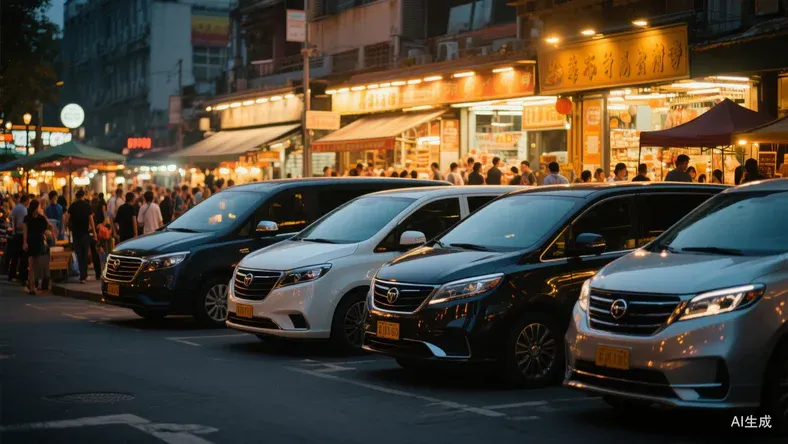
Despite a surge in high-profile electric multi-purpose vehicles (MPVs) from domestic automakers, China’s MPV market share remains a fraction of that in Southeast Asia, highlighting a deepening structural divergence between the two regions' economic development stages. While premium models like the Denza D9 and Li Auto MEGA capture headlines, data shows MPVs account for merely 3.8% of China's total automotive market.
This figures stands in stark contrast to Indonesia, where similar vehicles command a market share approximately eight times larger, driving a debate on why the world's largest electric vehicle (EV) producer appears to be ceding the segment to its southern neighbors. However, analysts point out that comparing the two markets is akin to comparing distinct asset classes; Southeast Asia’s market is driven by utilitarian, low-cost Asian Utility Vehicles (AUVs), while China’s demand has pivoted sharply toward luxury and technological integration.
The disparity underscores a fundamental shift in Chinese consumer behavior, where advanced logistics networks and robust infrastructure have eliminated the widespread need for dual-use cargo-passenger vehicles that remain vital in developing economies. In contrast, Southeast Asia remains reliant on affordable, rugged models for essential trade and transport, creating two distinct market ecosystems that render direct volume comparisons increasingly irrelevant for investors.
As Chinese manufacturers push toward luxury electrification, the gap reveals how rapid industrial maturation has decoupled China’s auto trends from the utility-focused demand typical of developing Asian economies.
The Structural Mismatch: MPV vs. AUV
The statistical gap between China and Southeast Asia is rooted in categorization and economic necessity. In Southeast Asia, the market is dominated by AUVs, a specific derivative of the MPV designed for the region's developing infrastructure. Japanese automakers, filling the void left by American manufacturers who exited due to pricing incompatibility, tailored these vehicles to be narrower and more affordable. Popular models like the Toyota Avanza serve as essential tools for both family transport and small business logistics.
In the past, China experienced a similar phase. The Wuling Hongguang, produced by SAIC-GM-Wuling Automobile, was once hailed by Forbes as "the most important car on earth," selling 1.6 million units in its first three years. However, as China’s automotive stock reached 319 million units—dwarfing the holdings of nations like Indonesia (25 million) and Vietnam—the market matured. The "dual-use" vehicle, essential in markets with lower car ownership rates per capita, has become less relevant in China's specialized economy.
Infrastructure and Efficiency Gains
The decline of the low-end MPV in China is a direct result of infrastructure modernization. In markets like Indonesia and Vietnam, the AUV remains a primary production tool for individual vendors who must navigate poor road conditions to transport goods personally.
Conversely, China’s advanced logistics systems have rendered this model obsolete for many small business owners. With efficient supply chains capable of delivering goods directly to storefronts, the necessity for a shopkeeper to own a cargo-capable passenger vehicle has diminished. Consequently, low-end models that previously padded MPV sales statistics have fallen out of favor, while the market has not yet fully transitioned to high-volume luxury consumption.
Regional Anomalies and the Hong Kong Exception
Global trends further context the Chinese market. In the United States, the MPV (or minivan) market share has shrunk to approximately 3% as SUVs gained dominance. Japan remains unique due to its specific "Kei car" (light automobile) regulations, which favor boxy, space-efficient designs necessitated by narrow roads and strict parking laws.
However, Hong Kong, China, presents a distinct outlier where high-end MPVs dominate. In 2023, MPVs accounted for approximately 55% of Hong Kong’s new car sales—more than ten times the rate in mainland China. This phenomenon is driven by high ownership costs, including registration taxes and fuel, which encourage households to purchase a single, versatile vehicle that serves as both a "mobile office" and a family carrier. The Toyota Alphard, serving as a status symbol for celebrities and business elites, has cemented the MPV as a luxury necessity in the city, influencing consumer aspirations in mainland China.
The Pivot to Luxury and Electrification
China’s MPV sector is currently undergoing a "luxury pivot" rather than a decline in relevance. As household incomes have risen, the demand for vehicles has shifted from basic utility to comfort and status. Early wealthy demographics favored imported models like the Toyota Previa, and later the Alphard, despite significant markups.
Today, domestic automakers are leveraging the transition to new energy vehicles to capture this high-end segment. The focus has moved beyond the simple utility of moving people or goods to competing on supply chain integration, technological innovation, and passenger experience. While Southeast Asia continues to rely on models priced around 300 million Indonesian Rupiah (approx. US$18,800), China’s market is increasingly defined by premium offerings. The perceived "loss" in market share is, in reality, a rapid evolution up the value chain, trading volume in low-margin utility vehicles for growth in high-margin, technology-intensive luxury transport.