
Pony.ai Wins Nod for Hong Kong Listing to Fuel Robotaxi Expansion Amid Widening Losses
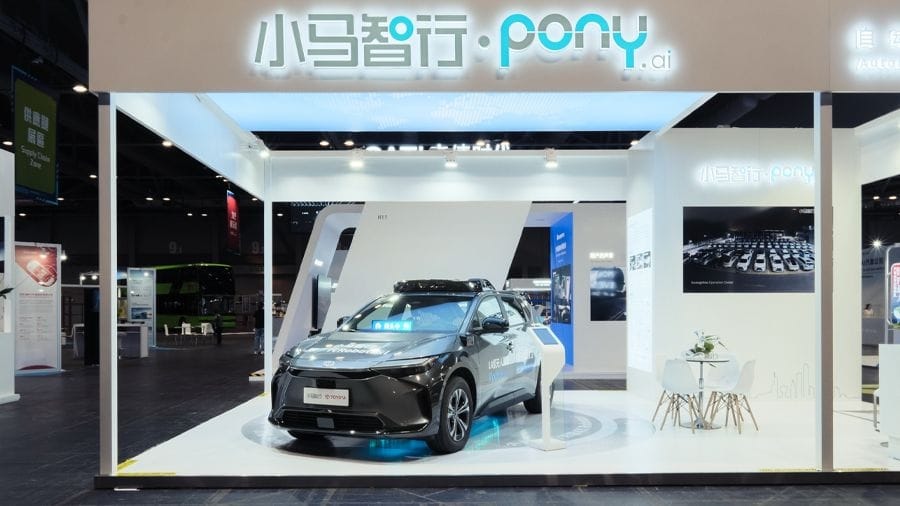
Pony.ai, a leading autonomous driving company, has secured regulatory approval for a Hong Kong listing, a critical move to fund its ambitious Robotaxi expansion even as its financial losses deepen. The plan sets the stage for a high-stakes push to achieve commercial viability in a capital-intensive industry where technological leadership does not guarantee profitability.
The China Securities Regulatory Commission disclosed on Oct. 14 that it had greenlit the company’s plan to issue up to 102 million common shares in a Hong Kong public offering. The filing mandates that the listing must be completed within 12 months, moving the plan into a substantial execution phase.
This comes less than a year after Pony.ai became the world’s first-to-list Robotaxi firm with its Nasdaq debut in November 2024 under the ticker “PONY.” A successful Hong Kong offering would establish a dual primary listing structure, providing a new channel for capital as the firm navigates a costly global race to commercialize autonomous vehicles.
The fundraising push coincides with a period of rapid growth and mounting red ink. While the company’s total revenue surged 75.9% year-over-year in the second quarter of 2025 to RMB 154 million yuan (US$21.1 million), its net loss widened by 72.5% to RMB 382 million. The Hong Kong listing is seen as crucial for fueling its expansion and shoring up its balance sheet against deep-pocketed rivals.
Growth Story Clouded by Mounting Losses
Pony.ai's latest financial results paint a picture of a company scaling quickly but struggling with profitability. The second-quarter revenue jump was driven by strong performance across its business lines, which include its core Robotaxi service, software licensing and applications, and Robotrucks. Robotaxi revenue alone grew an impressive 157.8% year-over-year to RMB 10.9 million, as the company expanded its fully driverless paid services across the top-tier Chinese cities of Beijing, Shanghai, Guangzhou, and Shenzhen.
However, this growth comes at a significant cost. The company's net loss was primarily fueled by heavy investment in its future. Research and development expenses climbed 69% to RMB 350 million, largely for the mass production of its seventh-generation Robotaxi and higher staff compensation. Selling, general, and administrative costs nearly doubled to RMB 113 million amid spending on professional services to support its large-scale deployment. Further highlighting the commercialization challenge, the strategically critical Robotaxi business accounted for just 7.08% of total revenue in the quarter.
The High Cost of Scaling Up
Pony.ai's strategy hinges on achieving scale, a capital-intensive endeavor. The company, which currently operates over 500 vehicles, plans to double its Robotaxi fleet to 1,000 by the end of 2025. This expansion will place further strain on its finances, which included a cash and investment balance of RMB 5.36 billion at the end of the second quarter.
The unit economics of Robotaxis remain challenging. Even after a 70% reduction from previous generations, a single vehicle still costs nearly RMB 300,000, with annual operating and maintenance expenses around RMB 100,000. CEO Peng Jun has publicly stated that a fleet of 1,000 vehicles represents the operational breakeven point. He anticipates the company could achieve group-level profitability around 2028 or 2029, signaling that significant cash burn will continue for the foreseeable future.
Top Funds Bet on Pony.ai Despite Short-Seller Doubts
Despite widening losses, Pony.ai has attracted significant backing from prominent international investors. In the second quarter, 14 top-tier institutions, including Fidelity Investments and Wellington Management, increased their stakes. Cathie Wood's ARK Invest bought over $12.9 million in stock across August and September, while asset manager Baillie Gifford has become the company's eighth-largest shareholder. The interest from firms known for their bets on Tesla underscores a bullish long-term view on the disruptive potential of autonomous mobility.
This investor confidence is contrasted by pointed scrutiny from a short-seller. In July, Grizzly Research published a report alleging that Pony.ai's technology lags Alphabet's Waymo by at least three years, citing claims from internal sources about data integrity issues. The report also asserted that Pony.ai's user experience in some Chinese cities was inferior to that of competitors Baidu's Apollo Go and WeRide. Pony.ai has not publicly responded to the report.
Navigating a Crowded and Capital-Intensive Race
Pony.ai is competing in an increasingly crowded global market. Domestically, Baidu's Apollo Go is a formidable leader with a fleet of approximately 2,000 vehicles and a significant lead in daily orders. Meanwhile, WeRide has diversified its business to include robobuses and autonomous sanitation vehicles to spread costs. On the international stage, Tesla opened its Robotaxi service to the public in September 2025, and Waymo already operates thousands of fully driverless cars in the U.S.
Unlike rivals backed by tech giants, Pony.ai is more dependent on capital markets to fund its operations. Its pursuit of a Hong Kong listing is therefore a strategic move to secure funding closer to its main operational base in China, potentially facilitating better policy coordination and resource allocation.
The path to commercialization for Robotaxis remains a long-term endeavor. According to forecasts from Frost & Sullivan, the global market is only expected to reach $66.6 billion by 2030. With profitability still years away and the risk of stricter safety regulations looming, a public listing is less a finish line than a refueling stop. For Pony.ai, winning the autonomous race will depend not just on technological prowess but on who can first build a sustainable business model.