
Pony.ai’s $7.5 Billion Valuation Faces Reality Check Ahead of Hong Kong IPO
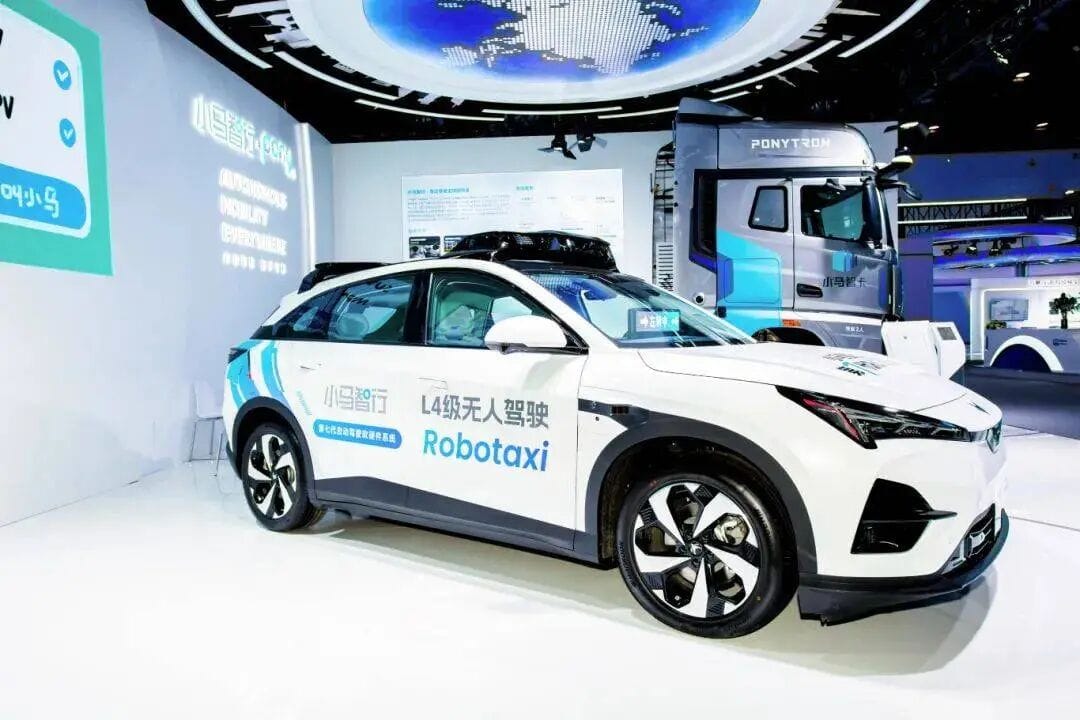
Pony.ai is racing toward a Hong Kong initial public offering, a move designed to secure its status as the world’s premier publicly traded robotaxi firm. But the maneuver also puts a spotlight on a widening gap between its ambitious $7.5 billion valuation and a business still struggling to gain traction in a fiercely competitive and cash-intensive industry.
The autonomous driving startup passed its Hong Kong Stock Exchange listing hearing on Oct. 17, paving the way for a dual listing just 11 months after its U.S. debut. The accelerated push is seen by analysts as a strategic effort to raise critical capital and solidify its brand as it jockeys for the title of "the world's first global robotaxi stock."
This capital markets gambit, however, unfolds against a backdrop of mounting pressure. Financials show that Pony.ai’s much-hyped robotaxi services contribute less than 10% of its total revenue, while its vehicle fleet lags behind domestic rivals. Meanwhile, widening losses underscore the immense cost of its ambitions.
The upcoming listing serves as a crucial test for investor appetite. With formidable competitors like Baidu Inc. and Didi Chuxing Technology ramping up their deployments, Pony.ai’s IPO is less a victory lap and more a necessary refueling stop in a high-stakes marathon where only the best-capitalized players are expected to survive.
A Race for Capital and Credibility
For Pony.ai, the pursuit of a dual U.S.-Hong Kong listing is about more than just funding; it is a calculated play for market leadership and credibility. By establishing itself as the first dually-listed autonomous vehicle company, it aims to build brand recognition not just with investors, but also with regulators and the public—a crucial advantage for a startup navigating complex policy landscapes and competing against tech giants.
Industry consensus suggests that large, well-resourced corporations with advantages in technology, capital, and government relations are more likely to succeed in the robotaxi sector. For smaller players like Pony.ai, a public listing provides the financial “ammunition” needed for sustained operations and confers a level of legitimacy that is difficult to achieve as a private entity.
A Valuation Under Scrutiny
Pony.ai's current market capitalization of approximately 7.5 billion has raised eyebrows, particularly when measured against its operational scale. With a fleet of just 680 robotaxis, the valuation implies as taggering worth of over 10 million per vehicle. This premium is being tested by financials that reveal a heavy reliance on its less-publicized business lines, such as software licensing.
In the second quarter of 2025, Pony.ai’s robotaxi service revenue was $1.5 million. While this represented a 157.8% year-over-year increase, its share of total revenue fell to just 7.08% from 9.7% in 2024. Despite this, the company continues to center its public narrative on its robotaxi progress, a strategy aimed at maintaining its high-growth tech stock appeal. The company has already weathered a short-seller report from Grizzly Research that criticized its service quality, signaling that its high valuation will remain under intense scrutiny until its robotaxi operations achieve meaningful scale.
Crowded Field, Shrinking Window
The competitive pressure on Pony.ai is intensifying. In China, it trails market leaders in fleet size. Baidu’s Apollo Go operates over 1,000 vehicles across 16 cities, having completed more than 14 million rides. WeRide also has a larger fleet of 700 vehicles.
Moreover, the entry of giants threatens to squeeze out smaller startups. Didi recently announced it would deploy over 1,000 robotaxis across multiple Chinese cities in 2025, backed by a recent RMB 2 billion yuan (approximately US$281 million) fundraising round, and has set a target of 1 million autonomous vehicles by 2030. This aggressive expansion by a ride-hailing titan, alongside the looming presence of global players like Waymo and Tesla Inc., is rapidly closing the window of opportunity for independent firms like Pony.ai.
The High Cost of Ambition
The road to robotaxi commercialization is paved with enormous costs. The business is a heavy-asset model where profitability is contingent on achieving massive scale, which requires immense upfront investment. According to one industry insider, the hardware for a single L4 autonomous vehicle, including its high-performance industrial computer, can cost over RMB 200,000 yuan.
Pony.ai’s financial statements reflect this reality. In the second quarter, research and development expenses soared 69% year-over-year to 49 million, driven by investments in its seventh−generation robotaxi platform.Selling, general,and administrative costs jumped 97.3%, as it prepared for commercial deployment. This surge in spending widened the company’s net loss for the first half of 2025 to 90.64 million.
CEO Peng Jun has stated that the company could reach profitability once its fleet expands to 50,000 vehicles, a milestone he projects for 2028 or 2029. With a target of just 1,000 vehicles by the end of 2025, Pony.ai remains far from self-sufficiency. The Hong Kong IPO is thus not just strategic, but essential for its survival as it seeks to turn its ambitious robotaxi blueprint into a profitable reality.