
Pop Mart Is Being Valued Like Its Overseas Story Is Over—Morgan Stanley Disagrees
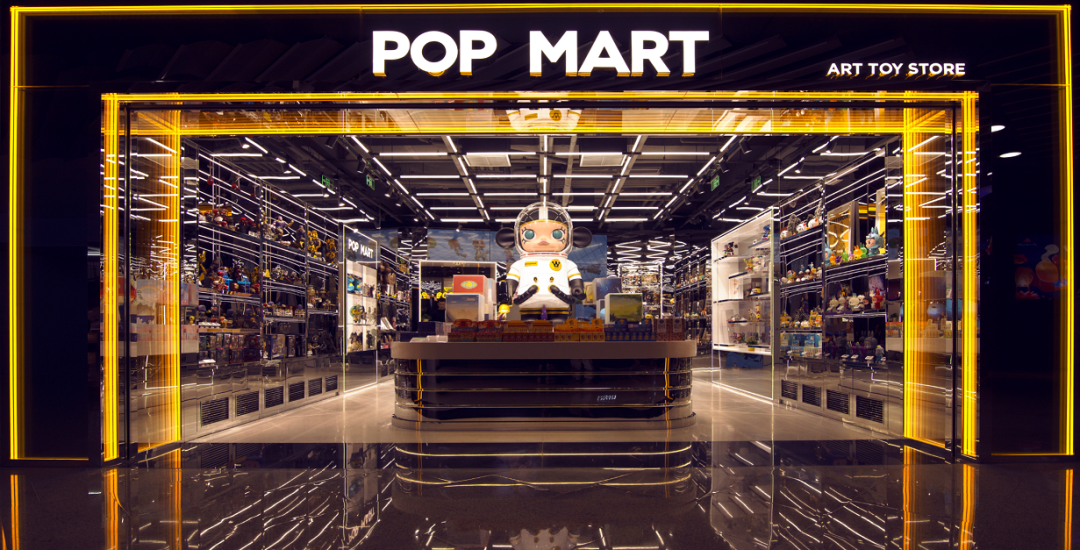
Morgan Stanley Asia on March 30, 2026 published a “Tactical Idea” note on Pop Mart International Group arguing the stock is now priced for an “overseas stumble” and a 2026 growth reset—yet the bank’s sum-of-the-parts (SoTP) work suggests bearish sentiment has moved faster than fundamentals.
That’s worth paying attention to because the market is no longer debating whether Pop Mart can grow—investors are debating whether its overseas expansion has already failed in markets it has “just begun penetrating.” When that narrative takes hold, multiples don’t compress politely; they gap.
Morgan Stanley’s central claim is blunt: “Current valuation appears to suggest that Pop Mart’s model has already been written off in markets it’s just begun penetrating.”
A Stock “Priced For” a Bear Scenario
The note frames the post-results reset as unusually violent. Morgan Stanley writes that the “expectation gap between bulls and bears has narrowed rapidly since earnings,” and that “sell-side consensus 2026e earnings of Rmb15.7bn is no longer a benchmark for investors.”
The bank’s read from investor conversations is that near-term numbers have become the entire battlefield:
- For 1Q26, investors are looking for 50–60% y/y group sales growth, with Greater China up 70–80% and overseas up ~30%.
- At the same time, they estimate overseas sales will decline 50% q/q in 1Q—a seasonal hangover that, fairly or not, has become a referendum on underlying demand.
If those assumptions hold, investors model a pattern of strong mid-year sequential rebounds followed by renewed weakness: “up ~50% q/q in both 2Q25 and 3Q25, then down ~10% q/q in 4Q25 and down ~20% q/q in 1Q26e.”
That framing matters because it explains why the tape is trading like management’s >20% 2026 sales-growth target is fantasy. Morgan Stanley notes: “Almost no one expected 20% sales growth for 2026, and all are bracing for very weak overseas results in 1Q26.”
SoTP: Even a Ugly 2026 Can Still Be Mispriced
Morgan Stanley tries to separate “estimate cuts” from “valuation panic.” It runs a SoTP with assumptions it says are below what the market is already discounting—and still finds upside.
At the segment level, the bank assumes for Greater China 26% y/y growth and 34.5% net profit margin, with only “mild” margin contraction due to dilution from new businesses. It argues scale benefits should support gross margin and that “core SG&A may continue to decline amid strong growth.”
Overseas is where the SoTP turns deliberately harsh: “sales down 30% and NP down ~60%,” and a ~7x forward P/E due to “earnings decline and low visibility.”
Margins: The Deleverage Fear May Be Overdone
Where the market seems most eager to punish Pop Mart is on operating leverage—specifically, the idea that weaker overseas sales automatically implode profits.
Morgan Stanley pushes back: “We think NPM in China will be stable.” For overseas, it concedes uncertainty, but highlights cost structure: e-commerce platform and transportation expenses were “40–45% of overseas SG&A in 2025,” and “most of this spending should be variable with online sales.”
It also notes “meaningful efficiency improvements in 2H25 versus 2024 and 1H25,” driven by a mix shift toward the company’s own website (lower platform take rates) and “optimization in international logistics.” Translation: even if overseas revenue softens, the profit fall may not be as mechanically brutal as investors are modeling.
Inventory: Big Number, Smaller Near-Term Provision Risk
Inventory has become a second flashpoint. Morgan Stanley details a sharp build: inventory rose from Rmb1.5bn to Rmb2.3bn and then to Rmb5.5bn (US$770m) by end-2025, while turnover days increased from 126 in 2024 to 148 in 2025, potentially peaking at 179 in 2026.
The bank estimates Rmb1.0–1.5bn (US$140–210m) could be excess, tied to overly optimistic sales assumptions made in mid-2025. Still, it argues there is no “imminent provisioning risk,” noting cumulative provisions during 2021–2025 were only ~Rmb50mn, and emphasizing the products are “non-seasonal and non-perishable.”
The bank adds a key behavioral tell: it is “not seeing the company increase discounting or rely more on lucky bags for inventory digestion now,” and it argues “maintaining pricing discipline is more important than accelerating inventory digestion.”
New Businesses: “Desperate Bid” or Deliberate Expansion?
Morgan Stanley acknowledges market skepticism around small home appliances, which some investors view as a “desperate bid for growth.” The bank disagrees, saying development started at least 1.5 years ago and is targeted at the top 5–10% of customers—more “secondary items” than functional necessities (e.g., “The Monsters coolers” positioned for rooms).
It expects other initiatives—Pop Land, POPOP fashion jewelry, Pop Blocks, and desserts—to “make more meaningful progress” in 2026, and flags short-form animations for Twinkle Twinkle and Peach Riot as an initiative “the market is currently overlooking.”
Related Coverage:
POP MART Faces Epic Short Squeeze Risk as Bears Double Down Despite 50% Rally
Pop Mart Plunges as ‘Peak Labubu’ Fears Overshadow Triple-Digit Profit Surge