
Pop Mart Shares Tumble as JPMorgan Downgrades Amid Valuation Concerns
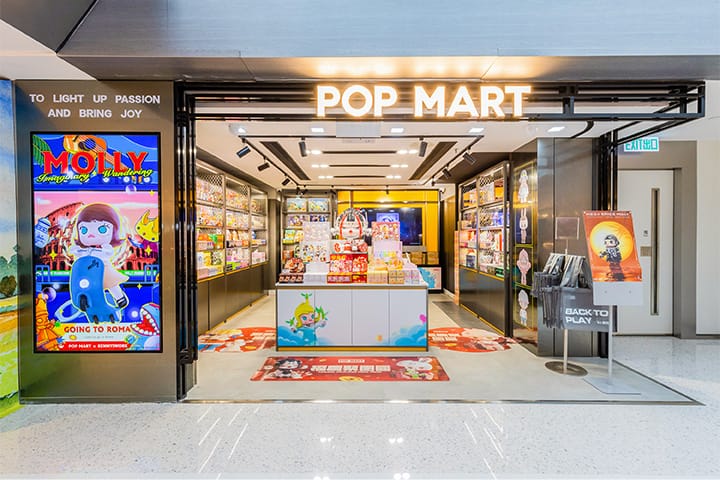
Pop Mart International Group Limited shares plunged in Hong Kong trading after JPMorgan downgraded the collectible toy maker to Neutral from Overweight, citing valuation concerns and declining visibility for upcoming catalysts that could sustain the stock's meteoric rise.
On Monday, Pop Mart's stock price fell as much as 9% during trading, marking a 25% decline from its historical highs. The investment bank cut its price target to HK300 from HK400, while maintaining that the company's long-term investment thesis remains intact. JPMorgan removed Pop Mart from its Positive Catalyst Watch list, noting that four of seven identified catalysts had already materialized, with the remaining three showing "low visibility."
Pop Mart's shares have surged 209% year-to-date and 466% over the past year, vastly outperforming the Hang Seng Index's 32% and 52% gains respectively. The analysts warned that the stock's valuation is now "priced for perfection" and vulnerable to any fundamental disappointments or negative media coverage.
The downgrade comes despite solid momentum for the company's flagship Labubu character, which continues to drive strong sales despite declining Google search interest and resale prices following a 10-fold increase in manufacturing capacity.
Catalyst Window Closes as Key Drivers Materialize
JPMorgan analysts Kevin Yin and Yibo Wu cited the successful completion of several major catalysts including strong first-half 2025 results, a collaboration with Uniqlo, index inclusion, and the opening of jewelry stores. The bank identified three remaining potential catalysts with uncertain timing: the delayed release of "Labubu & Friends" animation, the launch of Labubu 4.0 ahead of holidays, and possible introduction of interactive toys.
The analysts noted particular strength in Mini Labubu sales, which launched at prices of RMB 79 yuan ($11) in mainland China and sold out within minutes. The palm-sized collectibles continue to trade at a 46% premium in the resale market despite capacity increases.
Pop Mart also launched pure gold "Baby Moly" items priced at RMB 1,971 yuan ($254) per gram, representing a 46% premium over competitor Laopu Gold's pricing and a 136% premium over traditional gold bars.
Licensing Concerns and Market Dynamics
The downgrade follows market confusion over a collaboration between luxury brand Moynat and Kasing Lung, the creator of The Monsters IP that includes Labubu. JPMorgan clarified that the partnership complies with existing licensing agreements, which grant Pop Mart exclusive rights to develop pop toys globally and sell them exclusively in China through 2030.
The analysts acknowledged recent negative media coverage regarding declining resale prices and product quality concerns, though they view these as largely irrelevant to fundamental performance. Labubu 3.0 resale prices have declined 70% from peak levels in China and 50% overseas, though Mini Labubu products still command significant premiums.
Despite the downgrade, JPMorgan maintained its positive long-term outlook, forecasting 31% sales growth and 34% earnings growth compound annual growth rates through 2027. The bank expects overseas markets to contribute over 60% of earnings by 2027, up from the current 38.9% revenue contribution.
Valuation Reset Reflects Reduced Risk Tolerance
The new HK$300 price target reflects a lower price-to-earnings-growth multiple of 1.1x, down from 1.5x previously, representing a 40% discount to peers compared to the prior 20% discount. JPMorgan cited reduced risk tolerance given the stock's strong performance and heightened sensitivity to negative news flow.
Trading at 31x 2025 estimated earnings and 22x 2026 estimates, Pop Mart's valuation compares to peer averages of 24.8x and 21.3x respectively. The analysts noted that every 0.1x change in PEG multiple could lead to a 9% change in price target, highlighting the stock's sensitivity to valuation assumptions.
The investment bank maintained that Pop Mart represents one of the highest-quality management teams in China's consumer sector, alongside Yum China, Midea Group, and Anta Sports. The company's proven ability to monetize intellectual property through social media platforms and diversified portfolio remain key competitive advantages, with Labubu expected to contribute 35% of 2027 sales compared to current levels above 34%.