
Pop Mart x LVMH: A Partnership Born of Mutual Need
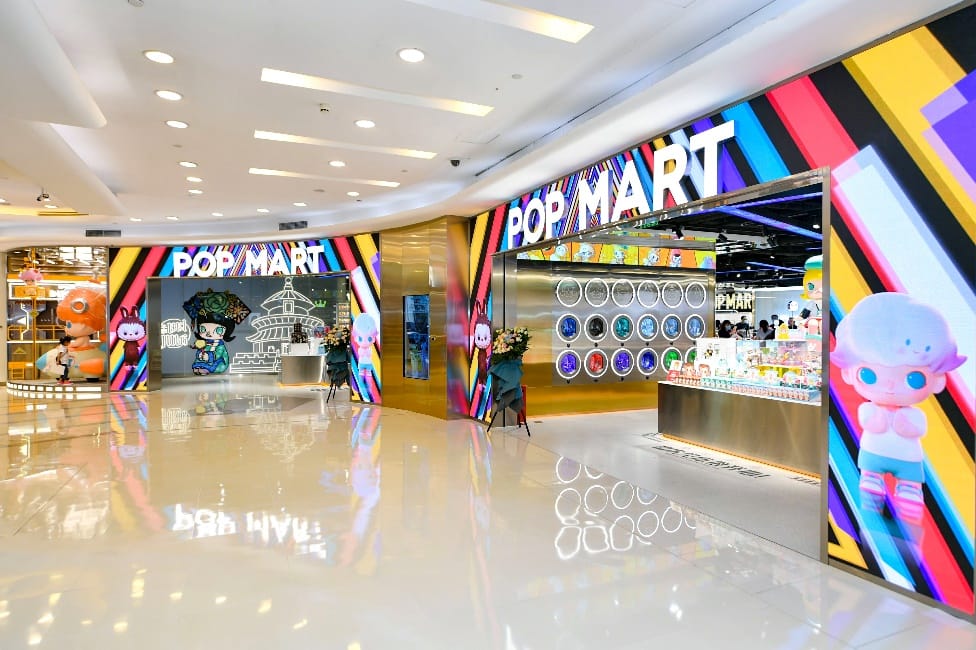
Pop Mart is deepening its integration with the global luxury sector, signaling a strategic pivot designed to balance mass-market scale with the exclusivity of high fashion. As the Chinese designer toy giant faces significant stock volatility and questions regarding the longevity of its intellectual property, this strengthening tie with the luxury world underscores a mutual necessity: Pop Mart seeks the enduring premium allure of heritage brands, while the slowing luxury industry searches for renewed relevance among younger, trend-driven consumers.
The company announced on December 10 that Andrew Wu, President of Greater China for LVMH Moët Hennessy Louis Vuitton SE, has been appointed as a new non-executive director. Wu, a veteran who first joined LVMH in 1993 and has led its Greater China operations since 2005, brings decades of experience in managing top-tier luxury portfolios. His appointment suggests that Pop Mart is moving beyond superficial marketing collaborations toward a deeper exploration of the international fashion hierarchy’s operational logic.
This high-profile recruitment comes as Pop Mart grapples with a sharp market correction, with its stock plummeting more than 45% from its 2025 peak and wiping out over HK$200 billion in market value. Simultaneously, the global luxury sector is navigating its own headwinds; consultancy Bain & Co. reports that the industry is experiencing its first substantive slowdown since 2009, with the Chinese market recording negative growth for six consecutive quarters. The cross-pollination of leadership aims to address these dual challenges, attempting to merge the "scarcity" logic of high-end goods with the viral velocity of collectible toys.
For investors, the alliance represents a critical experiment in brand positioning. While Pop Mart has delivered nearly 70% gross margins—figures comparable to Hermès—it remains a young company managing the delicate friction between artistic uniqueness and commercial ubiquity. As CEO Wang Ning seeks to master the art of "abundant scarcity," the market is watching to see if LVMH’s playbook can stabilize Pop Mart’s valuation and extend the lifecycle of its hit characters in an increasingly skeptical capital market.
Calculated Scarcity
The core of the alliance lies in the shared pursuit of "scarcity," a driver of value for both designer toys and luxury handbags. In both industries, value is derived not just from utility, but from social stratification and identity expression. Pop Mart has historically emulated the luxury "pyramid" structure, launching its high-end MEGA collection—which generated nearly RMB 1 billion yuan (US$137 million) in the first half of 2025—to sit atop a base of accessible blind-box products.
Industry analysts view the cooperation as a potential "win-win." LVMH gains direct access to the emotional connections and vibrant youth communities surrounding IPs like LABUBU, offering insights into shifting consumption trends. In return, Pop Mart gains LVMH’s expertise in brand heritage and cycle management. This was visualized in October when LVMH Chairman Bernard Arnault attended the launch of a collaboration between Moynat and LABUBU, signaling a strategic embrace beyond mere product placement.
The Availability Paradox
However, Pop Mart faces immediate pressure to prove it can maintain premium status while aggressively ramping up production. Deutsche Bank has warned that the company is encountering an "Availability Paradox." As production capacity for plush toys surged—from a monthly average of 300,000 units in early 2024 to over 30 million units by August 2025—formerly scarce items are becoming ubiquitous, threatening the "cool factor" that drives demand.
This dilution is evident in the secondary market, a key barometer of brand heat. On trading platforms, the price of popular items such as the LABUBU 4.0 "Heart" model has dropped to approximately RMB 270 (US$37), down from RMB 380 (US$52) just two months ago. Similarly, products that were once hard to find in the U.S. and UK markets are now readily available on Amazon and official sites. Short-selling firms like Bernstein have flagged risks regarding growth deceleration and IP concentration, predicting that LABUBU sales could peak as early as 2026.
Extending the Lifecycle
To counter the risks of fading trends, Pop Mart is leveraging its cash flow to broaden its IP portfolio and deepen cultural relevance. The company is aggressively expanding overseas, opening a net 70 stores in the first half of 2025 with a target of 200 for the full year. Management has noted a rise in cross-IP purchasing among members, with newer characters like CRYBABY and Star Man—the latter generating RMB 390 million yuan (US$53.6 million) in just six months—showing strong growth momentum.
Beyond retail, the company is investing in content to build a "soul" for its characters. Filings indicate that copyrights for a LABUBU and Friends animated series have been registered, and Sony Pictures has reportedly secured film adaptation rights for the IP. With the second phase of its Beijing theme park under construction, Pop Mart is betting that legitimate cultural depth, aided by LVMH-style brand management, will allow it to defy the short lifecycles typical of the toy industry.