
China Auto Output Hits Record High Even as Domestic Buyers Pull Back
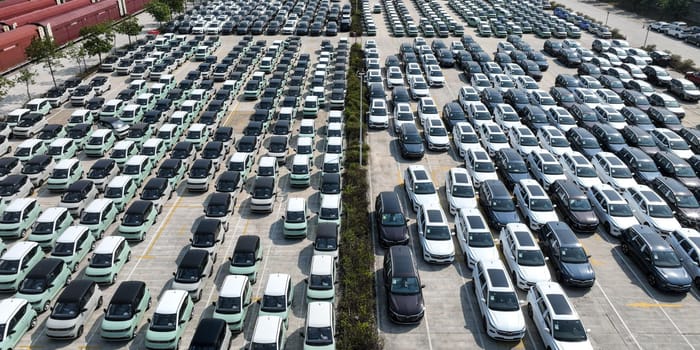
China’s automakers pushed production to unprecedented levels in November 2025, breaking the 3.5 million monthly unit barrier for the first time in history even as domestic consumers grew increasingly cautious. According to the China Association of Automobile Manufacturers (CAAM), monthly production reached 3.53 million units, marking a historic high as manufacturers raced to maximize output during the final policy window of the year.
While factories are running at full capacity, the retail side of the market tells a different story. Data from the China Passenger Car Association (CPCA) shows that retail sales for passenger vehicles dropped 8.1% year-on-year in November. This divergence between surging production and cooling domestic demand has forced automakers to rely heavily on overseas markets, with exports surging nearly 50% to absorb the excess capacity.
The disconnect between supply and demand is exerting significant pressure on corporate profitability. Industry data reveals a stark contrast in margins, with the auto manufacturing sector operating at a slim 4.4% profit margin, while upstream raw material providers enjoy margins exceeding 30%. This "profit hollowing" is exacerbated by rising inventory levels, which grew by 60,000 units in November, a sharp reversal from the inventory drawdown seen during the same period last year.
As the industry approaches the end of 2025, it faces a critical policy transition. The expiration of favorable purchase tax exemptions at the end of December is expected to trigger a short-term sales rush, but analysts warn that this could overdraft demand for early 2026. With tax rates set to rise to 5% next year, automakers and policymakers are bracing for a challenging start to the "15th Five-Year Plan" period, balancing the need for growth against weakening consumer sentiment.
Production Surge Meets Retail Chill
The Chinese auto sector exhibited a distinct "temperature difference" in November, characterized by hot production lines and cold showrooms. CAAM data indicates that while production rose 5.1% month-on-month, domestic retail demand showed visible fatigue. The CPCA reported that wholesale volume reached a record 2.99 million units, confirming that manufacturers maintain optimistic production schedules despite sluggish local uptake.
Chen Shihua, deputy secretary-general of CAAM, noted that the domestic sales decline is largely due to the gradual withdrawal of local subsidies and consumer hesitation ahead of expected policy changes in 2026. "Overall sales in November were driven by exports," Chen stated. This mismatch resulted in rising dealer inventories, contrasting sharply with the inventory reduction of 220,000 units recorded in November 2024. CPCA Secretary-General Cui Dongshu attributed the retail dip to a high baseline from the previous year and the waning impact of "trade-in" subsidy policies, which saw daily volumes drop to 30,000 units.
Exports Provide Critical Buffer
With domestic consumption tapering, international markets have become the primary engine for growth. November exports reached a historic high of 728,000 vehicles, a 48.5% year-on-year increase. For the first eleven months of 2025, total exports stood at 6.34 million, with full-year projections aiming for 7 million units.
The composition of these exports is shifting alongside volume. Plug-in hybrid vehicles (PHEVs) have seen their share of the export mix jump from 26% last year to 42%, finding particular success in developing markets due to their cost-effectiveness and range capabilities. Additionally, China’s automakers are diversifying their global footprint beyond traditional markets like Russia, expanding significantly into Mexico, Belgium, the UK, the UAE, and Brazil. New energy vehicles (NEVs) accounted for 47.3% of total passenger car exports in November.
EV Market Enters "Stable Phase"
Domestically, the New Energy Vehicle sector remains a bright spot, though its growth trajectory is maturing. NEV production and sales both exceeded 1.8 million units in November, achieving a record market penetration rate of 53.2% according to CAAM. The CPCA reported an even higher retail penetration of 59.3%.
However, the explosive growth rates of 30-50% seen in previous years have moderated to single digits, signaling a shift from a "policy-driven explosion" to a "market-driven stable phase." Pure electric vehicles (BEVs) showed signs of a rebound with 9.2% retail growth, while plug-in hybrids and range-extended models saw slight declines. Notably, pure electric models now account for 73% of sales among "new force" automakers, indicating a reshuffling of technical routes.
Profit Squeeze and Policy Cliff
Despite volume records, the financial health of automakers remains a concern. Cui Dongshu highlighted that the auto sector’s 4.4% profit margin is dangerously low compared to the 30% margins enjoyed by the upstream non-ferrous metal mining industry. "The disparity is huge," Cui said, arguing that automakers need better protection against unreasonable raw material price hikes to sustain international competitiveness.
Looking ahead, the market faces a significant hurdle with the restoration of the 5% vehicle purchase tax starting January 1, 2026. The expiration of the current exemption is estimated to reduce consumer concessions by over RMB 100 billion (approx. US$13.8 billion). While a year-end sales spike is anticipated as buyers rush to beat the deadline, the industry remains cautious about 2026. However, policy signals from central leadership emphasizing "quality improvement and efficiency" suggest continued government support to stabilize the market for the coming year.