
Roborock’s Overseas Revenue Tops 60%, Driving a Structural Margin Inflection
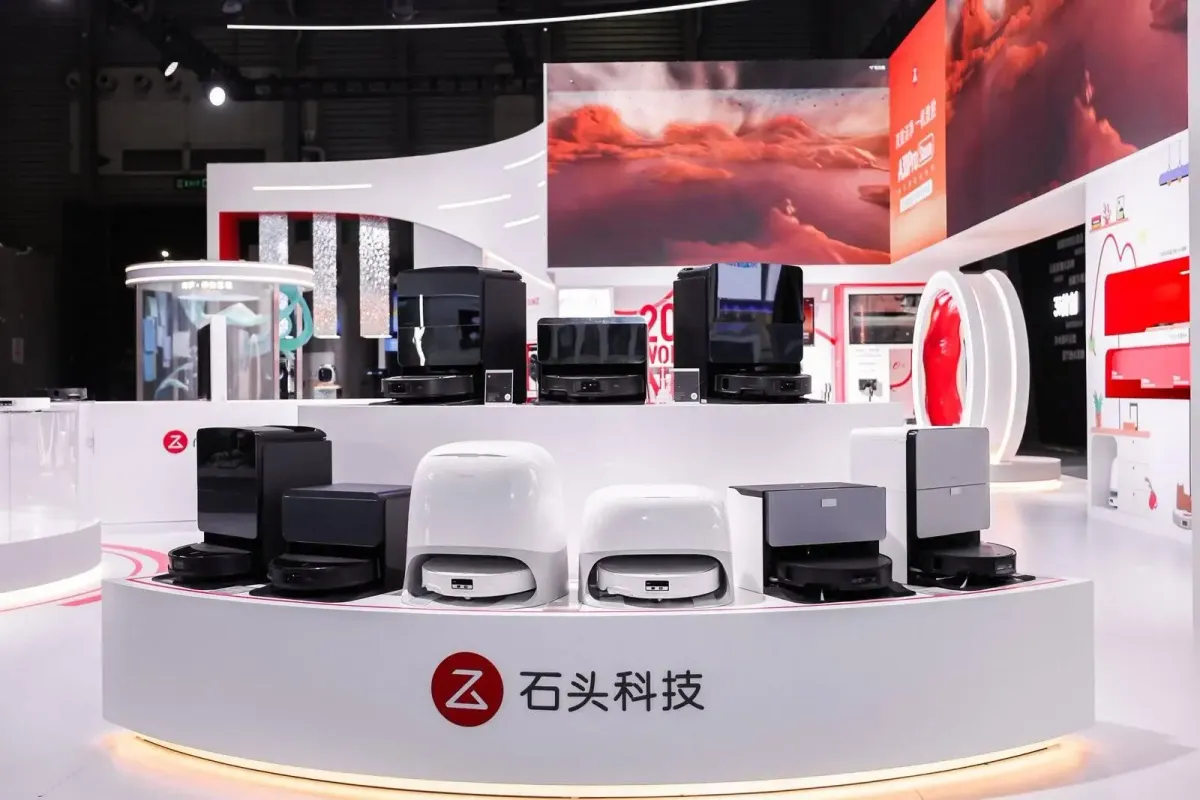
Goldman Sachs flags a structural margin inflection at Roborock Technology, after the robotic vacuum maker posted a 62% surge in second-quarter net profit and crossed the RMB 10 billion half-year revenue milestone for the first time — all while the domestic cleaning-appliance market contracted.
The Beijing-based company reported Q2 2026 net profit of RMB 663 million (US$92.1 million), beating Goldman Sachs's own estimate by approximately 35% and surpassing broader market consensus by a wide margin. Revenue for the same quarter reached RMB 5.86 billion (US$813.9 million), up 31% year-on-year and accelerating from the 23% growth recorded in Q1 2026 — a sequential re-acceleration that analysts say signals more than a seasonal bounce. Goldman Sachs maintained its Buy rating and set a price target of RMB 170 per share in a note dated August 25, 2026.
The stock's initial reaction was muted: shares fell 3.40% to RMB 112.50 on the August 24 earnings release date. But the market recalibrated sharply the following session, with the stock surging more than 20% intraday to RMB 135, pushing total market capitalization to RMB 35.04 billion (US$4.87 billion) and fully erasing the prior day's decline.
Overseas Markets Drive Revenue Past the RMB 10 Billion Ceiling
For the first half of 2026, Roborock Technology posted total revenue of RMB 10.08 billion (US$1.40 billion), up 27.6% year-on-year — the first time the company has cleared the RMB 10 billion half-year threshold. Net profit attributable to shareholders reached RMB 986 million (US$136.9 million), a 45.6% increase, while non-recurring net profit climbed 60.74%.
The more consequential data point for investors lies in the geographic revenue split. Overseas revenue reached RMB 6.07 billion (US$843.1 million) in H1 2026, representing 60.22% of total revenue — the first time international markets have exceeded 60% of the company's top line and formally displaced China as its primary revenue source. Overseas gross margin stood at 49.18%, compared with 34.31% for the domestic segment, making international operations responsible for 68.45% of total gross profit. In effect, Roborock's global expansion is not merely a volume story; it is the company's primary profit engine.
During Amazon Prime Day — held earlier than in prior years — Roborock claimed the top sales position in the robotic vacuum category across seven markets, including Germany, the United Kingdom, the United States, and Canada. European market share reached 45%; North American share broke above 33%.
Margin Expansion Outpaces Revenue Growth, Stripping Out Tariff Tailwinds
The operating leverage story is arguably more significant than the headline revenue beat. Q2 2026 gross margin came in at 43.3%, above Goldman Sachs's 42.5% forecast, supported by cost reductions, product-mix optimization, and IEEPA tariff refunds. Operating margin reached 11.5%, a year-on-year improvement of 8.8 percentage points and substantially above Goldman's 6.5% projection.
Selling and administrative expenses grew just 1% and 2% year-on-year respectively against 31% revenue growth, compressing the selling expense ratio by 6.2 percentage points and the administrative expense ratio by 2.8 percentage points. The divergence between cost growth and revenue growth illustrates a meaningful improvement in marketing return on investment and structural operating leverage.
Critically, Goldman Sachs notes that even after stripping out approximately RMB 192 million (US$26.7 million) in Q2 tariff refunds recognized as non-recurring income, operating profit still exceeded expectations. The bank explicitly flags that three previously cited headwinds — U.S. tariff exposure, European business-model transition costs, and domestic subsidy-related drag — have "largely dissipated," clearing the path for sustained margin recovery.
Net profit margin for Q2 reached 11.3%, up 2.2 percentage points year-on-year, though the improvement was narrower than the operating margin gain due to foreign exchange losses. H1 2026 forex losses totaled approximately RMB 220 million (US$30.6 million), a sharp reversal from the RMB 82 million (US$11.4 million) forex gain recorded in the same period of 2025.
Domestic Market Holds Ground Despite Industry Contraction
China's robotic vacuum retail market contracted 4.0% in H1 2026, yet Roborock gained share. During the 618 shopping festival, the company ranked first among cleaning appliance brands by market share. Its robotic vacuum domestic market share reached 35.73%, holding the top position; its floor-washing machine share stood at 27.22%, ranking second in the category.
Domestic robotic vacuum retail sales reached RMB 2.99 billion (US$415.3 million) in H1, up 9.67% year-on-year. Floor-washing machine domestic retail sales of RMB 1.87 billion (US$259.7 million) grew 40.19%, reflecting strong momentum in a product category with a lower installed base. Lawn-mowing robots and washer-dryer combos currently contribute limited revenue but are tracking in line with management guidance on both scale and profitability.
R&D Investment and Shareholder Shifts Signal Competing Narratives
Research and development expenditure reached RMB 720 million (US$100 million) in H1 2026, up 5.11% year-on-year. R&D personnel account for more than 40% of the total workforce, and the company added 1,172 newly authorized patents in the period — metrics that underpin its technology differentiation argument in an increasingly competitive global market.
Shareholder dynamics present a more nuanced picture. Core insiders — founder Chang Jing, Ding Di, and Xiaomi-affiliated Tianjin Jinmi — maintained stable positions through Q2. However, northbound-flow holdings via Hong Kong Securities Clearing Company Limited declined from 2.99% at end-Q1 to 2.12% at end-Q2, with multiple mainstream funds also trimming positions. The divergence between institutional selling and the stock's subsequent 20%-plus rally suggests the selloff may have been technically driven rather than fundamentally motivated.
Seventeen institutions published research reports on Roborock in the past six months, with an average target price of RMB 165.61 per share. More than 70% of covering analysts carry Buy or Outperform ratings. China International Capital Corporation (CICC) maintained its Outperform rating.
Goldman Projects Profit Doubling by 2028
Goldman Sachs forecasts Roborock net profit of approximately RMB 2.03 billion (US$281.9 million) in full-year 2026, rising to RMB 2.64 billion (US$366.7 million) in 2027 and RMB 3.28 billion (US$455.6 million) in 2028 — implying a near-doubling of annual earnings over a two-year forward horizon. The trajectory rests on three pillars: continued overseas share gains, sustained operating leverage as the cost base scales more slowly than revenue, and the progressive normalization of tariff-related headwinds that suppressed reported margins through 2025.
The central risk to that outlook remains currency volatility. With 60% of revenue now sourced internationally, a sustained appreciation of the Chinese yuan — or further weakness in the euro and British pound — would amplify the forex loss line that already shaved roughly 2 percentage points off net margin in Q2. Management has not publicly disclosed a formal hedging strategy for H2 2026.
Related Coverage:
A Tale of Two Vacuums: Citi Flags Q2 Earnings Divergence Between Roborock and Ecovacs