
Why China's Tech Giants Are Selling Off Their Gaming Assets
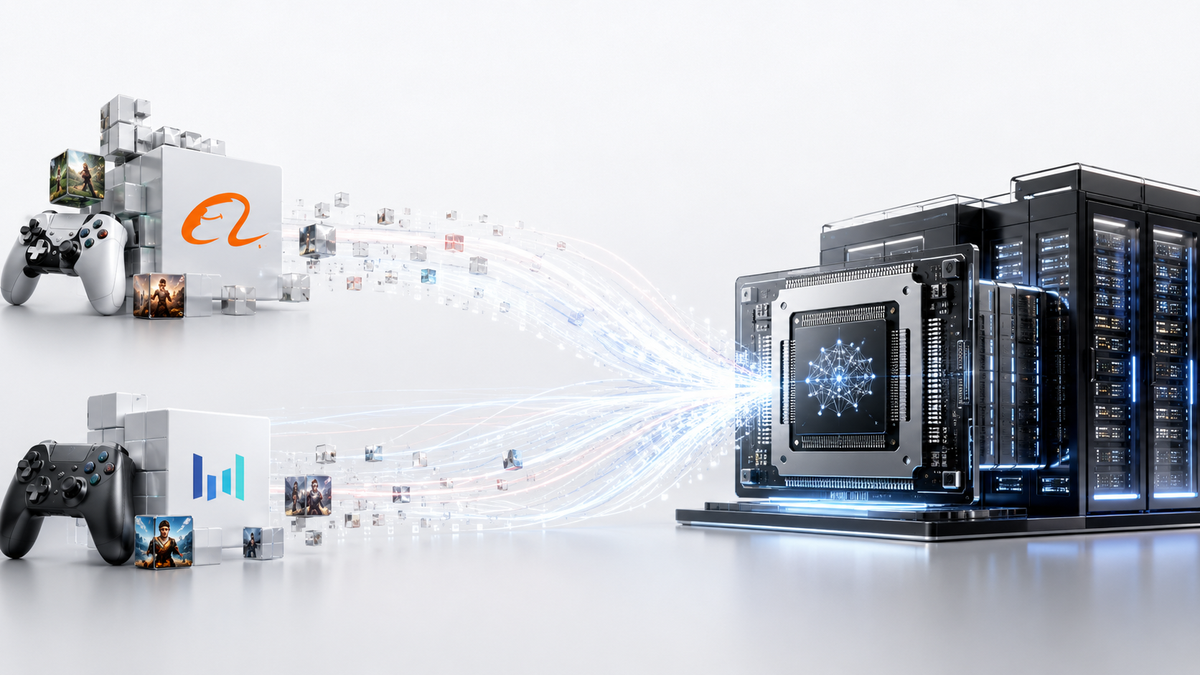
Alibaba and ByteDance have exited major gaming investments. Here's the structural logic behind the retreat — and what it reveals about where Chinese tech is heading.
What Is Happening?
Two of China's largest internet conglomerates have divested significant gaming assets within a short window of time.
Alibaba agreed to sell Lingxi Games — operator of the hit strategy title Romance of the Three Kingdoms: Strategic Edition — to Asia-focused private equity firm Trustar Capital for more than $1.5 billion. ByteDance, meanwhile, sold Moonton Technology, maker of Southeast Asia's dominant mobile game Mobile Legends: Bang Bang (MLBB), to Saudi Arabia's Savvy Games Group for more than $6 billion. ByteDance had originally acquired Moonton in 2021 for approximately $4 billion.
These were not distressed sales of failing businesses. Both assets were profitable and carried genuine market presence. That is precisely what makes the divestitures worth understanding on their own structural terms.
Why Did These Companies Enter Gaming in the First Place?
Alibaba and ByteDance entered the gaming sector with distinct but overlapping rationales.
Alibaba saw gaming as a missing piece in its broader digital entertainment portfolio — a high-margin consumer business that could sit alongside e-commerce and cloud. ByteDance believed its core competencies in algorithmic content distribution and its growing international footprint could be redeployed to replicate the growth playbook it had used in short video.
Both bets produced real results. Lingxi Games' Romance of the Three Kingdoms: Strategic Edition ranked consistently near the top of global iOS revenue charts for years, generating billions in gross revenue and establishing a defensible position in the strategy game (SLG) category. Moonton's MLBB built a monthly active user base in the hundreds of millions across Southeast Asia and the Middle East, along with a mature global esports operation.
Yet neither company ever made gaming a core identity. For Alibaba and ByteDance, gaming was always a strategic adjacency — valuable, but not foundational.
Why Are They Selling Now?
The AI capital reallocation argument
The most widely cited explanation is that both companies need capital for AI infrastructure, and gaming assets provide a convenient source of liquidity.
Alibaba CEO Eddie Wu has publicly committed to investing more than ¥380 billion (approximately $52 billion) in cloud and AI hardware infrastructure over three years. In a recent quarter, Alibaba's capital expenditure reached ¥67.7 billion, up 75% year-on-year. ByteDance has similarly redirected the bulk of its free cash flow toward large language model development and AI compute procurement — to the point where AI infrastructure spending created visible pressure on quarterly profit margins.
Against that backdrop, high-value gaming assets become a rational source of liquidity. Selling Lingxi Games and Moonton is not a distress liquidation. It is a portfolio rebalancing: converting assets with steady but bounded cash flow potential into fuel for investments that carry far higher strategic valuation multiples.
The gaming business model argument
There is a second, less-discussed structural factor. Gaming is a high-cash-flow business, but it is no longer a high-multiple business for platform companies. In an era when AI commands premium valuations and investor attention, the opportunity cost of capital allocated to gaming has risen sharply.
Moonton's financials illustrate the underlying pressure. Its 2024 revenue declined year-on-year. In Q1 2025, gross margin fell from 29.22% to 18.14%. A maturing flagship title, without a clear successor product in the pipeline, is a cash flow asset — not a growth story.
What Changed in the Gaming Industry Itself?
The retreat of Alibaba and ByteDance is not only about AI. It also reflects a structural shift in what it takes to succeed in games.
From traffic game to content industry
For most of the 2010s, gaming success in China was heavily correlated with distribution advantages: user acquisition efficiency, app store relationships, and algorithmic recommendation. These were capabilities that internet platforms possessed in abundance.
That model has eroded. The commercial success of titles like Black Myth: Wukong — a single-player, narrative-driven game developed over six years — signaled that the market increasingly rewards long-cycle content investment: world-building, deep gameplay systems, IP accumulation, and community development. These are capabilities that require creative patience, not platform scale.
The internet industry's default operating mode — rapid iteration, fast pivots, data-driven optimization — is structurally misaligned with the multi-year development cycles that premium games now demand. ByteDance's own experience illustrated this: its self-developed title Crystalborne performed strongly during its initial high-spend launch window, then declined sharply, suggesting that distribution muscle could manufacture a launch but not sustain a franchise.
The AI wildcard
Simultaneously, AI tools are beginning to compress the cost and time required to produce lightweight games. "Vibe coding" — using natural language prompts to generate functional game prototypes without traditional programming — has moved from novelty to mainstream practice. Casual game categories in particular are seeing rapid AI-assisted production.
This creates a paradox for large platforms. At the high end, games are becoming more expensive and time-intensive to produce. At the low end, AI is commoditizing casual game development. The middle ground — where platform advantages in distribution once dominated — is narrowing.
Who Is Buying, and Why Does That Matter?
The identity of the buyers is as structurally significant as the sellers' decision to exit.
Savvy Games Group (Saudi Arabia) acquired Moonton as part of a broader strategy to build a global gaming and esports hub aligned with Saudi Vision 2030. Savvy had previously acquired Scopely (maker of Monopoly GO!) and ESL FACEIT, a major esports operator. Moonton's MLBB adds a Southeast Asian and Middle Eastern user base of over 100 million monthly active users, plus an established international tournament infrastructure — assets that fit directly into Savvy's portfolio logic.
Trustar Capital acquired Lingxi Games as a classic private equity play. Romance of the Three Kingdoms: Strategic Edition has entered a mature phase: user payment habits are established, the game requires limited new R&D investment, and it generates predictable cash flow. For a financial buyer, that stability is the asset.
Both transactions signal something important: gaming assets are being re-priced on their own fundamentals — cash flow, user loyalty, IP depth — rather than as components of a platform conglomerate's growth narrative. The separation from big-tech balance sheets may actually clarify their value.
What About Tencent and NetEase?
The contrast with China's two native gaming giants is instructive.
Tencent and NetEase built their businesses on games. Titles like Honor of Kings, Peacekeeper Elite, Naraka: Bladepoint, and Eggy Party are not adjacencies — they are core franchises with years of IP investment, community infrastructure, and monetization depth. For these companies, AI is not a reason to exit gaming; it is a tool to make game development faster and cheaper.
Yet even Tencent and NetEase are rationalizing. Tencent has closed multiple overseas studios and restructured its TiMi Studio Group into four focused sub-units. NetEase shut down Swords of Legends Online — an open-world wuxia game that took six years and over ¥1 billion to develop — just 18 months after launch. The consolidation is real, even among companies for whom gaming remains the core business.
The difference is one of degree and intent. For Tencent and NetEase, contraction is about concentrating resources on proven franchises. For Alibaba and ByteDance, it is about exiting a sector that was never their primary competitive arena.
What Are the Longer-Term Implications?
Several structural trends are likely to persist regardless of near-term market conditions.
Capital concentration in AI infrastructure will continue to pull resources away from content businesses across the Chinese internet sector. The companies best positioned to resist this pressure are those — like Tencent — where content is the infrastructure.
Gaming will increasingly bifurcate between high-budget, long-cycle premium titles (where deep creative capability matters most) and AI-assisted casual games (where speed and distribution still dominate). Platform companies without genuine creative DNA are poorly positioned in both segments.
Cross-border asset flows in gaming will accelerate. The Moonton-Savvy deal is part of a broader pattern of Middle Eastern sovereign and institutional capital acquiring gaming and esports assets. Chinese studios with strong overseas user bases — particularly in Southeast Asia — will remain attractive acquisition targets.
Private equity and strategic buyers will continue to find value in mature gaming franchises that large platforms no longer wish to own. The separation of gaming assets from platform balance sheets may create a more rational market for game company valuations.
The Bottom Line
The sale of Lingxi Games and Moonton is best understood not as a retreat driven by failure, but as a rational reallocation driven by diverging opportunity costs. Gaming generates cash; AI generates strategic optionality. For companies at Alibaba's and ByteDance's scale, the calculus is straightforward.
The deeper story is structural: the gaming industry has evolved in ways that reward capabilities — creative patience, IP stewardship, long-cycle development — that internet platforms were never designed to build. The exit of platform capital from gaming does not signal the industry's decline. It signals the industry's maturation into a business that stands on its own terms.
Related Coverage:
Alibaba Offloads Gaming Unit Lingxi for $1.4B, Funneling Cash Into AI Arms Race
ByteDance Poised to Net $2 Billion Profit From Gaming Unit Sale to Saudi Buyer