
Robotics Vision Startup Segen Intelligence Raises Funds as China VCs Shift to Upstream Tech
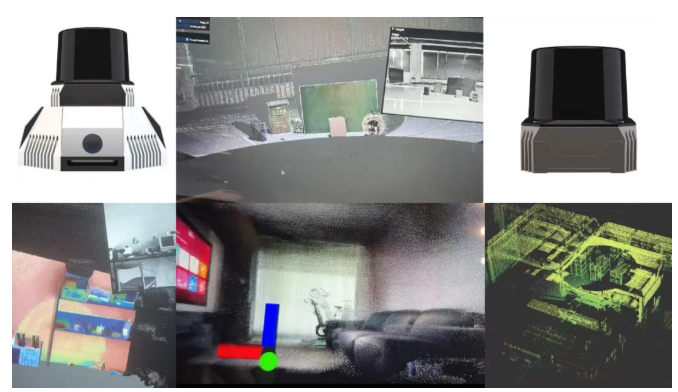
Chinese robotics startup Segen Intelligence has secured new funding as investors pivot from building complete humanoid robots to backing the critical upstream components that power them. The deal highlights a maturing market where venture capital is increasingly targeting core technology providers essential for the industry’s next phase of growth.
Segen Intelligence, a company specializing in perception systems for robots, announced the completion of its Pre-A funding round. The financing was led by Lingge Ventures, with participation from industrial investor Hengdian Capital and an oversubscribed commitment from existing shareholder Yuanqiao Capital.
The investment comes amid a sustained surge in China’s embodied intelligence sector, which recorded 195 financing deals in the first ten months of 2025. However, investor focus is shifting from full-stack robot developers to upstream suppliers of key components. As first-mover advantages in robot manufacturing become entrenched, the new frontier for investment is in specialized technologies like perception, which act as the “eyes” and “nervous system” for advanced robots.
Segen Intelligence plans to use the fresh capital to accelerate core technology iteration, expand its product lines, and scale commercial deployment. The company aims to solidify its technical lead in multi-modal spatial sensors and deepen the application of its products in the robotics sector.
Investment Focus Shifts Upstream
The investment landscape for embodied intelligence in China has evolved significantly throughout 2025. The initial wave of funding, largely seen as an extension of the boom in large language models, favored companies building complete robots. The logic was that rapid advances in AI models would be best demonstrated through robotics, justifying early-stage bets despite a lack of clear commercial applications.
However, as the year has progressed, leading robotics firms have established significant barriers to entry through accumulated capital, technical expertise, and supply chain control. This has made it difficult for new full-stack robot makers to emerge, pushing investors to look further up the value chain. The focus has moved to crucial components such as robotic joints, flexible materials, and advanced sensors. Exemplifying this trend, leading developer AgileRobots disclosed in August that its corporate venture capital arm was actively investing in upstream component startups.
A "Central Nervous System" for Robots
Segen Intelligence, founded in 2024, is positioned to address a core challenge in robotics: enabling machines to perceive and navigate the physical world efficiently and accurately. Current mainstream solutions either rely on stacking multiple independent sensors—a costly and complex integration process—or require robots to actively move to gain different perspectives, which is computationally intensive.
Segen is developing an integrated "multi-modal fusion + perception-decision" architecture that acts as a robot's "central nervous system." This system combines data from its self-developed 3D LiDAR and panoramic cameras with an onboard computing platform and specialized algorithms. The goal is to handle environment perception and basic behavioral decisions locally, reducing the computational load on the robot's main processor and enabling decision responses in milliseconds. The company's Octa series products are designed to provide this all-in-one perception solution, which is already in small-batch delivery to key clients.
Tsinghua Roots and Strategic Backing
Segen Intelligence’s team and its investors share strong ties to China’s top academic and industrial circles. Founder and CEO Fu Chen holds both a bachelor's degree and a Ph.D. from Tsinghua University and was previously a co-founder at Foryouopto, a leading company in the 2D LiDAR market. This background provides him with deep expertise in both the technology and commercialization of robotic perception.
The new investors bring strategic value beyond capital. Lead investor Lingge Ventures focuses on early-stage companies originating from top universities. Hengdian Capital, the investment arm of manufacturing conglomerate Hengdian Group, has a portfolio of companies in industrial automation and medical robotics that are potential end-users of Segen's technology. Meanwhile, the continued support from Yuanqiao Capital, which has a track record of backing successful component makers like SEER, underscores confidence in Segen's technology and progress. Yuanqiao has previously stated that core components represent a major opportunity, as robot costs need to fall by 60-80% to meet market expectations, creating significant room for technological