
Seres Bets on ByteDance to Recreate AITO's Success, Faces Investor Skepticism
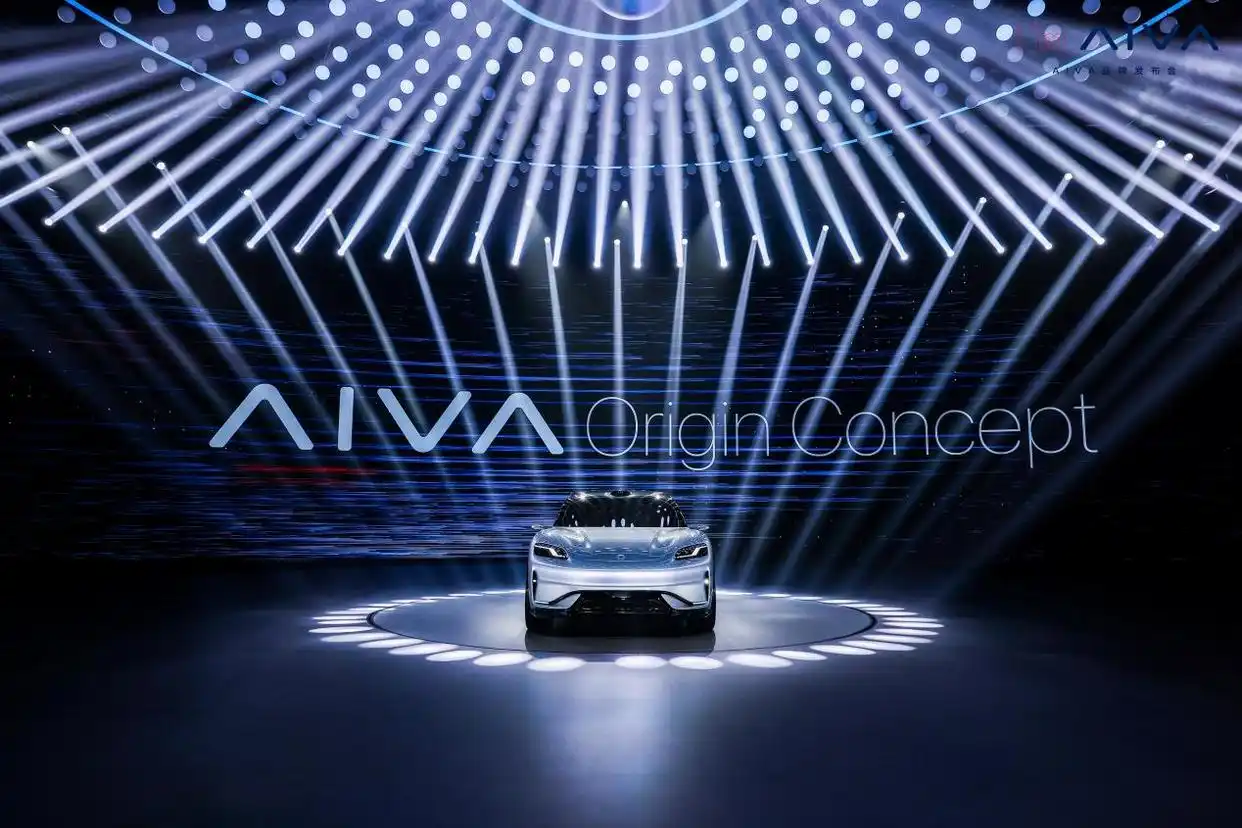
AIVA's RMB 6.6 billion launch signals Seres' most ambitious pivot away from Huawei dependency, yet the automaker's A-share stock has shed 40% year-to-date, exposing a structural profit trap that no AI rebrand can easily escape.
Chongqing-based Seres Group (601127.SH; 09927.HK) unveiled AIVA on June 9—a new AI-native automotive brand developed under its freshly restructured subsidiary Chongqing Saidou Technology—positioning the vehicle as a direct challenge to the "software-defined car" paradigm that Huawei helped it pioneer. The launch marks the most structurally significant strategic realignment in Seres' history: a deliberate attempt to build a second growth engine outside the Huawei Intelligent Selection ecosystem, this time anchored to ByteDance's Volcengine and its Doubao large language model.
Capital markets responded with skepticism. On June 10, Seres' A-shares closed at RMB 68.88, down 3.95% on the day. Since Saidou's corporate restructuring on May 29, the stock has declined a cumulative 14.6%. Zooming out further, the shares have lost roughly 40% since January 2026 and are now more than 60% below their intraday peak of RMB 173.55 reached on September 30, 2025—erasing over RMB 180 billion (approximately US$25 billion) in market capitalization from the company's near-RMB300 billion (US$41.7 billion) zenith.
ByteDance Mirrors Huawei's Playbook—Without the Equity Stake
The structural architecture of the AIVA partnership is deliberately engineered to replicate the AITO model, with ByteDance substituting for Huawei in the technology-provider role. Volcengine VP Yang Liwei confirmed at the June 9 launch that the collaboration extends beyond component supply: Volcengine will "jointly define, jointly design, and co-build the AI automotive experience," embedding Doubao's large model and intelligent cockpit capabilities from the product conception stage.
ByteDance, however, was quick to distance itself from any equity involvement. On June 6—three days before the launch—the company issued a formal statement denying any shareholding relationship with Saidou Technology and reiterating it has no plans to manufacture vehicles or launch an automotive brand. The clarification was necessary because market participants had conflated "Saidou" as a portmanteau of Seres and Doubao, triggering speculation that ByteDance had entered car manufacturing directly. The denial triggered a stock pullback that partially reversed an earlier excitement-driven rally.
The denial itself, industry analysts note, is structurally identical to Huawei's long-standing "we don't make cars" position—a posture that has not prevented Huawei from becoming one of the most commercially decisive forces in China's premium EV segment. ByteDance's Doubao LLM commands a monthly active user base of 345 million as of Q1 2026, ranking first domestically and second globally behind ChatGPT, according to QuestMobile data. Volcengine's ambition, as articulated by Yang, is to make Doubao as foundational to intelligent vehicles as Huawei's Qiankun smart-driving system has become to AITO.
Saidou's Ownership Structure Reveals Deliberate Financial Engineering
The corporate restructuring completed May 29 is as analytically significant as the brand launch itself. Saidou Technology—formerly Chongqing Blue Electric Technology—completed a recapitalization that reduced Seres' shareholding from 100% to 32.96%, deliberately keeping it below the one-third threshold that would require consolidated financial reporting. Shapingba Zhiyuan, a local-government-backed investment vehicle from Chongqing's Shapingba district, led the round with a RMB 3.43 billion (US$476 million) commitment to become the largest shareholder at approximately 34.5%.
Total funding raised exceeded RMB 6.6 billion (US$916.7 million), with Contemporary Amperex Technology(CATL) participating via its industrial investment arm Wending Investment, alongside auto-parts manufacturers Jiangsu Bojun Technology and Changzhou Xingyu. The investor syndicate effectively replicates the CHN (Changan-Huawei-CATL) supply-chain coalition that underpins Avatr—but with ByteDance's ecosystem replacing Huawei's.
The restructuring serves a dual purpose: it removes the financial drag of a chronically loss-making subsidiary—Blue Electric sold only 25,600 vehicles in 2025, generating no meaningful scale—while simultaneously constructing a ring-fenced vehicle for Seres' AI strategy that insulates the listed parent from direct R&D cost exposure.
Huawei Partnership Creates Value but Compresses Margins to a Structural Floor
The financial logic driving the AIVA pivot becomes transparent when Seres' 2025 and Q1 2026 results are disaggregated. AITO delivered 426,000 vehicles in 2025, generating RMB 165.05 billion (US$22.9 billion) in revenue at a gross margin of 28.76%, implying a net margin of approximately 3.6%.
The margin compression is largely traceable to hardware procurement costs. Market estimates, though unconfirmed by either party, suggest Seres pays Huawei's Yinwang subsidiary approximately RMB 52,400 per vehicle in hardware costs, with additional channel service fees flowing to the Hongmeng Zhixing distribution network. Seres disclosed RMB 22.335 billion (US$3.1 billion) in Huawei hardware procurement costs for 2025 alone.
Q1 2026 data sharpens the concern. Revenue grew 34.46% year-on-year to RMB 25.746 billion (US$3.6 billion), and gross margin held at 26.2%, while non-recurring net profit collapsed 73.87% to RMB 103 million (US$14.3 million). Most alarmingly, operating cash flow swung from a RMB 4.78 billion inflow in Q1 2025 to a RMB 20.95 billion (US$2.9 billion) outflow in Q1 2026—a deterioration that signals accelerating working-capital consumption as the company simultaneously funds AITO's competitive pricing and AIVA's launch costs.
Seres President He Liyang has publicly stated that R&D investment will not be constrained by near-term profitability targets. The company spent RMB 12.51 billion (US1.74 billion) on R&D in 2025, up 77.4% year-on-year and representing 7.58% of revenue. Q1 2026 R&D expenditure of RMB 12.51 billion (US$1.74 billion) maintained a 70.7% growth rate, with funds directed toward the Mofang 2.0 AI-driven platform, L4-level embodied intelligence, and robotics.
AIVA Targets the AI-Native Generation—But Faces Trademark and Competitive Headwinds
AIVA's first production model, the ME7, is scheduled for delivery before year-end 2026 at a price point above RMB 200,000 (US$27,800), targeting younger, tech-oriented consumers. The brand's conceptual framework—"AI first, car second"—positions the vehicle as a continuously evolving AI entity rather than a fixed hardware product, a narrative that resonates with 2026's designation by many industry observers as the inaugural year of "physical AI."
The brand's debut was not without friction. Avatr, the CHN-model premium EV brand backed by Changan Automobile, Huawei, and CATL, posted a thinly veiled warning on social media before the launch, noting that a new brand's visual identity bore strong resemblance to its own "AVATR" logo. Avatr's legal team subsequently issued a statement reserving the right to pursue action against unfair competition. Saidou Technology and AIVA have not publicly responded.
One hour after AIVA's launch, SAIC Motor's Roewe brand—which holds the distinction of being Volcengine's first "AI-native" automotive partner—posted a congratulatory message welcoming new entrants to the AI-native vehicle segment. Roewe's Jiayue series, co-developed with Volcengine and designed by former Rolls-Royce and BMW design director Jozef Kabaň, has already cleared China's Ministry of Industry and Information Technology production catalogue as an extended-range EV. The two brands are positioned to serve distinct demographics: Roewe targeting family buyers, AIVA targeting young urban professionals.
Leadership Continuity Signals Institutional Memory—and Strategic Continuity Risk
AIVA's executive team carries notable institutional weight. Chairman Zhang Zhengyuan is a nephew of Seres founder Zhang Xinghai and was a core architect of the original AITO partnership with Huawei, overseeing the SF5's channel rollout and the brand's zero-to-one phase. President and Chief Product Officer Li Bo previously served as Head of Products at Huawei's Intelligent Selection Vehicle unit before joining Seres in March 2024. The same team that built AITO's commercial success is now attempting to replicate it under a ByteDance ecosystem—a structural bet that the formula is transferable, not Huawei-specific.
The generational transition at the Seres parent is equally notable. Zhang Xinghai has stepped down as chairman of Seres Automobile, the listed entity's passenger-vehicle operating subsidiary, with his 36-year-old son Zhang Zhengping assuming the role. The simultaneous handover at both the parent and the new subsidiary suggests a deliberate succession strategy designed to align leadership incentives with the AI pivot.
Analyst Takeaway: The Profit Architecture Problem Persists
The central investor concern is not whether AIVA can sell cars—it is whether Seres can build a business model where incremental revenue translates into proportional profit. The AITO experience demonstrates that Seres can generate scale and gross margin, but that the value chain economics systematically favor technology and supply-chain partners over the OEM.
Car fans founder Sun Shaojun, quoted in Caijing magazine, frames Seres' current positioning as "ecosystem accommodator"—simultaneously serving Huawei through AITO and ByteDance through AIVA. The strategic logic is coherent: as a preferred hardware partner for ByteDance's automotive ambitions, Seres could theoretically negotiate better unit economics and priority access to Volcengine compute resources. But the structural leverage remains with the technology providers, not the assembler.
Until Seres demonstrates a credible path to capturing a larger share of the AI-defined vehicle's value stack—whether through proprietary software IP, data monetization, or reduced dependency on any single technology partner—the market is likely to price the stock as a high-revenue, low-margin contract manufacturer with an optionality premium on its AI narrative. That premium, as the 60%-plus decline from peak suggests, has already been substantially repriced.
Related Coverage:
SERES Rebrands Unit as Saido, Expanding ByteDance's AI Footprint in EVs