
SERES Rebrands Unit as Saido, Expanding ByteDance's AI Footprint in EVs
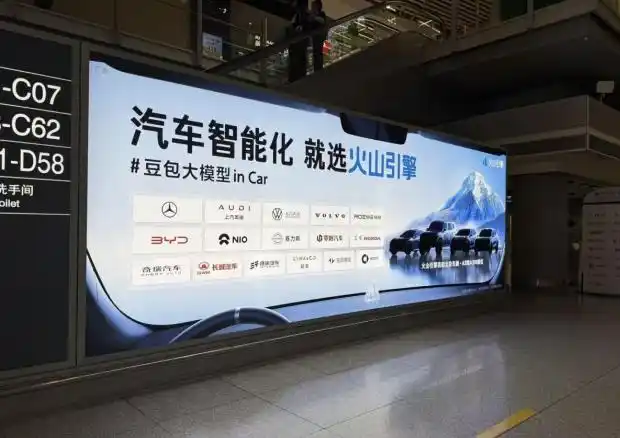
SERES Group has rebranded its Blue Electric Technology subsidiary as Saido Technology, signaling a structural deepening of its AI partnership with ByteDance that analysts say could surpass every existing tech-automaker integration model in China.
The renaming—officially announced by Chongqing's Shapingba District government on May 30—was preceded four days earlier by a RMB 6.67 billion (US$926 million) capital injection into the entity, reshuffling its ownership structure in ways that echo the architecture of another landmark Chinese EV alliance. The new majority shareholder is Shaci Zhiyuan, the new-energy vehicle investment vehicle of state-owned Shaxing Group, a Shapingba district capital platform. More strategically significant: CATL subsidiary Wending Investment acquired a 9.887% stake—a shareholding almost identical to CATL's roughly 9.878% position in Avatr Technology.
The parallel is not incidental. In the Avatr model, Huawei functions as a pure technology supplier—providing HarmonyOS cabin software, Qiankun ADAS, and DriveONE electric drive systems—while CATL anchors the venture as both battery supplier and equity stakeholder. ByteDance's Volcano Engine, per reporting by LatePost Auto, has not taken an equity position in Saido, mirroring Huawei's non-shareholding role at Avatr. The structural blueprint appears deliberate.
Volcano Engine Moves to Redefine What "Deep Integration" Means
ByteDance's automotive ambitions have been building since October 2025, when SERES subsidiary Chongqing Phoenix Technology signed an embodied intelligence framework agreement with Volcano Engine. SERES Group Vice President Kang Bo publicly described the scope as covering "end-to-end joint design of embodied intelligence."
What distinguishes the Saido partnership from ByteDance's existing automotive work is the stated depth of integration. Volcano Engine's collaboration with SAIC's Roewe on the "Jiayue" AI-native vehicle series—launched in April 2026—was itself positioned as a co-definition and co-development arrangement, with Doubao large language model serving as the unified cockpit interface. The Saido deal, according to LatePost Auto's sourcing, is explicitly designed to exceed that benchmark.
A source familiar with the matter told 36Kr in October 2025 that the Doubao model in the SERES context would handle voice and visual interaction simultaneously, with the model defining not just software behavior but sensor parameters and underlying compute architecture. That level of hardware-software co-design goes materially beyond what shipped on the third-generation Blue Electric E5 PLUS in December 2025—a vehicle that carried ByteDance's full content ecosystem (Douyin, Toutiao) and seven in-cabin AI agents, but represented an earlier, shallower integration layer.
Doubao's Hardware Expansion Traces a Deliberate Trajectory
The Saido venture fits within a recognizable ByteDance pattern of embedding Doubao into consumer hardware at the OS level. In December 2025, ByteDance launched a preview version of the Doubao Phone Assistant on the Nubia M153 handset, using GUI Agent technology to enable cross-application autonomous execution from a single user command. The product was explicitly experimental, and several apps subsequently restricted AI permissions for risk-control reasons—but it demonstrated ByteDance's intent to own the interaction layer of physical devices, not merely supply a cloud API.
The automotive context raises the stakes considerably. A vehicle presents a persistent, high-attention environment where an AI model that controls cabin functions, navigation, media, and communication can generate both engagement data and recurring service revenue—two metrics central to ByteDance's core business model.
One Structural Gap Could Undermine the AI-First Narrative
A critical constraint limits the Saido-Volcano Engine partnership's scope. Volcano Engine President Tan Dai has publicly stated the unit will not pursue intelligent driving projects. That carve-out means Doubao's integration will stop at the cockpit boundary.
The current Blue Electric E5 PLUS uses a Horizon Robotics J3 chipset for ADAS, with the system developed by UISEE Technology. If Saido's forthcoming model retains this stack, the vehicle will present two distinct AI layers—Doubao controlling the cabin, a separate ADAS supplier controlling the driving domain—with no unified model orchestrating both. For a vehicle whose commercial proposition rests on AI differentiation, that fragmentation poses a product marketing challenge that SERES will need to address before launch.
SERES Seeks Strategic Autonomy It Never Had With Huawei
The Saido restructuring carries a dimension that goes beyond technology selection. SERES built its commercial relevance almost entirely through the AITO brand, where Huawei effectively controlled product definition, R&D direction, marketing, and channel strategy—leaving SERES in a manufacturing role with limited brand equity of its own. Blue Electric, SERES's self-directed brand, never broke out of the sub-RMB 100,000 price segment and generated negligible market presence.
The Saido entity—with Chongqing state capital as majority shareholder, CATL as a minority equity partner, and ByteDance as a technology-only collaborator—gives SERES a structure in which it retains meaningful operational control. The "soul" of the brand, as the original Chinese reporting frames it, would remain at least partly in SERES's hands. Whether the forthcoming vehicle, expected to be announced this month, can translate that structural autonomy into commercial traction will determine whether the Saido bet ranks alongside AITO as a defining strategic move for the Chongqing automaker.
Related Coverage:
Huawei-Backed Seres Unveils Sportier Aito M6 SUV to Challenge Xiaomi's YU7