
Shanghai's Humanoid Robot Makers Chart Divergent Paths to Commercial Viability
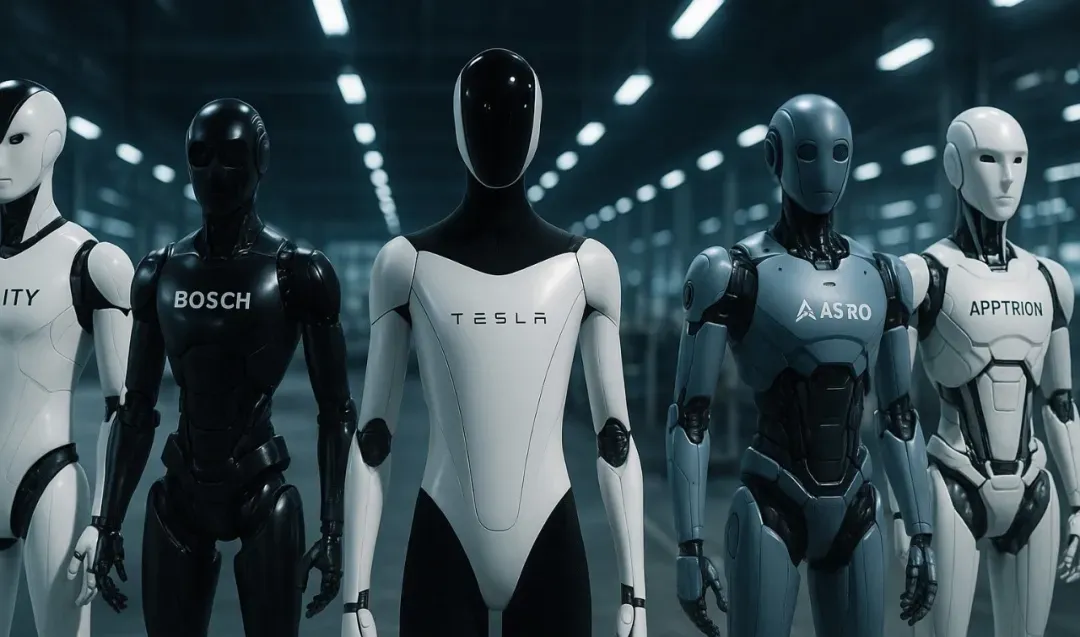
Shanghai's humanoid robot sector is navigating a critical inflection point as three leading companies pursue distinct commercialization strategies, shifting industry focus from speculative hype to tangible value creation in limited scenarios. The divergence reflects a broader maturation across China's robotics industry, where survival now depends on proving commercial viability before capital markets lose patience.
Agibot, Kepler Robotics, and Pudu Robotics' Qinglang Intelligence represent three archetypal approaches emerging from the sector's second-phase field research conducted in 2025. While Agibot pursues full-stack vertical integration, Kepler prioritizes industrial-grade hardware performance, and Qinglang leverages existing service robot deployments to build data moats. All three companies demonstrate cautious optimism about near-term deployment while maintaining long-term conviction, marking a departure from the technology-first mentality observed in earlier industry surveys in Beijing and Hangzhou.
The Shanghai cohort's emphasis on closed-loop business models distinguishes it from peers in other tech hubs, signaling that commercial validation in real-world environments has become the primary competitive battleground. Industry observers note that the threshold for commercial breakthrough is becoming visible, though significant technical and economic hurdles remain.
Agibot's Vertical Integration Play
Agibot has emerged as a proponent of comprehensive vertical integration, combining what it terms "cerebellum plus brain" architecture—deep fusion of hardware platforms with intelligent algorithms. The company has invested in or established joint ventures with core component suppliers, developing proprietary motors, reducers, and drivers to control costs and quality amid immature supply chains.
The strategy extends to software, where Agibot develops foundation models and world models to enhance intelligence capabilities. This holistic approach contrasts with the single-point breakthroughs common among competitors, reflecting Agibot's emphasis on system-level integration.
Agibot's product portfolio spans full-size humanoids, wheeled robots, half-size units, and quadrupeds, covering applications from industrial to consumer segments. The company frames this broad coverage as strategic design based on a "data-model-platform-scenario" flywheel effect, where multi-scenario deployments generate real-world data that feeds back into model optimization.
The commercialization roadmap prioritizes scenarios by maturity: reception and guidance services, industrial manufacturing, and entertainment/commercial applications. The Elf series targets industrial logistics and has secured orders worth hundreds of millions of yuan; the Expedition series focuses on commercial services, deployed at China Mobile and State Grid outlets for navigation tasks; while the Lingxi series explores entertainment and elderly care sectors.
Agibot announced in December 2025 that it had produced its 5,000th general-purpose embodied robot, a milestone with significant industry benchmark value. The company has set a target of shipping 10,000 units in 2026, having already achieved "thousand-unit scale" shipments across product lines.
Kepler's Industrial Hardware Focus
Kepler Robotics embodies extreme pragmatism through exclusive focus on industrial B2B scenarios, using hardware performance as its breakthrough point. The company positions its products as "blue-collar" robots designed to replace repetitive, high-intensity labor.
The K2 humanoid's hardware specifications stand out: 15-kilogram single-arm payload, 25-30 kilogram dual-arm capacity, and linear actuator solutions achieving 81% energy conversion efficiency—far exceeding the industry average of 40-50%. This high efficiency keeps joints nearly heat-free, enabling high-intensity operations.
Kepler has developed integrated software-hardware capabilities, independently creating planetary roller screw actuators and dexterous hands among core components. Combined with proprietary control algorithms, the system achieves eight-hour continuous operation. Rather than awaiting general-purpose large models, Kepler trains specialized small models through reinforcement learning and imitation learning to quickly address specific tasks like handling and loading.
The company acknowledges software models as its biggest bottleneck, with current success rates around 70%—well below the 99.99% industrial standard. Kepler's self-developed operating system supports secondary development to build an open ecosystem, though current focus remains on deep partnerships with leading customers.
The K2 Bumblebee has entered mass production with thousands of units ordered. Kepler predicts partial replacement in simple scenarios by end-2026, but complete substitution requires three to five years. The company attributes survival to "either strong technical barriers or vertical depth," emphasizing industry cooperation over internal competition.
Qinglang's Service Sector Data Advantage
Qinglang Intelligence brings a veteran service robotics perspective to the humanoid sector. As the global leader in service robot shipments with overseas revenue exceeding half of total sales, the company maintains that general-purpose and specialized robots will coexist rather than compete—humanoids extend general capabilities without replacing specialized units.
The company's core logic centers on a "job-based pathway"—accumulating "skill" capabilities through specialized roles like making popcorn, assembling burgers, or greeting customers, then gradually generalizing toward universal competence. This approach focuses on service industries where flexibility requirements are high, labor shortages acute, and multi-task capabilities essential.
Qinglang operates two humanoid models: wheeled-base and bipedal configurations. The wheeled version serves as the primary product, emphasizing efficiency and safety, while bipedal units target complex terrain applications.
A key differentiator is scenario data: Qinglang's network of 100,000 deployed robots generates navigation and interaction data in irregular environments that transfers directly to humanoid training, addressing portions of data requirements. The company avoids pure cash-burn model training, instead iterating continuously through job-based product deployments—analogous to Tesla accumulating autonomous driving data through vehicle sales.
Commercial targets align with service sector ROI sensitivity: robot costs must not exceed two years of position-specific labor costs while completing 0.5 person-equivalent workload. Qinglang has secured preliminary orders and plans deep partnerships with industry leaders to validate scenario value.
Divergent Strategies, Shared Challenges
Despite varied approaches, all three companies point toward a common trend: commercialization discussions have shifted from "whether possible" to "how quickly." Agibot's full-stack model attempts to integrate the technology chain, Kepler's industrial depth pursues stable output, and Qinglang's service sector progression leverages data accumulation—representing ecosystem, vertical, and scale approaches to market entry.
Compared to earlier research phases, Beijing emphasized technical route divergence reflecting early-stage exploration diversity, while Hangzhou highlighted hardware-first versus model-driven philosophical splits. Shanghai's cohort stresses landing feasibility, with universal recognition that regardless of technical sophistication, failure to create measurable scenario value ensures market rejection.
The practices demonstrate that near-term breakthroughs depend on scenario depth rather than technical breadth, while long-term success hinges on data accumulation and systematic iteration capabilities. Industry participants face three critical challenges: intelligence-level bottlenecks requiring software-hardware coordination; cost-ROI balance demanding supply chain maturation and scale economies; and scenario generalization ability progressing from single-point validation to system integration.
The transition from fervor to rationality, from isolated technologies to systems thinking, reflects not merely individual corporate struggles but collective industry evolution approaching a commercial tipping point.