
Shenzhen E-Bike Maker Heybike Hits $100 Million in Revenue Without Venture Funding
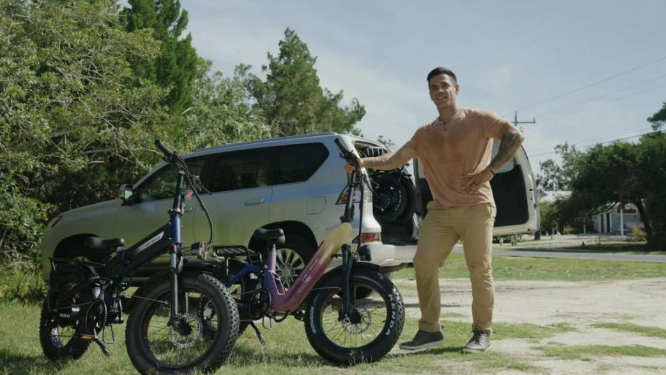
A Shenzhen-based electric bicycle company has carved out a profitable niche in the competitive North American market by defying the venture capital playbook. Heybike has reached annual revenue exceeding $100 million and sales of 200,000 units while maintaining profitability since its first year—without taking any external funding.
The company's approach contrasts sharply with competitors that have raised hundreds of millions from investors like Sequoia and Hillhouse Capital. While rivals expanded aggressively across product lines and geographies, Heybike concentrated on two specific use cases: urban commuting and light outdoor recreation, targeting a $1,000 price point largely overlooked by the market.
"We want to use our own capital to control the pace and invest more resources in R&D and quality control," said Fang Huimin, founder and CEO of Heybike. The company has accumulated over 170,000 users globally since its 2021 launch, focusing primarily on North America, which accounts for roughly 70% of revenue.
The strategy has enabled Heybike to weather the sector's recent consolidation, which has seen several well-funded competitors struggle as the e-bike market transitions from explosive growth to maturity. The company now plans to expand into premium segments with models priced at 4,000−4,000−5,000 while maintaining its core positioning.
Targeting the Market's Missing Middle
Heybike's founders entered the electric mobility sector in 2014, initially focusing on electric scooters for domestic and overseas markets. When they pivoted to e-bikes in 2021, the industry was experiencing an investment boom, with startups like Urtopia, Velotric, and international players such as VanMoof and Rad Power Bikes raising substantial venture rounds.
However, the founders identified a gap in the market structure. Amazon's e-bike offerings clustered at two extremes: budget models priced at 600−600−700 and premium off-road bikes starting at 1,500−1,500−2,000. "There was a demand gap in between," Fang told 36Kr, a Chinese technology media outlet.
The company launched two initial models priced around $1,000—one aimed at urban commuters and female riders, and a foldable fat-tire bike suited for weekend recreation. These products avoided direct competition with established brands like Giant and Merida, which operate primarily through dealer networks, and differentiated from high-performance brands targeting serious enthusiasts.
Within two to three months of launching on Amazon and its direct-to-consumer website, both models entered the top ten in their categories. Following Black Friday promotions in their debut year, they secured positions in the top three. A single model surpassed 10,000 units sold within six months.
The company's core customer base differs from typical e-bike marketing targets. Rather than focusing on young urban professionals, Heybike attracted female riders and consumers over 50 seeking outdoor recreation—a demographic with purchasing power and strong preferences for comfort and safety.
Distribution and Geographic Strategy
Heybike adopted a dual-channel approach, selling through its own website and Amazon while gradually expanding to physical retail. The company has become one of the first Chinese e-bike brands carried by Best Buy stores in the United States.
Geographic markets show distinct product preferences. North American customers favor outdoor-oriented models with throttle-only operation and speeds exceeding 30 miles per hour. European regulations require pedal-assist systems, driving demand for commuter-focused designs. In Japan, where Heybike has also entered, compact folding models suit local preferences for space-efficient storage.
The company has deliberately avoided rushing into emerging markets in Southeast Asia or Latin America. Instead, it spent two years studying user requirements before developing region-specific models. Li Yifan, Heybike's co-founder and COO, emphasized this measured approach: "We hope to maintain our own pace rather than being swept up by external market changes."
Technology Focus on Practical Features
Heybike directs its annual R&D budget of several million dollars toward battery systems, motors, and IoT connectivity rather than pursuing maximum performance specifications. "We don't want technology to become a self-indulgent tool, but to genuinely serve users' daily needs," Li said.
In 2022, the company introduced e-bikes with built-in 4G modules to the North American market, prioritizing GPS tracking, remote locking, and keyless smartphone unlocking. "We found that many users worried about such expensive bikes being stolen when parked outdoors—this was a real anxiety they had," Li explained.
The company's motor development emphasizes smooth acceleration, low-speed torque, and noise reduction rather than peak power output—attributes particularly valued by its core demographics of female and older riders. Future plans include AI-driven algorithms for personalized riding mode recommendations, battery health alerts, and adaptive pedal assistance based on terrain.
Expansion Plans Without External Capital
The North American e-bike market remains underpenetrated at roughly 5% adoption compared to 25-30% in Europe, according to Fang. As consumer understanding evolves from "first commuter bike" to "specialized sports equipment," Heybike is developing a high-end line targeting professional and extreme sports users.
The premium models under development will carry price tags of 4,000−4,000−5,000, positioned for long-distance off-road riding. "Just as the automotive market differentiates into sports cars and SUVs, e-bike users' needs are diversifying," Fang said. A modular platform approach will allow the company to maintain cost advantages in its core product range while competing in premium categories.
The company aims to become the market share leader in North America within three to five years while exploring entry into South Korea and Singapore. For these newer markets, Heybike plans to test demand through crowdfunding campaigns and retail partnerships rather than immediate large-scale operations.
Despite its growth trajectory, the company maintains it has no immediate plans to seek venture funding, continuing to rely on operating cash flow to finance expansion. This self-funded approach has become increasingly unusual in a sector where competitors have collectively raised hundreds of millions in venture capital over the past four years.