
Shenzhen’s ‘DJI Alumni’ Drive AI Hardware Investment Boom
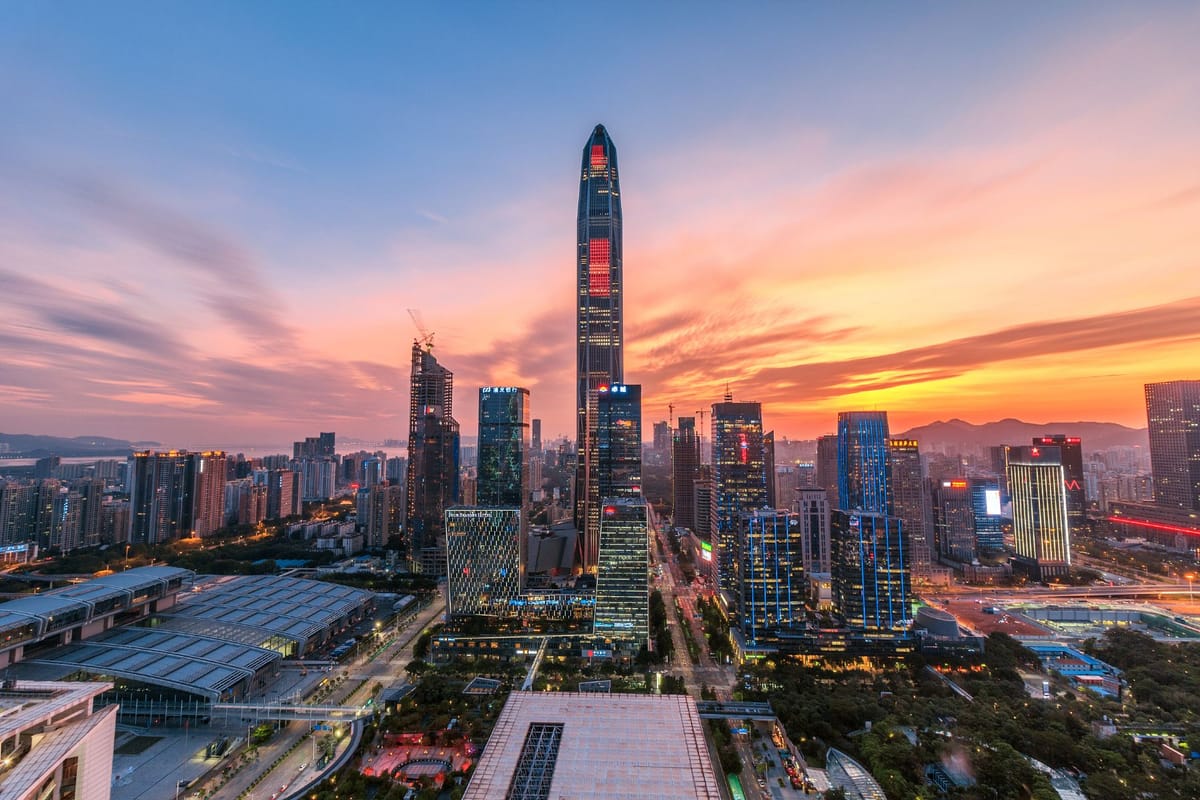
Venture capital interest has surged in Shenzhen’s hardware sector in 2025, driven by a wave of startups founded by former employees of drone giant DJI. The area surrounding DJI’s headquarters has become a focal point for investors seeking the next unicorn in artificial intelligence and robotics, creating a localized hub of innovation comparable to a hardware-focused Silicon Valley.
Investment firms are aggressively recruiting staff based in Shenzhen to target AI hardware opportunities, with many meetings now taking place in cafes within a 10-kilometer radius of DJI’s "Sky City" headquarters. This trend stems from a "fear of missing out" (FOMO) regarding ventures led by technical experts departing from the drone maker, whose startups are commanding valuation premiums due to their engineering pedigree and the proven track record of previous DJI spinoffs.
The frenzy has catalyzed a funding spree for companies specializing in robotics, 3D printing, and smart devices, attracting capital from top-tier firms including HongShan (formerly Sequoia China) and strategic investments from social media platform Xiaohongshu. This capital inflow reinforces Shenzhen’s status as a global manufacturing hub, leveraging its dense supply chain to accelerate product development from design to mass production.
Key industry players note that the localized ecosystem allows for rapid iteration, prompting major venture capital funds to relocate operations or hold annual summits in the city to stay close to the innovation source. As AI integration revitalizes the hardware sector, the movement of talent and capital highlights Shenzhen's pivotal role in the global supply chain.
The DJI Effect
The proliferation of startups founded by former engineers from DJI Technology has created a distinct "DJI clique" that investors are eager to back. Known for a strong engineer culture, these founders often set up operations in close proximity to their former employer. Recent analysis of the local investment map reveals that LiberLive, founded by former DJI engineer Tang Wenxuan, operates just 300 meters from DJI, while EcoFlow, established by former battery R&D head Wang Lei, is located 400 meters away.
The success of these ventures has established a template for high-growth hardware companies. A prime example is Bambu Lab, founded by a team of five former DJI employees led by Tao Ye. The company has seen its valuation skyrocket in the 3D printing sector, a market previously considered niche by investors in 2022. This trajectory has solidified the reputation of DJI as a "Whampoa Military Academy" for hardware entrepreneurs through the eyes of VCs, who now believe that founders from this lineage command significantly higher valuations based solely on their background.
Other notable ventures include AgileX Robotics, founded by former executive Wei Jidong, which recently secured RMB 100 million yuan (US$13.8 million) in funding from investors including HongShan and 5Y Capital. The trend has reinforced the consensus that technical talent leaving DJI tends to remain in the local ecosystem, fostering a concentrated hub of hardware innovation.
Capital Influx and Market Activity
The resurgence of the hardware sector, now powered by artificial intelligence, has triggered a wave of financing in 2025. Beyond the "DJI alumni" circle, the broader market is active. Haivivi, a companion robot company, recently completed a Series A funding round worth RMB 200 million yuan (US$27.7 million). Furthermore, newly established companies such as MiaoDong Technology, Diamon Robot, and Qiduo Smart have quickly secured early-stage capital from major institutions like Matrix Partners and Shunwei Capital.
A significant new entrant in this space is the investment arm of Xiaohongshu. The lifestyle platform has aggressively backed Shenzhen hardware startups this year, including Skyris, Cloud Wang Innovation, and Dream Horse Innovation. While Xiaohongshu recently established its Shenzhen headquarters near Tencent, its investment strategy closely tracks the hardware boom centered in the Nanshan district.
This shift in capital allocation is influencing operational decisions for investment firms. Several major VCs, including Source Code Capital and Linear Capital, have moved their annual meetings to Shenzhen, signaling a long-term commitment to the region. Investors who previously focused on the Yangtze River Delta are relocating to Shenzhen to capitalize on the "AI + Hardware" trend, citing the necessity of being close to the supply chain and export channels.
Supply Chain Dominance
Shenzhen’s enduring appeal lies in its unmatched supply chain capabilities, often described as an ecosystem competition rather than individual corporate rivalry. In the Nanshan district, known as "Robot Valley," industry data indicates that a robot can go from design to mass production within a 10-kilometer radius. The localization rate for the humanoid robot supply chain has exceeded 60%, with domestic production rates for leading enterprises surpassing 90%.
The efficiency of this ecosystem is exemplified in the 3D printing sector, where a complete industrial chain allows for the assembly of a printer every two minutes. This infrastructure enables rapid prototyping, where design drawings can be converted into physical samples on the production line within hours. Such speed was a decisive factor for companies like Insta360, which relocated from Nanjing to Shenzhen to leverage these resources, eventually leading to a successful IPO.
Global recognition of this manufacturing prowess continues to grow. Over 70% of the Chinese products listed in Time magazine’s "Best Inventions of 2025" originated from Shenzhen, spanning categories from AR glasses to robotics. This highlights the city's evolution from a manufacturing base to a global innovation center, where a new generation of founders with global perspectives creates products designed for international markets from day one.