
SoftBank-Backed Agritech Firm XAG Revives IPO Plan With Hong Kong Filing
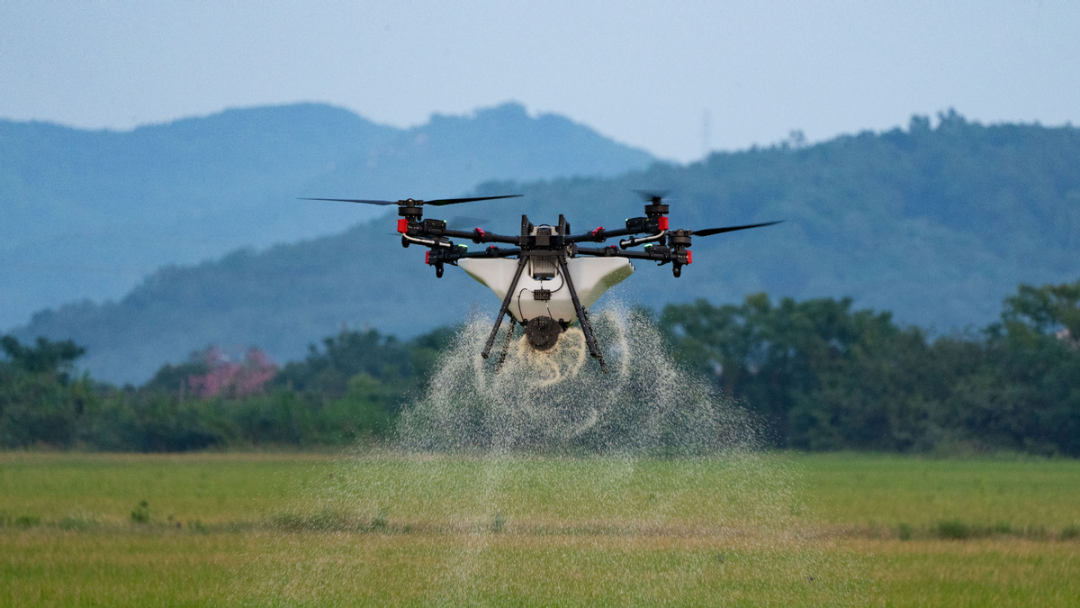
Chinese agricultural technology firm Guangzhou XAG Technology, a primary competitor to industry leader DJI, has filed for an initial public offering in Hong Kong, reviving its listing ambitions after a prior attempt in mainland China.
The filing with the Hong Kong Stock Exchange signals a renewed push for public capital by the SoftBank-backed company, which specializes in agricultural drones and robots. In 2021, XAG sought to list on Shanghai's STAR Market but withdrew its application in May 2022, citing strategic adjustments.
The move comes as XAG's financial performance shows a significant turnaround. The company achieved profitability in 2024 with a net profit of 70.4 million yuan. This momentum continued into 2025, with net profit for the first six months surging 49.1% year-on-year to 130 million yuan.
XAG is a major player in the nascent agritech sector, ranking second globally in both the agricultural robot and agricultural drone markets as of 2024, according to Frost & Sullivan data. The company's IPO is poised to test investor appetite for a high-tech solution to the challenges of an aging agricultural workforce and the need for increased farming efficiency.
From Tech Labs to Farmland
Founded in 2007 by Peng Bin, a Ph.D. holder and former Microsoft "Most Valuable Professional," XAG initially operated in the consumer drone space, similar to its rival SZ DJI Technology. The company's trajectory shifted decisively in 2013 after a trip to Xinjiang, where Peng identified a critical need for efficient crop-dusting in vast cotton fields.
This realization prompted XAG to pivot entirely to agriculture, a move initially met with skepticism from investors who questioned the profitability of applying high-tech solutions to traditional farming. Peng, however, argued that an aging farmer demographic—with an average age of 60 in rural China—and terrain unsuitable for ground machinery created a perfect use case for automated, aerial technology.
The conviction paid off, attracting prominent venture capital. "Early-stage investors focused on the technology's disruptive potential, while later-stage investors saw its ability to transform social structures and business models," Peng said in a previous interview.
Evolving the Business Model
XAG's path to market involved a significant business model evolution. The company's first-generation crop-spraying drones, launched in 2016, were too expensive for individual farmers to purchase. In response, XAG built its own service team of over 400 people, charging farmers a per-acre fee for spraying services.
By 2017, as the technology matured and costs decreased, a new ecosystem of third-party drone operators and agricultural supply distributors emerged. Recognizing this shift, XAG pivoted again, largely discontinuing its direct services to focus on selling hardware to these professional users. "We don't do what users can do themselves; we only do what they can't," Peng said of the transition. The strategy proved successful, with equipment sales surpassing 100 million yuan in the first year.
Today, XAG's product ecosystem includes agricultural drones, unmanned ground vehicles, auto-steering systems for tractors, and IoT devices for smart farm management. Its technology has served 8.72 million farmers across 600 million acres of farmland.
A Financial Turnaround
Agricultural drones remain XAG's main revenue driver, accounting for 89% of total sales in the first half of 2025. These devices, equipped with centimeter-level RTK positioning, can autonomously spray crops, spread seeds, and transport materials, drastically improving efficiency. According to its prospectus, XAG drones can reduce a 1,000-acre spraying job from 5-10 days with 10-20 workers to 1-2 days with 1-2 operators, while cutting pesticide use by 20-30% and water by 90%.
This product-focused strategy has fueled a financial turnaround. After posting net losses of 254 million yuan and 133 million yuan in 2022 and 2023, respectively, the company swung to a 70.4 million yuan net profit in 2024.
Revenue grew from 614 million yuan in 2023 to 1.07 billion yuan in 2024. For the first six months of 2025, revenue reached 745 million yuan. Gross margins have steadily improved, rising from 18.9% in 2023 to 31.9% in 2024, and reaching 34.3% in the first half of 2025. While China remains its largest market, overseas revenue is expanding rapidly, with a compound annual growth rate of 59.4% between 2022 and 2024.
Competition and High-Profile Backers
XAG operates in a market dominated by DJI. In China, the world's largest single market for agricultural drones, DJI held a 63.9% market share by revenue in 2024, while XAG held 20.8%, according to the prospectus. Globally, XAG's market share stood at 17.1% for agricultural drones and 10.7% for agricultural robots in 2024.
The company is supported by a roster of high-profile investors. In late 2020, it raised 1.2 billion yuan (approximately US$169 million) from investors including Baidu Capital, SoftBank Vision Fund, and Sinovation Ventures. This was followed by a further investment of over 300 million yuan from Hillhouse Capital in 2021.
Following its STAR Market withdrawal, XAG secured additional funding in 2023 from Sinovation Ventures and new investor China Unicom Capital. Based on a share transfer in July 2025, the company's valuation is estimated at around 4.6 billion yuan.
Ahead of the IPO, founder Peng Bin is the controlling shareholder with a 42.96% stake. SoftBank Vision Fund is the largest external shareholder with 12.86%, followed by Baidu Capital (6.12%), Hillhouse Capital (4.98%), and Sinovation Ventures (4.3%). The proceeds from the IPO are intended for R&D, global sales network expansion, and working capital.