
Tech Giants Wager on AI Glasses in Race for Next 'Super Hardware'
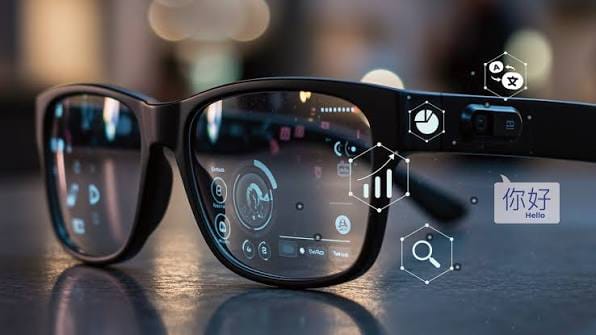
Major technology companies from Meta to Xiaomi are ramping up investment in artificial intelligence-powered glasses, betting that the head-worn devices can evolve into the next indispensable "super hardware." However, significant hurdles in battery life, user comfort, and the lack of a "killer app" raise questions about whether the burgeoning category can achieve mass adoption or will be confined to a niche market.
The push has intensified in 2025, a year dubbed the "battle of a hundred glasses," with nearly 20 brands including Huawei Technologies Co., Baidu, Inc., and Google launching new products in the first half alone. These devices are gaining traction among early adopters, who use them for hands-free photography during travel, real-time translation, and accessing information on the go.
The market is showing signs of rapid expansion. Research firm IDC forecasts that smart glasses shipments in China are expected to reach 2.91 million units in 2025, a year-over-year increase of 121.1%. This growth reflects a broader industry belief that glasses could become a primary interface for human-computer interaction in the AI era.
Despite the renewed optimism, the core challenge remains: proving that AI glasses can offer more than just supplementary functions to a smartphone. To avoid the fate of previously hyped gadgets that faded into obscurity, manufacturers must convince consumers that these devices are essential tools, not just high-tech toys.
Early Adopters Embrace Hands-Free Convenience
For the current user base, the primary appeal of AI glasses lies in their ability to free up their hands. Photography has emerged as the most popular feature, particularly for outdoor enthusiasts who want to capture fleeting moments without fumbling for a phone. One user noted the convenience of recording a passing sunset while cycling, valuing the ability to "capture a moment" over pristine image quality.
Beyond photography, voice interaction for tasks like managing diet plans is also gaining favor. A user of glasses from Thunderbird Innovation described asking the device for meal suggestions based on his daily carbohydrate and protein targets, and using it to estimate the calorie count of his food.
In an unexpected development, AI glasses are also finding a dedicated audience among visually impaired individuals. Features like Meta's "Be My Eyes" use AI to provide detailed audio descriptions of the user's surroundings, helping them navigate and identify objects. While users have praised this functionality, they have also requested further enhancements, such as optical character recognition (OCR) for reading text.
Hardware Hurdles: Battery and Comfort Remain Key Concerns
Despite their growing appeal, AI glasses are plagued by fundamental hardware limitations that hinder a seamless user experience. As with other head-worn devices, manufacturers face a difficult trade-off between comfort and battery life.
To keep the glasses lightweight, current models compromise on power. While devices like the second-generation Ray-Ban Meta can last 8-9 hours on standby, continuous use for audio playback or video recording slashes that time to as little as 40 minutes to three hours.
Ergonomics present another significant challenge. The "one-size-fits-all" approach, typically featuring thick frames to accommodate internal components, fails to suit all face shapes and nose types, leading to complaints of pressure, slippage, and general discomfort. Users have also reported a range of technical glitches, including lost video files, voice assistant failures, and sound leakage, indicating the technology is still maturing.
Echoes of Google Glass, A Renewed Ecosystem Push
The current wave of AI glasses is not the industry's first attempt at this form factor. Thirteen years ago, Google Glass generated immense excitement but ultimately failed to gain traction, largely due to its high price tag of around $1,500 and an uncomfortable single-eye display that caused dizziness for many users.
Today, crucial technological advancements and falling costs have made the proposition more commercially viable. The cost of key components like Micro-OLED displays has dropped significantly, with some estimates suggesting a 35% reduction since 2023. This has allowed new products to enter the market at more accessible price points, lowering the barrier to entry for curious consumers.
Beyond cost, the strategic imperative to secure an "ecological niche" is driving the investment boom. In the AI era, hardware is increasingly seen as a gateway to an entire ecosystem of software and services. Hardware-focused companies like Xiaomi Corp. and Huawei view AI glasses as a potential interaction hub for their "human-car-home" strategies. Meanwhile, software giants like Alibaba Group Holding and ByteDance see the devices as a new frontier for their payment and short-video platforms.
The Billion-Dollar Question: Smartphone Killer or Niche Gadget?
As the industry places its bets, the ultimate question is whether AI glasses can transition from a smartphone accessory to a truly standalone "super hardware." The trajectory of extended reality (XR) headsets offers a cautionary tale, as they have struggled to move beyond niche applications like gaming and media consumption due to their bulk and limited battery life.
AI glasses face a similar dilemma. Currently, they primarily add a device to a user's collection rather than replacing an existing one, a concept known as "de-physicalization," where a single product integrates the functions of many. To achieve long-term relevance, AI glasses must either integrate more deeply with smartphones or evolve to replace some of their core functions.
Some companies are already tackling this challenge. Meta's latest models are designed to increase "usage density" by enabling users to scroll through Instagram and interact using a muscle-sensing wristband. However, breaking down the "walled gardens" of competing ecosystems remains a major obstacle. As long as AI glasses serve mainly as a peripheral, they risk the fate of devices like the Kindle—once a celebrated innovation, now relegated by many to a secondary role.