
Tariff Walls Force Chinese Automakers to Pivot From Export to Global Manufacturing
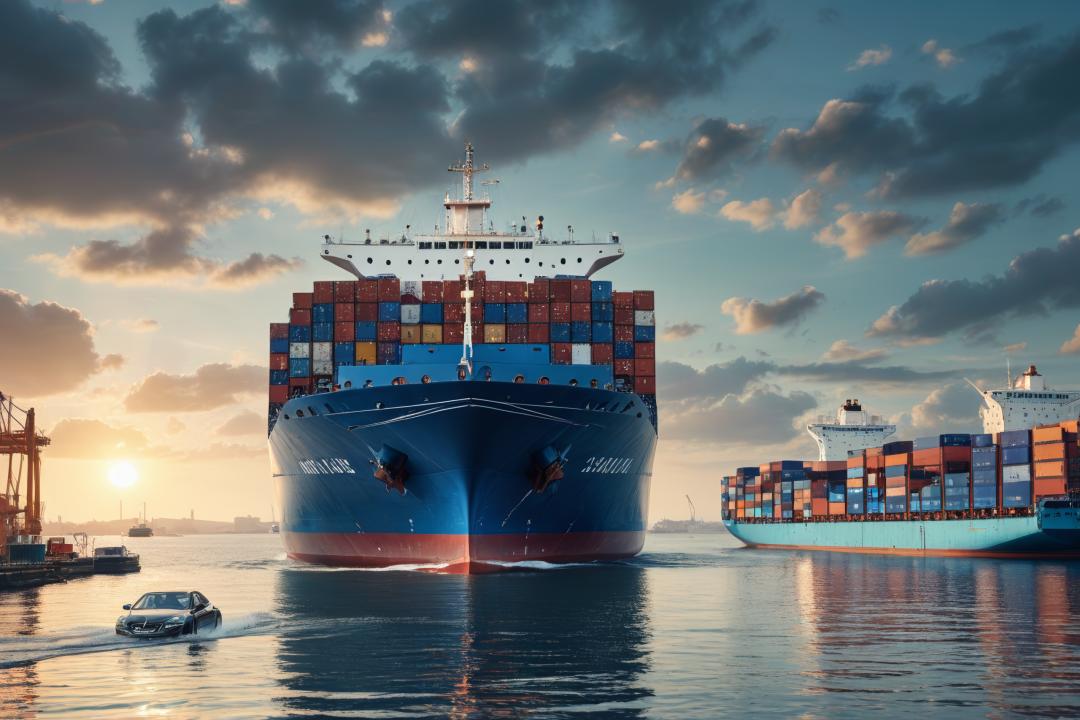
In the first five months of 2026, China exported a record 4.25 million vehicles, yet this headline figure masks a critical structural pivot: the era of pure export-driven growth is ending as Chinese automakers aggressively transition to localized global manufacturing.
Facing a 125% tariff wall in the US and the European Union’s impending Industrial Accelerator Act, Chinese original equipment manufacturers (OEMs) are fundamentally restructuring their capital expenditure. The strategy is bifurcating to mitigate geopolitical risks: securing heavy-asset greenfield and brownfield production sites in Europe, while utilizing joint ventures and regional proxies to navigate North American trade barriers.
This localized capital allocation is already reshaping the global supply chain landscape. Following a record 8.32 million unit export volume in 2025—a 150% surge from 2022—investors are now pricing in the execution risks of overseas factory integration, labor management, and localized procurement. The market focus has shifted from raw export volume to the sustainability of regional market share retention under tightening regulatory regimes.
Brownfield Acquisitions Accelerate European Localization
The urgency to establish European manufacturing footprints is driven by a stark imbalance: while SAIC Motor, BYD, and Chery Automobile registered 617,600 passenger vehicles in Western and Central Europe in 2025—a 24-fold increase from 2020—99.3% of these vehicles were imported from China, according to S&P Global Mobility data.
To bypass EU extra tariffs and qualify for local policy incentives, Chinese OEMs are increasingly favoring brownfield investments over greenfield projects to optimize CapEx and accelerate time-to-market. While BYD advances its greenfield facility in Szeged, Hungary, and SAIC evaluates five European sites including Spain, the broader industry is absorbing legacy European auto capacity.
Leapmotor is leveraging its partnership with Stellantis NV to produce vehicles at the Zaragoza plant in Spain. Similarly, Dongfeng Motor Group has signed a memorandum of understanding with Stellantis to manufacture its premium Voyah brand in Rennes, France. Capitalizing on restructuring by Western legacy automakers, Geely is reportedly targeting Ford’s Valencia plant, while Chery is negotiating for Nissan’s Sunderland capacity. These asset acquisitions transfer idle European industrial capacity into Chinese supply chains, establishing a localized defense against trade barriers.
USMCA Loopholes Drive North American Joint Ventures
In North America, where Chinese EVs face effectively prohibitive tariffs and severe software restrictions, frontal market entry is blocked. Despite manufacturing nearly 75% of global EVs and exporting over 2.5 million EVs in 2025, the US remains the only major market devoid of direct Chinese imports. Consequently, Chinese firms are deploying proxy strategies via technology licensing and US-Mexico-Canada Agreement (USMCA) loopholes.
The strategy relies heavily on "borrowing" established manufacturing infrastructure. Geely utilizes its Volvo subsidiary's South Carolina plant for EV production, while its Zeekr brand supplies Alphabet’s Waymo autonomous fleet. General Motors Co. has insulated its supply chain by licensing battery technology from Contemporary Amperex Technology (CATL) and plans internal combustion engine vehicle production in Mexico with SAIC-GM-Wuling.
Mexico and Canada have emerged as critical springboards. Chinese brands now command a 25% market share in Mexico, where Guangzhou Automobile Group plans to initiate local assembly this year. Meanwhile, Canada’s regulatory framework, which permits up to 49,000 Chinese EVs annually at a low 6.1% tariff, has prompted BYD to evaluate local plant acquisitions.
However, this proxy approach faces escalating legislative headwinds. Threats to tighten regional content requirements during the upcoming USMCA renegotiations, coupled with pressure on Mexico to impose 50% tariffs on non-compliant vehicles, mean Chinese OEMs must achieve a stringent 75% North American content threshold to maintain tariff-free access. With Dunne Insights data showing 38% of US consumers are willing to purchase Chinese vehicles, the ultimate test for Chinese automakers in 2026 will not be consumer demand, but their capacity to execute complex, multi-jurisdictional manufacturing alliances.
Related Coverage:
China Auto Market Slumps in May as Fuel Vehicles Fall 40%, Exports Offset Weakness