
Tencent Caps WeChat AI Autonomy to Shield Super-App
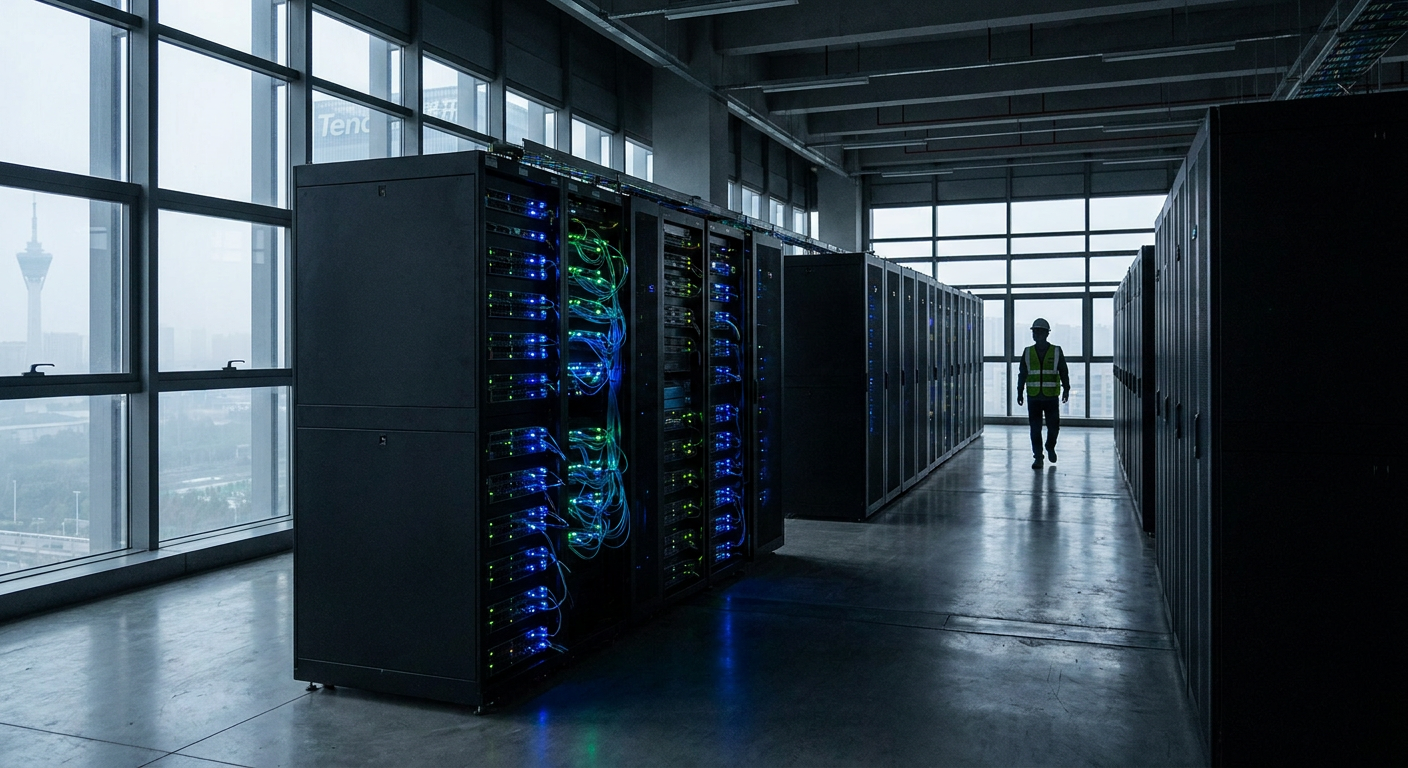
Tencent restricts the autonomy of its newly integrated WeChat AI assistant, prioritizing 1.4 billion users' ecosystem security over full automation in 2026.
The mid-2026 beta rollout of Xiaowei on WeChat version 8.0.75 represents a structural pivot in how China’s defining super-app deploys generative AI. Powered by Tencent’s proprietary WeLM and select DeepSeek models, the agent executes single-link tasks seamlessly but deliberately halts before financial transactions. Market analysts view this "shallow bridging" strategy not as a technical deficit, but as a calculated risk-management maneuver.
Uncovering Systemic Limits in Compound Tasking
Extensive testing reveals a stark capability boundary when Xiaowei processes compound directives. While single tasks—such as ordering a Luckin Coffee Americano—are processed accurately up to the payment confirmation page, bundling this with secondary requests triggers state-management failures. For instance, instructing the AI to simultaneously order coffee, search for a local hotpot restaurant, and draft a work-related message results in context pollution. The agent incorrectly applies coffee-related parameters to the hotpot query and overwrites the message draft with cache data. This degradation exposes an architectural bottleneck: the lack of a robust framework to pass variables cleanly across consecutive workflows.
Contrasting Engineering Pathways with Rivals
Execution constraints stem directly from Tencent's chosen engineering architecture. Unlike Alibaba, whose Qianwen application utilizes system-level API integration to achieve fluid, closed-loop e-commerce checkouts, Xiaowei relies on mini-program parameter protocols. Furthermore, external AI tools like ByteDance's Doubao and Zhipu AI's AutoGLM rely on visual screen simulation to bypass complex UI limitations.
Tencent explicitly rejects this visual mimicry, prioritizing strict programmatic access. While this prevents unauthorized overriding of complex UI elements—such as high-speed rail seat selectors or hotel booking panels capping at RMB 500 (US$72.46)—it drastically reduces automation for long-chain tasks. The system resolves to execute structural parameters first, returning manual control to the user when facing complex, unmapped interfaces.
Enforcing Hard Boundaries on Privacy and Payments
Beyond engineering hurdles, Tencent hardcodes uncompromising functional red lines. Xiaowei systematically refuses to execute automated mass messaging or back-read WeChat Moments beyond a two-day window. When prompted, the AI delivers a structured decline, separating product permission limits from underlying AI capability.
The deliberate choice to stop automated routines "one centimeter short" of final execution—most notably requiring manual user clicks for all payments and message dispatches—underscores a defensive product philosophy. In a digital ecosystem processing trillions in transactions annually, Tencent leverages friction as a primary security feature rather than an operational bug.
Yielding Macro Utility from Incremental Automation
For traditional enterprise software, a 60% task completion rate would signal inadequacy. However, deployed across WeChat’s 1.4 billion user base in 2026, this threshold generates profound macroeconomic utility. The ability to instantly summarize lengthy chat histories, route DeepSeek logic for zero-hallucination financial report analysis, and navigate ride-hailing via Didi Chuxing provides immediate, scalable time-savings.
By deploying a predictable, low-marginal-cost intermediary layer, Tencent solidifies user retention without risking the integrity of its third-party mini-program network. As the AI landscape matures, WeChat’s conservative deployment stands as one of the most commercially pragmatic agentic integrations in the Chinese market.