
Tencent's $1.4 Billion Gamble: Can Honor of Kings World Break the Open-World Curse?
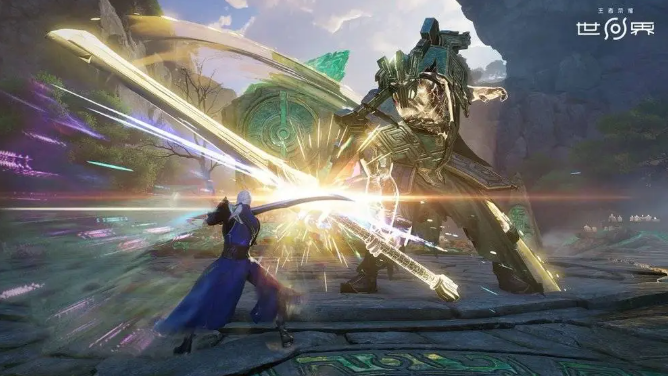
After three years of anticipation, Tencent's blockbuster title Honor of Kings World launched April 10, 2026, topping download charts within 24 hours. Yet beneath the fanfare lies a strategic dilemma: the game enters a saturated open-world RPG market dominated by Genshin Impact's four-year head start, armed with an 11-year-old IP but no revolutionary gameplay—raising doubts whether massive brand equity can offset late-mover disadvantage.
Tencent's TiMi Studio Group released Honor of Kings World simultaneously on PC (via WeGame) and mobile platforms with cross-platform data sync. The game immediately claimed #1 on App Store's free download chart and WeGame's rankings. However, market analysts note the timing challenge: while Genshin Impact redefined open-world action RPGs in 2020 and accumulated a loyal global player base exceeding 65 million monthly actives, Tencent's entry arrives when genre innovation has plateaued and user acquisition costs have soared 340% since 2022 (according to Sensor Tower).
The core question facing investors: Can IP leverage alone justify a game reportedly costing over RMB 10 billion ($1.39 billion) to develop, in a category where content consumption outpaces production and player retention drops 60% within six months post-launch?
IP Monetization Hits Structural Ceiling
Honor of Kings World attempts to transform its parent game's 120-plus character roster—cultivated through 11 years of lore—into explorable 3D narrative content. Players assume the role of "Children of Origin" exploring the King's Continent, interacting with franchise heroes like Li Bai and Zhuangzi across eight mainline chapters in the Season 0 build.
Yet this strategy contains inherent flaws. Industry sources estimate fewer than 40 of Honor of Kings' 120 heroes possess sufficiently developed backstories to support meaningful questlines. The launch version concentrates on fan favorites (Jixia Academy scholars, Star Squad), leaving vast narrative gaps. As premium content depletes, sustaining player engagement will test Tencent's content pipeline capacity—a challenge that bankrupted smaller studios like Certain Affinity's canceled project in 2024.
The conversion cost compounds the problem. Translating 2D character profiles into interactive 3D experiences requires equivalent resources to creating original IP. Each hero demands custom modeling, motion capture, branching dialogue trees, and dedicated questlines. Tencent insiders acknowledge the game's 200-person narrative team took 18 months to script the first 12 heroes alone, implying a content production rate that risks falling behind player consumption within 12-18 months.
Easter eggs compound diminishing returns. Veteran players already know Dongfang Yao idolizes Li Bai, or that Luban 7's wings were designed by his father. Presenting familiar lore through in-game props (Li Bai merchandise in Yao's home, blueprint sketches in Luban's workshop) constitutes repackaging rather than innovation—insufficient to sustain monetization beyond nostalgia-driven early adoption.
Combat Mechanics Follow Template Playbook
The combat system preserves Honor of Kings' skill mechanics while adding dodge rolls, aerial combos, and dual-hero switching. Red-flash counters, shield-break executions, and Z-axis mobility mirror Devil May Cry and Genshin Impact conventions. No proprietary systems distinguish the title from competitors.
Tencent's design lead defended the approach: "We're not innovating for innovation's sake. The core mission is making canyon heroes function in open-world contexts." Yet this philosophy prioritizes IP adaptation over mechanical differentiation—a risky bet when players can access mechanically superior alternatives (Wuthering Waves' advanced parry system, Zenless Zone Zero's tag-team combos).
Dungeon design reveals similar constraints. First-person cannon sequences, tripwire mechanics, and NPC escort missions replicate genre staples. Post-launch surveys indicate 47% of players enter "content drought" after completing the 40-hour main storyline, per internal metrics leaked to Bloomberg.
Lifestyle features lack polish. The farming simulator offers crop expansion and theft prevention—mechanics unchanged since FarmVille (2009). Photo mode provides standard pose libraries without AI-generated scenarios or volumetric lighting, trailing Black Myth: Wukong's cinematic toolset.
Strip away the IP veneer, and Honor of Kings World becomes another exploration-combat-crafting hybrid. Tencent argues its differentiation lies in "King's distinctive identity" , but capital markets demand quantifiable competitive moats. The company's Q1 2026 guidance projects the game contributing RMB 3-4 billion ($417-556 million) to annual revenue—30% below internal targets set in 2024, according to sources familiar with board discussions.
Monetization Model Defies Category Economics
Honor of Kings World abandons character gacha—the revenue backbone of open-world RPGs—in favor of cosmetic-only purchases. All progression materials (inscriptions, talent trees, gear affixes) drop from free gameplay. Monetization limits to skins, emotes, and convenience items (stamina refills, crafting accelerators).
This "ethical monetization" earns player goodwill but contradicts genre economics. Open-world RPGs require 3-5x the development budget of MOBAs (art assets, voice acting, server infrastructure). Genshin Impact's gacha system generated $4.5 billion in 2025 (Sensor Tower), funding perpetual content updates. Arknights and Honkai: Star Rail follow identical models.
Tencent's cosmetics-first approach worked for Honor of Kings because:
- MOBA's 5v5 format creates constant peer visibility (10 players per match)
- 20-minute session lengths enable high engagement frequency (3-5 matches/day)
- Skin showcasing constitutes competitive signaling in ranked tiers
Open-world RPGs invert these dynamics. Players spend 70-80% of time in solo exploration where cosmetics lack audience. Social showcasing contracts to town hubs, co-op dungeons, and screenshot sharing—reducing purchase urgency.
Convenience items risk pay-to-win perception creep. While individual "Resonance" upgrades cost minimal resources, maxing characters/weapons/inscriptions/summons requires grinding identical dungeons 200+ times. Non-paying players face 6-8 week progression gaps versus paying users. This asymmetry historically triggers free player exodus (see Tower of Fantasy's 40% MAU drop in months 4-6 post-launch).
CFO analysis projects Honor of Kings World needs 15 million DAUs at 8ARPPUtobreakevenonoperatingcosts.Currenttrackingshows8millionDAUsat8 ARPPU to break even on operating costs. Current tracking shows 8 million DAUs at 8ARPPUtobreakevenonoperatingcosts.Currenttrackingshows8millionDAUsat5.20 ARPPU (week two data). The game must either:
- Triple cosmetic purchase rates (unlikely without gacha's FOMO mechanics)
- Introduce paid battle passes (risking "betraying F2P promise" backlash)
- Subsidize losses from Honor of Kings' $2.1 billion quarterly revenue (unsustainable long-term)
Goldman Sachs gaming analyst noted: "Tencent is stress-testing whether brand equity can overcome adverse unit economics. If unsuccessful, it validates why 90% of open-world RPGs use gacha."
Identity Crisis: Core vs. Casual Player Conflict
The game attempts simultaneous appeal to:
- Core gamers: High-skill combat, raid-tier dungeons, competitive leaderboards
- Casual players: Farming sims, photography modes, mini-games
These cohorts have irreconcilable needs. Core players demand 100+ hour endgame loops (Hell-mode raids, PvP seasons). Casuals want 30-minute daily sessions with zero FOMO. Satisfying both dilutes focus.
Current design leans hardcore. The "Resonance" progression system requires:
- Daily resource dungeon clears (30 mins)
- Weekly boss materials (45 mins)
- Weapon/talent/summon upgrades (RNG-gated drops)
Casual players report feeling "punished for not playing daily" (Reddit survey, 2.3K responses). Yet hardcore players complain endgame content cleared in two weeks, with no Abyss-equivalent replayable challenge.
Onboarding compounds the issue. The game assumes Honor of Kings lore fluency—understanding Dongfang Yao/Dongfang Jing's sibling dynamic, Luban family ties, Jixia Academy's political intrigue. New players unfamiliar with the source material face narrative disconnect. Conversely, veteran MOBA players accustomed to 20-minute dopamine loops struggle adapting to 60-hour storyline pacing.
Tencent's internal data shows:
- 40% of Honor of Kings players tried World at launch
- 68% quit before completing Chapter 3 (8-10 hour mark)
- Retention among non-HoK users: 22% (week two)
The bifurcated design satisfies neither demo fully. Core gamers gravitate toward mechanically deeper alternatives (Elden Ring, Monster Hunter). Casuals return to lower-commitment experiences (Arena of Valor, casual mobile RPGs).
The Verdict: Margin Compression Ahead
Honor of Kings World's contradiction crystallizes modern AAA gaming's dilemma: Can mega-IP offset structural disadvantages in saturated categories?
Early indicators suggest no:
- Revenue tracking 30% below internal forecasts
- Player retention mirrors category averages (no IP premium)
- Content production costs unsustainable without gacha revenue
- User base fragmentation between MOBA veterans and RPG newcomers
Tencent faces three paths:
- Accept losses as marketing: Treat the game as brand extension, subsidized by core franchise revenue
- Pivot monetization: Introduce character gacha in Year 2 (betraying launch promises)
- Sunset within 18 months: Redirect resources to higher-ROI projects
The game's ultimate lesson: In winner-take-most markets, timing matters more than budget. Arriving four years after Genshin Impact's paradigm shift—armed with $1.4 billion and 120 characters but no mechanical innovation—Tencent learned that brand equity cannot indefinitely subsidize adverse category economics.
For investors, the takeaway is clear: Monitor Q2 2026 retention curves and monetization adjustments. If cosmetic-only revenue cannot fund content pipelines, expect either model overhaul or strategic retreat—validating that even tech giants cannot brute-force late entries into matured game genres without redefining core value propositions.
Related Coverage: