
Thumb Camera Showdown: Can DJI’s OSMO Nano Outshine Insta360’s GO Ultra?
DJI Technology has launched a new compact camera, directly challenging a niche market dominated by its rival Insta360 and escalating the competition between the two Chinese technology firms. The move signals an intensifying battle for leadership in the consumer imaging sector, which now sees the companies competing across drones, panoramic cameras, and miniature action cameras.
The new product, the OSMO nano, enters the market with a starting price of RMB 1,998 yuan (US$275), positioning it as a direct competitor to the high-end GO Ultra from Arashi Vision Inc.'s Insta360 brand. This launch marks DJI's aggressive entry into the "thumb-sized" camera category, a segment largely pioneered and defined by Insta360.
The release is the latest in a series of strategic encroachments between the two companies. Earlier in 2025, DJI unveiled a panoramic camera targeting Insta360's core market, while Insta360 countered by launching a drone, challenging DJI's long-standing dominance in the aerial imaging space. This escalating rivalry is being closely watched by investors as a driver of technological advancement rather than a simple price war.
While the OSMO nano boasts superior image specifications, early evaluations indicate it struggles with significant overheating issues that can automatically halt recording. This performance trade-off presents a critical challenge for DJI as it seeks to unseat an established competitor known for more reliable thermal management.
Image Quality at a Cost
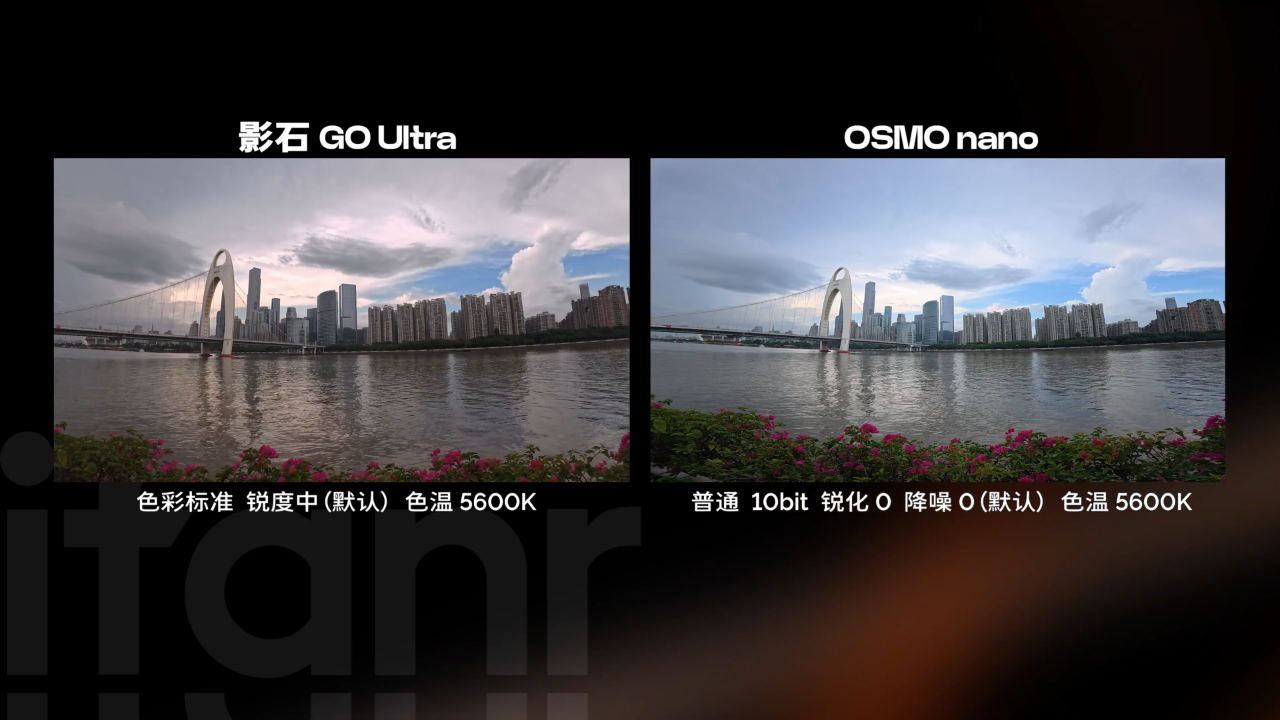
A central element of DJI’s strategy with the OSMO nano is its focus on high-end hardware and image fidelity. The camera is equipped with a 1/1.3-inch sensor, comparable to the 1/1.28-inch sensor in the Insta360 GO Ultra. This enables the OSMO nano to deliver visibly superior image quality, characterized by sharper details, greater dynamic range, and better performance in low-light conditions. It also supports 10-bit color for professional-grade post-production.
However, this performance comes at a cost. In side-by-side tests recording at 4K resolution and 60 frames per second, the OSMO nano entered a thermal protection mode and stopped recording sooner than the GO Ultra. This overheating issue also negatively impacts the device's battery life, especially when used for extended periods, a potential drawback for users who prioritize long-duration recording.
Diverging Ecosystem Strategies
The OSMO nano’s design reflects DJI’s established product philosophy, featuring a magnetic, modular body reminiscent of its previous Action 2 camera. A key advantage for existing DJI customers is that the new camera is compatible with the brand’s existing ecosystem of Action series accessories, reducing the total cost of ownership for users already invested in DJI hardware. The device includes both built-in storage and an SD card slot for backup.
This approach contrasts with Insta360's strategy, which has often involved introducing new mounting systems or interfaces with successive product generations, requiring customers to purchase new accessories. DJI’s focus on inter-compatibility appears aimed at building long-term ecosystem loyalty.
A Rivalry Forging Innovation
The intensifying competition between DJI and Insta360 is viewed by industry observers not as a zero-sum conflict but as a catalyst for innovation. Both companies are leveraging their respective technological strengths to push the boundaries of their product categories. Recent examples include DJI developing a custom square sensor to improve panoramic image quality and Insta360 integrating its 360-degree camera technology into a drone.
Rather than engaging in a price war, both firms are focused on product differentiation and strengthening their brand identities. The rivalry has spurred advancements in sensor technology, imaging software, and hardware design, ultimately benefiting consumers with more capable and diverse products.
Clear Paths for Consumers
The distinct characteristics of the OSMO nano and GO Ultra create clear choices for different user segments. Insta360’s offerings are generally positioned toward mainstream consumers and families, with an emphasis on user-friendly software and ease of use.
In contrast, DJI’s OSMO nano is tailored for prosumers and professional users who prioritize maximum image quality and advanced features like 10-bit color and D-Log M color profiles for greater flexibility in editing. With an effective price of RMB 1,698.3 after a government subsidy, the OSMO nano’s performance-oriented proposition becomes highly competitive, underscoring that innovation, not just price, is the core battleground for these two companies.