
DJI, GoPro Launch New Cameras in a Head-to-Head Battle for Market Dominance
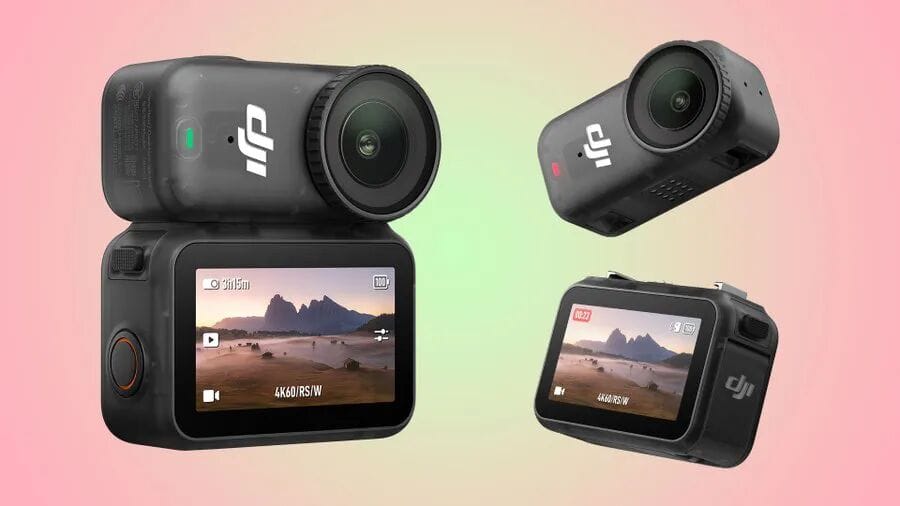
DJI Technology and GoPro launched new action cameras on the same day, escalating their rivalry in a direct battle for the high-growth imaging market. The simultaneous releases on September 23 signal divergent strategies, with DJI targeting the mainstream creator economy while GoPro doubles down on its professional user base.
DJI introduced its Osmo Nano, a compact camera emphasizing a blend of portability and professional-grade features. Aimed at mass-market adoption, the device packs a 1/1.3-inch sensor with 4K video capabilities and advanced stabilization, positioning it as an accessible tool for high-quality content creation.
In a direct countermove, GoPro unveiled the MAX 2, a panoramic action camera boasting 8K resolution. This high-end device is squarely aimed at professional videographers and niche commercial applications, seeking to create a technological barrier in the premium segment of the market.
The product showdown unfolds as DJI solidifies its market leadership, while GoPro faces increasing pressure. The strategic split—DJI’s pursuit of volume versus GoPro’s focus on a high-margin niche—will test their respective abilities to capture growth in a global action camera market projected to exceed $5 billion in 2025.
A Tale of Two Cameras: Mass Market vs. Pro Niche
The new products starkly illustrate the competing visions for the action camera’s future. The DJI Osmo Nano is designed for broad appeal, featuring a 1/1.3-inch CMOS sensor that supports 4K/60fps recording and 4K/120fps slow-motion capture. Its 10-bit D-Log M color profile allows for recording over a billion colors, while integrated RockSteady 3.0 and Horizon Balancing stabilization are engineered to deliver smooth footage during intense activities. These features directly address the mainstream user demand for upgrading from basic recording to more polished creative output.
Conversely, the GoPro MAX 2 carves out a specialized position with its focus on 8K panoramic video, offering 21% higher effective resolution than competing models. Both its front and rear lenses can capture 4K/60fps video with an ultra-wide 170-degree field of view. Its design, which includes user-replaceable lenses that can be swapped without tools, is tailored for demanding professional workflows in fields like virtual real estate tours and cinematic production.
The Price and Power Equation
Pricing and performance further separate the two contenders. The standard DJI Osmo Nano 64GB set is priced in China at RMB 1,998 yuan (approximately $280), making it a direct competitor to similarly priced models in the market. The camera’s versatile power system features a multi-function base that enables fast charging to 80% in 20 minutes and extends 1080p recording time to 200 minutes. It also supports high-speed data transfer via USB 3.1 and Wi-Fi 6.
GoPro has priced the MAX 2 at $499.99 for its overseas markets, placing it in a premium bracket. While a specific continuous-use battery life was not disclosed, its high-capacity 1960mAh Enduro battery and optimized power management system are designed to alleviate power concerns during professional shoots, particularly in cold environments. However, the uncertainty around its China launch date and local pricing could create a window of opportunity for competitors to gain an early advantage in a key market.
Market Dominance and Ecosystem Lock-in
The launches occur against a backdrop of DJI’s commanding market position. According to market data from Japan in June 2025, DJI held a 50.3% share, with its products topping sales charts for 20 consecutive months. In contrast, GoPro had fallen to ninth place, its share significantly eroded by DJI and other rivals like Insta360. DJI can leverage this extensive user base and retail channel penetration to accelerate adoption of the Osmo Nano.
Both companies lean on their software ecosystems to enhance user experience. The Osmo Nano integrates with the DJI Mimo app for features like live previews and one-tap editing, creating a seamless hardware-software loop. GoPro continues to build on its Quik app ecosystem, offering professional features like timecode synchronization across multiple devices. However, its mobile and desktop workflow has yet to establish a clear superiority over DJI's more streamlined experience.
Strategic Divergence Shapes Future Growth
This head-to-head launch highlights a fundamental split in market strategy. DJI is pursuing a broad, "all-around portable" approach to capture the mainstream segment, where trends favor lightweight, intelligent devices for everyday creation. The Osmo Nano, with its competitive pricing and superior core specifications in stabilization and frame rates compared to rivals, is well-positioned to drive further market share gains.
GoPro, meanwhile, is entrenching its position in the professional segment with a "deep technology" strategy centered on the MAX 2. By catering to a smaller but dedicated user base in extreme sports and professional video production, the company aims to protect its brand legacy and command higher margins. This focus, however, may limit its ability to capitalize on the broader, volume-driven growth in the action camera market. Ultimately, market leadership will be determined by which company more effectively balances performance and price to meet the evolving demands of its target audience.