
Robotics Unicorn Agibot Bets on Investment Blitz to Build Industry Ecosystem
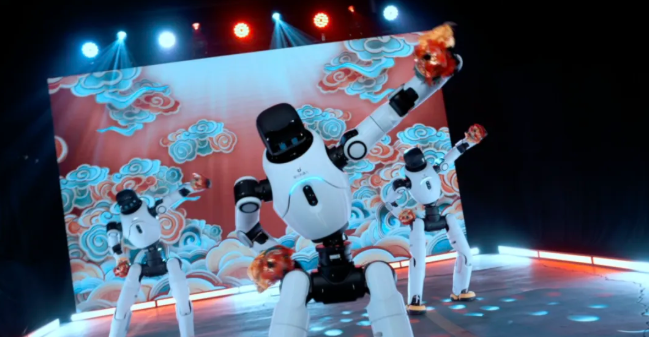
Chinese robotics startup Agibot is pursuing an aggressive expansion strategy, leveraging a flurry of investments, acquisitions, and joint ventures to construct a comprehensive ecosystem spanning from core components to end-user applications. This investment-led approach marks a departure from the typical growth model for robotics firms, positioning Agibot as a central hub in China's rapidly developing embodied intelligence industry.
Over the past year, the company has invested in 15 early-stage startups and established at least 17 joint ventures with major industrial players. A key move was its July acquisition of Sinocomposite Co., Ltd., which sent the target company’s stock price soaring more than tenfold since the announcement, underscoring the market's keen interest in Agibot’s strategy.
Deng Taihua, Founder, Chairman, and CEO of Agibot, revealed in August that this "invest early, invest small" strategy has yielded an 8x annualized investment return. The company has formalized this approach with its "Agibot A Plan," which aims to incubate over 50 early-stage projects within three years. Separately, Agibot partnered with Hillhouse Capital in September to launch a multi-hundred-million-yuan embodied intelligence fund.
With a valuation of 15 billion yuan (approximately US$2.1 billion) and backing from industrial giants like BYD Co. Ltd. and Tencent Holdings Ltd., Agibot is attempting to build an industrial empire encompassing the entire robotics value chain. The company is expected to close its Series C funding round by the end of 2025, with plans to bring in more international strategic investors.
Huawei-Linked Team and Ambitious Growth
Agibot's ability to attract capital and execute its ambitious strategy is underpinned by its experienced leadership team, many of whom are veterans of Huawei. CEO Deng Taihua is a former Vice President at Huawei and was a key leader of its Ascend AI business. Co-founder, President, and CTO Peng Zhihui was a prominent member of Huawei's "top minds" recruitment program.
The company has developed four series of robots—Yuanzheng, Lingxi, Jingling, and Juechen—targeting sectors from industrial manufacturing and logistics to commercial cleaning and home companionship. In March, it released its open-source general embodied foundation model, Genie Operator-1 (GO-1), and later its AgiBot World dataset to address the scarcity of high-quality training data. Agibot projects it will ship several thousand robots in 2025 and tens of thousands in 2026.
Strategic Investments in Core Components
A core pillar of Agibot’s strategy is securing its upstream supply chain through direct investment in key component manufacturers. The company has focused on makers of motors, drives, and sensors to enhance supply chain stability and foster collaborative development.
Investments have been made in at least five component firms, including Fastech, a producer of servo motors and drives, and QJ Robotics, which specializes in high-resolution tactile sensors. These are not merely financial investments; they involve strategic cooperation agreements to align component development with Agibot's own robot manufacturing needs and to leverage the commercialization experience of its partners.
Expanding Bets on Robot Makers and AI Models
In addition to building its own robots, Agibot is investing in other robot developers and artificial intelligence firms to diversify its technology portfolio and explore niche applications. The company has backed firms like Digital China and Shou-xing Technology, which focus on high-fidelity bionic and emotional interaction robots.
Simultaneously, it is investing in companies developing alternative AI models for embodied intelligence, including Lingchu Intelligence and Xingyuanzhi Robot. This dual approach of in-house development and external investment allows Agibot to explore multiple technological pathways and application scenarios, from urban sanitation to elderly care.
Joint Ventures to Secure Market Access
Agibot has established at least 17 joint ventures with listed companies, state-owned enterprises, and investment firms, typically taking a minority stake of 5% to 30%. Many of its partners, such as iSoftStone Information Technology (Group) Co., Ltd. and Lead-inno, are also suppliers to Huawei.
These JVs are designed to create symbiotic relationships across the value chain. For example, the venture with iSoftStone created iSoftStone-T to deploy robots in enterprise showrooms, while a partnership with auto parts maker Fulin Precision established Annu Intelligence to focus on robot integration and deployment. Another venture, Lizhi Ganzi, formed with optics specialist Lead-inno, aims to meet the demand for humanoid robots in 3C electronics assembly at facilities like those of Luxshare Precision Industry Co., Ltd.
A Capital Game or an Industrial Blueprint?
While Agibot’s strategy shows systematic foresight, it has also drawn skepticism. Some industry observers question whether the company is engaging in a "capital game" by prioritizing ecosystem-building and financial returns before the core technology for humanoid robots has fully matured. With the industry still years away from large-scale commercialization, concerns remain about whether the rapid expansion of its capital and partner network is premature.
Ultimately, the value of the vast and intricate ecosystem that Agibot is weaving will be tested by the market and the real-world performance of its products.