
Transsion Slides in HK Debut as 'King of Africa' Pivots Toward AI Ecosystem
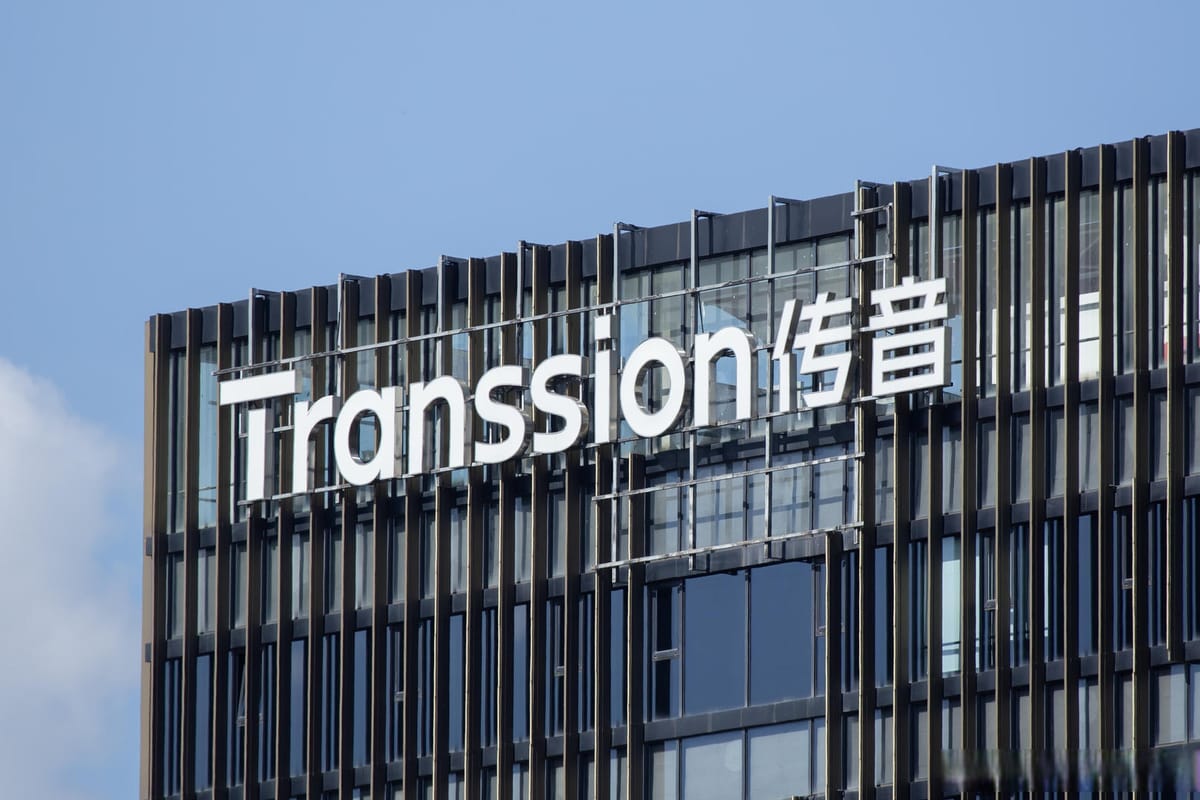
Transsion Holdings Ltd., the dominant smartphone manufacturer in emerging markets, saw its Hong Kong shares slide on their trading debut, underscoring investor skepticism as the company attempts to fund a costly artificial intelligence pivot amid severe supply chain cost pressures.
The Shenzhen-based manufacturer opened below its HK$35.30 issue price on Tuesday and dropped 5.8% to HK$33.26 in early trading. The offering, priced at the bottom of the marketed range, represents a steep 43.5% discount to its Shanghai STAR Market closing price on Sept. 30, raising approximately HK$3.06 billion.
The tepid market reception reflects structural challenges for the company dubbed the "King of Africa." While Transsion secured HK$1.25 billion from 11 cornerstone investors—including GIC Pte, E Fund Management, and affiliates of BYD Co. and MediaTek Inc.—the discounted dual-listing highlights a strategic urgency to overhaul its low-end hardware valuation model in an era dominated by generative AI.
Surging Component Costs Squeeze Hardware Margins
Global memory chip price hikes have severely eroded Transsion’s traditional high-volume, low-margin business model. Average procurement costs for memory components quadrupled from RMB 49.5 in 2023 to RMB 192.0 (US$26.6) by April 2026. For a company whose average handset selling price stood at RMB 345.8 in 2025, the supply chain shock proved devastating.
Transsion’s net profit plunged 53.5% to RMB 2.58 billion in 2025, with gross margins in its mobile division contracting to 18%. To hedge against further component inflation, the company aggressively stockpiled inventory, driving raw material reserves to RMB 9.3 billion by April 2026. This defensive maneuver pushed first-half 2026 operating cash flow into negative territory at RMB 5.86 billion, compelling the company to seek offshore capital despite holding RMB 11.6 billion in cash reserves.
Funding the AI and Energy Storage Transition
Management is directing 40% of the Hong Kong IPO proceeds toward AI infrastructure. The roadmap includes developing localized small language models (SLMs) tailored for emerging market dialects, integrating AI agents into the proprietary Transsion OS, and optimizing on-device computing for low-end chipsets operating in weak network environments.
Beyond software, Transsion is leveraging its extensive African retail network to build a secondary revenue engine in energy storage. Addressing chronic power shortages in markets like Nigeria, its sub-brands itel Energy and DYQUE Energy generated RMB 455 million in the first four months of 2026, eclipsing the segment's full-year 2025 revenue of RMB 358 million.
Aggressive Dividend Payouts Test Investor Patience
The decision to issue equity at a 43% discount contrasts sharply with Transsion’s aggressive dividend policy. Between 2023 and 2025, the company distributed RMB 10.2 billion (US$1.41 billion) in cash dividends, representing up to 87% of annual net income. Founder Zhu Zhaojiang indirectly collected an estimated RMB 986 million during this period.
This capital allocation strategy presents a paradox for institutional investors. While the Hong Kong listing provides necessary foreign currency to build technological moats in AI and renewable energy, the heavy historical payouts suggest a complex balance between rewarding early stakeholders and funding the company’s structural transformation.