
Transsion's AI Pivot Faces a Capital Confidence Crisis
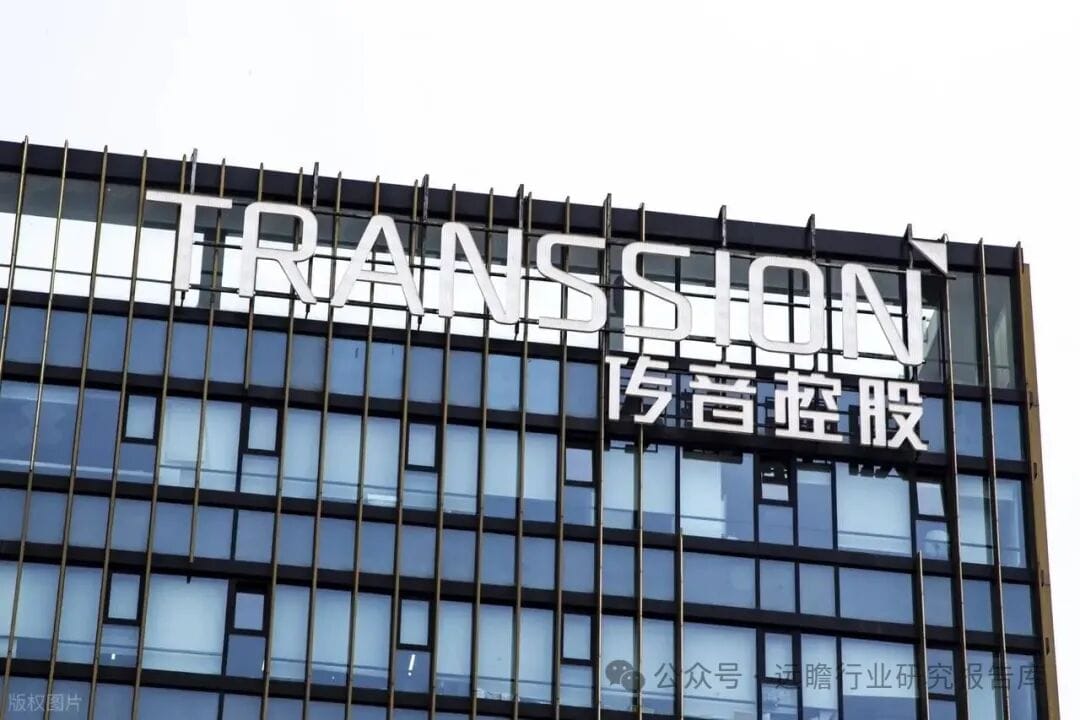
Transsion Holdings' belated AI strategy, underpowered by a HK$2.97 billion IPO war chest, collides head-on with rivals spending RMB 10 billion-plus annually — leaving Africa's handset king exposed on its home turf.
Transsion Holdings, the Shenzhen-based manufacturer that commands roughly one in every two handsets sold across Africa, debuted on the Hong Kong Stock Exchange in mid-2026 at HK$35.30 per share — the floor of its indicative range — with its opening print immediately slipping below that level. The muted reception was not a technicality. It was a verdict.
The company's stated rationale for the dual-listing was unambiguous: net proceeds of approximately HK$2.968 billion (US$412 million), after deducting HK$90.7 million in underwriting and issuance costs from gross proceeds of HK$3.059 billion (US$425 million), are earmarked primarily for artificial intelligence and terminal-technology research and development. Yet the market's response — an international tranche that attracted only 2.55x subscription at a time when nearly half of Hong Kong's 103 new listings in the year's first eight months commanded international books exceeding 10x — signals deep skepticism about whether that capital is sufficient for the battle ahead.
Late Awakening Reveals a Strategic Gap Years in the Making
Transsion's formal AI declaration arrived in its 2026 interim report, which for the first time explicitly repositioned the company's strategic center of gravity from "market expansion and product upgrades" toward "AI-driven high-quality development and value elevation." The timing is striking.
Huawei and Xiaomi each designated AI a core strategy as early as 2018. OPPO and Vivo made the pivot in 2024. Honor declared itself an "AI terminal ecosystem company" in early 2025. Transsion's public commitment in mid-2026 places it anywhere from one to seven years behind the industry curve — the widest AI strategy lag among China's major handset manufacturers.
The delay was not born of ideological resistance but of competitive insulation. Transsion's Africa-first model, where it controls roughly 50% of unit sales, historically shielded it from the domestic AI arms race that consumed rivals focused on China and Southeast Asia. That insulation is now eroding rapidly.
Deteriorating Financials Force the Strategic Reset
The financial logic underpinning Transsion's AI pivot is straightforward and uncomfortable. In 2025, the company reported revenue of RMB 65.591 billion (US$9.11 billion), a year-on-year decline of 4.55%. More alarming was the collapse in net profit attributable to shareholders: RMB 2.581 billion (US$358 million), down 53.49% year-on-year. For a company trading on the A-share STAR Market of the Shanghai Stock Exchange since 2019, sustained double-digit earnings erosion makes the status quo untenable.
Simultaneously, Transsion's African stronghold is under direct assault. The company's smartphone shipments in Africa fell from 105.66 million units in 2023 to 91.12 million units in 2025, a contraction of approximately 13.8% over two years. The catalyst is a coordinated competitive push by domestic rivals: Xiaomi has established what internal communications reportedly dubbed a dedicated "anti-Transsion task force" and entered 16 African nations; Honor has formalized partnerships with pan-African operators MTN and Vodacom; OPPO and Vivo have committed manufacturing investment in markets including Egypt.
The strategic calculus is clear — AI-enabled ecosystem lock-in represents Transsion's most credible moat against this encirclement. If the company can leverage its installed base to weave phones, laptops, TWS earbuds (via sub-brand oraimo), smart televisions, air conditioners, and refrigerators (via home appliance brand Syinix) into a cohesive AI-connected ecosystem, switching costs rise sharply for African households that have standardized on Transsion hardware. The model mirrors Xiaomi's "human × car × home" AI-of-Things architecture and Honor's cross-device "Agentic OS" — with Africa as the exclusive proving ground.
Capital Arithmetic Exposes the Resource Asymmetry
The strategic vision is coherent. The capital structure to execute it is not.
Transsion's deployable liquidity — combining its HK$2.968 billion net IPO proceeds with a cash and equivalents balance of RMB 11.641 billion (US$1.62 billion) as of end-June 2026 — totals approximately RMB 14.2 billion (US$1.97 billion). That figure must simultaneously service shareholder dividend commitments and fund inventory procurement across a supply chain exposed to NAND flash and DRAM pricing cycles.
Against that backdrop, consider the declared AI investment schedules of Transsion's primary competitors:
- Xiaomi: Guided for at least RMB 16 billion (US$2.22 billion) in AI spending in 2026 alone, with CEO Lei Jun publicly committing RMB 60 billion (US$8.33 billion) across 2026–2028.
- Vivo: Disclosed cumulative AI R&D investment exceeding RMB 23 billion (US$3.19 billion) through October 2024.
- Honor: Its "Alpha Strategy" AI transformation plan targets more than US$10 billion in investment over five years, with deployment spanning Robot Phone hardware, an Agentic OS platform, and cross-device AI ecosystem infrastructure.
The minimum credible entry price for a full-stack AI transformation — integrating smartphones, smart home devices, and connected hardware into a unified intelligence layer — appears to be at minimum RMB 10 billion annually, based on comparable peer spend. Transsion's total available resources fall below that single-year threshold before any non-AI capital allocation is considered.
Market Verdict Reflects Probability, Not Potential
Institutional investors' reluctance to price Transsion's Hong Kong offering above the floor reflects a probabilistic judgment rather than a categorical rejection of AI as a theme. The subscription data is instructive: at 2.55x international coverage against a market backdrop where nearly half of comparable new issues exceeded 10x, the discount to peer sentiment is approximately 75% on a coverage-ratio basis.
The implicit question the book-build answered was not "Is Africa a valuable AI market?" — it almost certainly is, given a young, mobile-first demographic and rapid smartphone penetration — but rather "Can Transsion, with its current resource base and a seven-year AI investment deficit, execute this strategy before better-capitalized rivals replicate its distribution advantages on the continent?"
The answer from institutional allocators, at least at launch, was a conditional no.
Transsion's dual A+H listing does expand its structural access to international capital, as the company itself acknowledged on its website following the listing. But accessing capital and deploying it with competitive velocity are different propositions. When Xiaomi's annual AI budget alone exceeds Transsion's entire deployable liquidity pool, the arithmetic of catching up compresses from a strategic challenge into an existential one.
Impact Assessment: Three Vectors to Watch
Supply chain: Transsion's AI investment will likely prioritize software integration and on-device inference optimization over proprietary silicon — a capital-efficient approach that nonetheless limits differentiation against rivals with custom chip roadmaps.
Africa market dynamics: The 13.8% shipment decline over 2023–2025 suggests the competitive window for building an AI ecosystem moat is narrowing. Each quarter of delayed AI deployment increases the probability that Xiaomi or Honor establishes ecosystem footholds before Transsion's network effects solidify.
Valuation re-rating catalyst: A meaningful re-rating would likely require either a demonstrable AI revenue stream in Transsion's 2026 full-year results or a strategic partnership announcement — with a cloud provider, a semiconductor firm, or an African telecom operator — that materially de-risks the capital gap. Absent such a catalyst, the Hong Kong listing's subdued open establishes a floor that reflects fair pricing of current uncertainty rather than undervaluation.
Related Coverage:
Transsion Bets on Africa’s ‘Electric Donkeys’ as Phone Growth Stalls
Transsion Slides in HK Debut as 'King of Africa' Pivots Toward AI Ecosystem