
Unitree G1 Teardown: Decoding the Economics and Engineering of the World's Best-Selling Humanoid Robot
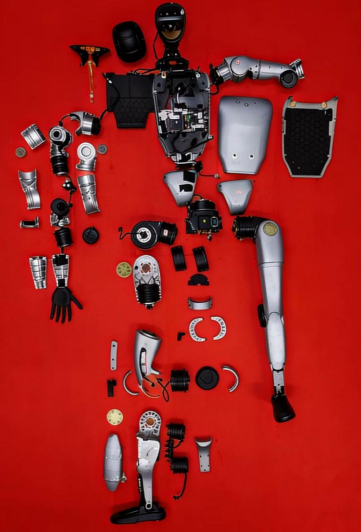
The humanoid robot market is experiencing explosive growth. According to IDC, global humanoid robot shipments are expected to reach nearly 18,000 units in 2025, a 508% year-over-year increase, creating a market size of approximately $440 million. At the forefront of this surge is Unitree Robotics, whose G1 model has captured the top spot in global shipments.
A recent in-depth teardown of the Unitree G1 by China Post Securities provides unprecedented insight into the robot's Bill of Materials (BOM), supply chain, and structural engineering. The findings reveal a masterclass in cost control, but also highlight the physical limitations that the industry must overcome to transition from commercial entertainment to heavy industrial applications.

The Economics of the Unitree G1
The G1 is positioned as an affordable, highly capable robot for research, education, and commercial exhibition. The base model is priced at 85,000 RMB (after tax), while the high-end EDU versions range from 169,000 to 309,000 RMB.
The teardown estimates the total BOM cost of the base G1 at approximately 41,574 RMB.
- Joint Modules: The 23 joints account for the bulk of the cost, estimated at 27,500 RMB (14 small joints at 1,000 RMB each, and 9 large joints at 1,500 RMB each).
- Sensors: The DJI LIVOX MID360 LiDAR costs around 3,840 RMB, and the Intel RealSense D435i depth camera is about 1,869 RMB.
- Computing: The Rockchip RK3588 mainboard, memory, and storage total roughly 1,415 RMB.
Factoring in an estimated 3,000 RMB for processing and assembly, the base model yields a gross margin of 40.7%. The higher-end EDU versions, which include upgrades like Nvidia Jetson Orin NX chips for 100 TOPS of AI compute and advanced dexterous hands (sourced from suppliers like Inspire-Robots and BrainCo), push gross margins to an impressive 63.5% to 66.7%.
Engineering for Extreme Lightweighting
The G1 weighs only 35kg, making it one of the lightest humanoid robots on the market. This is achieved through aggressive topological optimization and material selection:
- Integrated Joints: The joints use a 4-in-1 design (motor, planetary reducer, encoder, and driver board) with hollow-shaft wiring. This eliminates external cables, reducing wear and saving space.
- Materials: The chassis and non-load-bearing parts rely heavily on engineering plastics (ABS/PA) and aluminum alloys. The only steel structural component is in the lower leg link, necessary to withstand the high-impact loads of jumping and running.
However, this lightweighting leaves very little room for further weight reduction in future models without transitioning to more expensive materials like magnesium or titanium alloys.
The Compromises: Thermal Management and Payload
The teardown exposes the deliberate compromises Unitree made to keep costs and weight low.
Conservative Thermal Design: The G1 relies primarily on passive cooling (copper vapor chambers) for its joints, with active fan cooling limited to the main control board and waist joint. As a result, the robot can only operate continuously for 1 to 2 hours before the battery depletes or the system triggers thermal derating to prevent motor demagnetization.
Limited Payload: While the G1 can perform backflips, its single-arm maximum payload is only 2kg. This severely restricts its utility in industrial settings where heavy lifting and manipulation are required.
The Future: The Shift to Linear Actuators
The limitations of the G1 highlight a broader industry challenge. The G1 utilizes pure rotary joints (low-inertia high-speed permanent magnet synchronous motors paired with two-stage planetary reducers). While excellent for dynamic, explosive movements in a lightweight frame, rotary joints lack the torque density, rigidity, and continuous power output required for heavy industrial loads.
For humanoid robots to enter manufacturing and logistics, the industry must adopt linear joint solutions, such as planetary roller screws. Linear actuators offer higher thrust density, greater rigidity, and static self-locking capabilities, making them the optimal choice for industrial-grade, high-payload humanoid robots.
Ultimately, the Unitree G1 proves that in the current consumer and research market, hardware is a commodity. The true competitive advantage lies in software—specifically, the motion control algorithms that allow a low-cost, off-the-shelf hardware platform to perform world-class dynamic movements.
Related Coverage: