
Unitree Robotics IPO: What China's First Humanoid Robot Stock Tells Us About the Industry
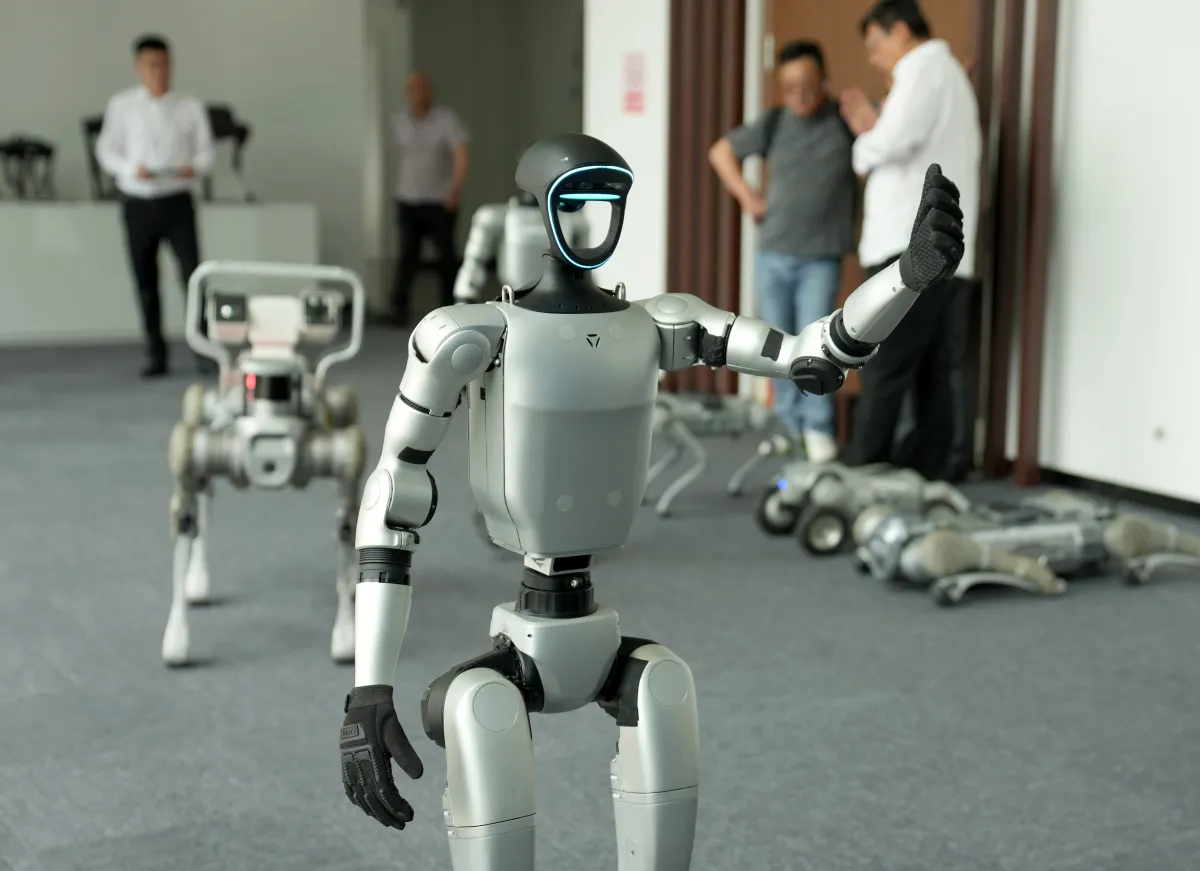
When Unitree Robotics (688836.SH) opened for trading on Shanghai's STAR Market on August 19, 2026, its shares surged 629% above the issue price in the first minutes of trading — valuing the company at RMB 444.9 billion. The listing wasn't just a market event. It was the first time a pure-play humanoid robot manufacturer had established a public price benchmark anywhere in China, forcing investors to answer a question the industry had long avoided: what is a humanoid robot company actually worth?
What Is Unitree Robotics — and Why Does This IPO Matter?
Unitree Robotics is a Hangzhou-based robotics company founded by Wang Xingxing, who began building quadruped robots as a graduate student. The company's commercial trajectory followed a now-familiar Chinese hardware playbook: start with research-grade products at premium prices, iterate rapidly, and use volume to drive costs down until the product reaches mass-market thresholds.
The IPO matters for reasons that extend well beyond one company's valuation. Until August 2026, the humanoid robot sector had no publicly traded pure-play benchmark in China. Valuations were set entirely in private funding rounds, making it difficult for the broader market to price the sector rationally. Unitree's listing — at a P/E of 219x on an issue price of RMB 150.80 per share — establishes the first open-market reference point, shifting the industry's investment logic from thematic speculation toward fundamental analysis.
The numbers around the IPO itself signal how intensely the market had been waiting. Nearly 9.78 million retail investors applied for shares, setting a STAR Market record. The allotment rate was 0.0181% — the lowest in the exchange's history — earning the offering the nickname "the hardest new share to get." Net proceeds reached RMB 5.917 billion, roughly 41% above the original fundraising target.
How Did Unitree Get Here? From Robot Dogs to Humanoids
Understanding Unitree's current position requires tracing the logic of its product evolution, because the same structural decisions that made it competitive in quadruped robots now underpin its humanoid business.
Wang Xingxing's first commercial product, the Laikago quadruped, shipped in 2017. Over the following years, Unitree systematically compressed the price of quadruped robots: the A1 broke into the consumer price range in 2020; the Go1 retailed at RMB 16,000 in 2021; the Go2 dropped below RMB 10,000 in 2023. Each price cut was made possible not by sacrificing margin but by internalizing component manufacturing and scaling production volume.
The pivot to humanoids in 2023 was not a strategic reinvention — it was a direct extension of the same architecture. Unitree transferred its quadruped-era motion control algorithms, joint actuator designs, battery management systems, and software stack directly onto its humanoid platform. The H1 full-size humanoid launched in August 2023 at RMB 593,400 per unit, with only five units sold that year. By 2025, the per-unit price had fallen to RMB 166,400, and sales volume reached 5,215 units — a 1,166% increase year-over-year.
Three catalysts accelerated the 2025 inflection:
- National television exposure. Sixteen H1 units performed at China's 2025 Lunar New Year Gala, the country's most-watched broadcast, shifting Unitree's domestic revenue share from 44% to 56% of total sales.
- Price ladder expansion. The R1 model launched at RMB 39,900 in July 2025 — the first humanoid robot priced at a near-consumer threshold — while the H2 anchored the premium segment at RMB 499,800. Four models now cover a complete price band from RMB 39,900 to RMB 499,800.
- Competition validation. The G1 was the sole robot in the world's first humanoid combat competition in May 2025; H1 units won 11 medals at the inaugural World Humanoid Robot Games in August.
Full-year 2025 revenue reached RMB 1.699 billion, up 332% year-over-year. Humanoid robot revenue of RMB 868 million surpassed quadruped revenue (RMB 698 million) for the first time, accounting for 51% of total sales.
Why Unitree's Cost Structure Is the Real Story
The humanoid robot hardware landscape is converging. Rotary joints, dexterous hands, and lidar configurations are becoming standardized across manufacturers. Motion control algorithms are increasingly open-sourced. On pure technical differentiation, the gap between leading players is narrowing.
What is not converging is cost structure — and this is where Unitree has built its most durable advantage.
Unitree's gross margin reached 60.4% in 2025, approximately 20 percentage points above the industry average. Three structural decisions explain this gap:
1. Actuator architecture. Unitree chose electric motor-plus-planetary-gearbox rotary joints from its earliest designs, avoiding hydraulic systems and the planetary roller screw assemblies that represent one of Tesla Optimus's most expensive and import-dependent components. Unitree's integrated joint module packages the motor, reducer, driver, and sensor into a single housing — reducing part count and unit cost simultaneously.
2. Vertical integration of core components. High-precision motors, reducers, and sensors are the industry's acknowledged cost bottleneck. Rather than purchasing these externally, Unitree manufactures them in-house, capturing the supplier margin on its own income statement. In 2025, mechanical components accounted for 50.8% of raw material procurement, with core components entirely self-produced.
3. Platform sharing and scale. Because humanoid and quadruped robots share the same joint drives, mechanical structures, battery management, and software, fixed development costs are amortized across a larger combined volume. Direct labor as a share of production cost fell from 13.97% in 2023 to 8.08% in 2025, even as output scaled dramatically.
The result: estimated per-unit cost for humanoid robots fell from approximately RMB 80,000 in 2024 to RMB 61,300 in 2025 — a 23% reduction in a single year. The quadruped business provides a forward template: as prices fell 6%, costs fell 16%, and gross margins actually expanded from 43.7% to 56.7% over two years. The humanoid business appears to be following the same trajectory, still in mid-transition.
The critical question is whether this cost moat is defensible. If competitors close the gap, the competition shifts from "Unitree's cost game" to "everyone's price war."
Where the Money Is Going: The "Small Brain" vs. "Big Brain" Problem
Unitree's IPO prospectus contains an unusually candid admission: the company spent its first years building exceptional hardware and motion control — what engineers call the "small brain" — while largely deferring investment in embodied large language models, the "big brain" that would allow robots to interpret instructions, adapt to unstructured environments, and perform complex tasks autonomously.
The prospectus states directly that "prior R&D investment focused on the body structure and motion control," with systematic investment in embodied AI models beginning only in 2024. As of the IPO, the company's industrial-grade model UnifoLM-X1-0 had completed only a pilot deployment in Unitree's own factory, where it can autonomously perform joint motor assembly.
The gap between a robot that can dance and a robot that can work in a factory is precisely what the IPO proceeds are designed to fund. Of the RMB 4.202 billion original fundraising plan, RMB 2.022 billion — 48% — was allocated to AI model R&D alone. Across all four project categories, 85% of planned spending is classified as research and development. The manufacturing base receives just RMB 624 million.
A leading indicator of this strategic shift is already visible in the financials: cloud computing and AI service costs grew 12.3x year-over-year in 2025, from RMB 1.228 million to RMB 15.154 million. Training large models requires renting compute first.
The financial picture in early 2026 reflects this transition. First-half 2026 revenue of RMB 1.152 billion grew 48.5% year-over-year — a deceleration from prior growth rates — while adjusted net profit margin compressed from 33.8% to 9.5% as sales expenses (up 133% in Q1 alone) and R&D spending increased sharply. Operating cash flow fell 32.5%. These are the numbers of a company deliberately front-loading investment ahead of a capability threshold it has not yet crossed.
Who Else Has a Stake in This Outcome?
The ownership structure around Unitree's IPO maps the current alignment of interests in China's humanoid robot ecosystem.
Founder: Wang Xingxing holds 23.8% of shares directly and an additional 9.5% through an employee incentive platform, for a combined 33.4% economic interest. Critically, Unitree's articles incorporate a dual-class share structure giving Wang 10 votes per share — translating to 65.3% voting control post-IPO. Capital allocation decisions rest almost entirely with him.
Strategic investors: Meituan is the largest external shareholder, holding 9.65% of pre-IPO shares through three investment vehicles. Sequoia China holds 7.11% through multiple platforms. Both are positioned to benefit from downstream deployment of humanoid robots in logistics, food delivery, and service environments where their core businesses operate.
Strategic allotment: Nine institutions received strategic placement shares, including entities linked to DeepSeek founder Liang Wenfeng (119,160 shares at approximately RMB 18 million), Tencent-affiliated entities, China National Petroleum's Kunlun Capital, Southern Power Grid, and China Telecom's investment arm. The participation of DeepSeek's founder is symbolically significant — it signals a perceived alignment between frontier AI model development and humanoid robot deployment.
Institutional investors: Major public funds including E Fund, Southern Fund, and ICBC Credit Suisse received allocations alongside leading quantitative private equity firms.
What Are the Constraints? The Gap Between Laboratory and Living Room
Despite the market's enthusiasm, Unitree's prospectus data reveals a structural limitation that the valuation largely looks past: the company's humanoid robot revenue is overwhelmingly concentrated in scientific research and education procurement, which accounted for 73.6% of humanoid revenue as of the most recent reporting period.
Universities and research laboratories are buying these machines. Factories and households are not — at least not yet, and not at scale.
This is not unique to Unitree. It is an industry-wide condition. The cost and reliability thresholds required for large-scale industrial deployment, let alone consumer household use, have not been reached by any manufacturer globally. The "just right" combination of price, durability, task capability, and safety margin for unstructured environments remains an unsolved engineering and economic problem.
Historical technology transitions offer useful perspective. Ford's Model T was first produced in 1908, but the complete assembly line that made mass automotive adoption possible came in 1913. Intel produced its first microprocessor in 1971; the information revolution it enabled took another decade to materialize commercially. The distance from laboratory demonstration to factory floor to household adoption has never been a straight line, and the timeline has consistently surprised optimists.
For Unitree, the near-term competitive pressures are concrete: Tesla's Optimus program is scaling; Boston Dynamics continues iterating; and a growing cohort of Chinese competitors — including UBTECH, which reported RMB 2 billion in 2025 revenue — are pursuing similar market positions. Unitree's hardware motion control capabilities are acknowledged as industry-leading, demonstrated most visibly by its pre-IPO launch of the "Superman" humanoid, which achieves a 2-meter vertical jump and a top speed of 12.66 meters per second. Converting that hardware performance into repeatable industrial workflows and eventually consumer applications is the central challenge the company's post-IPO capital must address.
What to Watch Going Forward
Several variables will determine whether Unitree's valuation proves prescient or premature:
Embodied AI progress. The speed at which Unitree's "big brain" investment translates into robots capable of autonomous task completion in real industrial environments — beyond its own factory pilot — is the most consequential near-term indicator.
Gross margin trajectory. The humanoid gross margin has already compressed from 87.7% (2023) to 63.2% (2025) as Unitree trades cost advantage for market share. Whether margins stabilize above 55% — the level the quadruped business achieved at scale — or continue declining will signal whether the cost moat is holding.
Revenue diversification. A shift in revenue mix away from research/education procurement toward industrial and eventually consumer applications would validate the long-term thesis. The R1's RMB 39,900 price point is a necessary but not sufficient condition for household adoption.
Capital deployment efficiency. With RMB 5.917 billion in net IPO proceeds and a founder controlling 65% of votes, the effectiveness of spending decisions — particularly the RMB 2+ billion allocated to AI model development — will be the primary determinant of whether the market's implied valuation is eventually justified.
At 219x issue-price earnings and over 1,000x trailing adjusted earnings at opening-day prices, the market has already paid for a version of Unitree that does not yet exist. The question is not whether humanoid robots will eventually transform manufacturing and services — most serious analysts believe they will. The question is whether Unitree will still be at the table when that transition reaches commercial scale.
Related Coverage:
Unitree Robotics Sets August Subscription for $609 Million STAR Market IPO