
VeriSilicon Doubles Revenue but Deepens Losses as R&D Spending Consumes Half of Sales
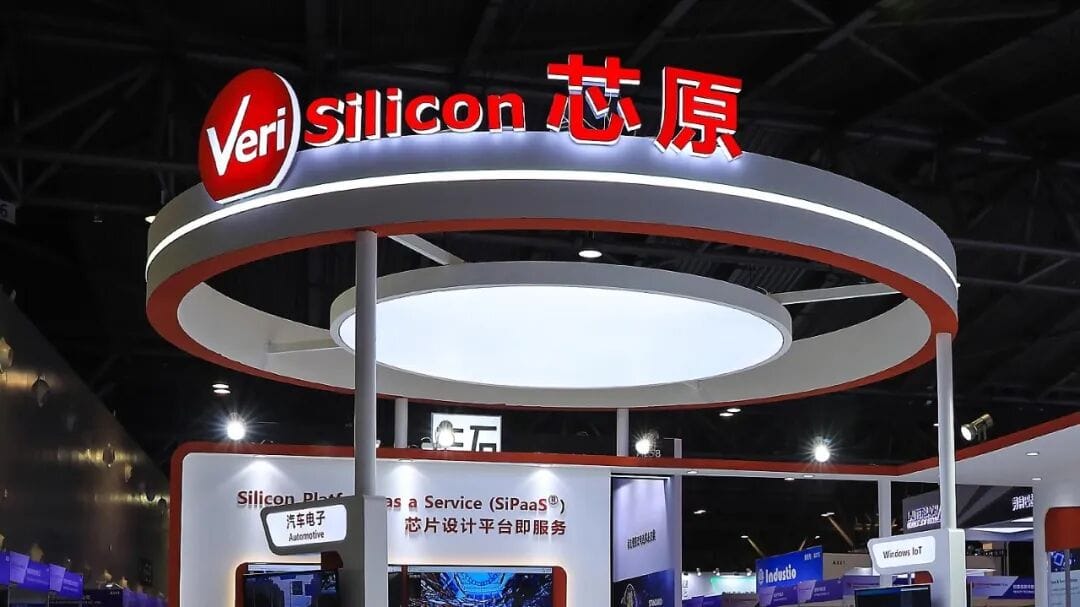
VeriSilicon, China's publicly listed semiconductor IP and chip design services firm, nearly doubled its first-half revenue in 2026 — yet burned through cash at an accelerating rate, underscoring the brutal economics of scaling a fabless model in a capital-intensive industry.
The Shanghai-listed company reported H1 2026 revenue of RMB 1.864 billion (US$258.9 million), up 91.37% year-on-year from RMB 974 million in the same period of 2025. The headline growth figure, however, obscures a widening profitability gap: net loss attributable to shareholders reached RMB 612 million (US$85 million), compared with RMB 320 million a year earlier — a deterioration of RMB 292 million, or 91.3%, that almost precisely mirrors the revenue growth rate.
The parallel expansion of both top-line and losses signals that VeriSilicon remains firmly in an investment-led growth phase, where incremental revenue is being systematically redirected into engineering capacity rather than earnings.
R&D Spending Erodes Margins Despite Improving Efficiency
Research and development expenditure consumed 50.49% of H1 2026 revenue — a ratio that, while down 15.22 percentage points from 65.71% in H1 2025, remains among the highest in the domestic semiconductor sector. For investors, the directional improvement is notable: the company is extracting more revenue per renminbi of R&D spend. But the absolute level of investment continues to suppress any path to near-term profitability.
On an adjusted basis — stripping out share-based compensation and acquisition-related non-cash charges — net loss attributable to shareholders stood at RMB 423 million (US$58.8 million), versus RMB 320 million in H1 2025. Adjusted EBITDA loss widened to RMB 222 million (US$30.8 million) from RMB 156 million, confirming that even on the most favorable accounting treatment, the core operating deficit is expanding.
Total pre-tax loss reached RMB 597 million (US$82.9 million), up from RMB 308 million in the prior-year period. Basic loss per share deteriorated to RMB 1.16 from RMB 0.64. The weighted average return on equity fell to -19.29%, down 3.87 percentage points year-on-year.
Cash Flow Inflection Provides a Critical Buffer
Amid the loss expansion, one metric stands out as a genuine positive signal: net cash from operating activities swung to a positive RMB 626 million (US$86.9 million) in H1 2026, reversing a net outflow of RMB 365 million in the same period of 2025. The turnaround — a swing of nearly RMB 1 billion — suggests that VeriSilicon's customer collections and working capital management have improved materially, even as accounting losses mount.
This divergence between operating cash flow and reported net income is characteristic of IP licensing and NRE (non-recurring engineering)-heavy business models, where upfront engineering costs are expensed immediately but the associated revenue streams may extend across multiple quarters or years.
Balance Sheet Absorbs Growth Capital, Net Worth Contracts
Total assets grew 17.40% to RMB 9.06 billion (US$1.26 billion) as of June 30, 2026, up from RMB 7.718 billion at end-2025, reflecting continued investment in engineering infrastructure and potential acquisition activity.
Shareholder equity, however, contracted sharply. Net assets attributable to shareholders fell 14.40% to RMB 2.925 billion (US$406.3 million) from RMB 3.418 billion at year-end 2025 — a direct consequence of accumulated losses eating into the equity base. The company declared no dividend and made no capitalization of reserves for the period.
The shareholder register as of the reporting date comprised 53,346 holders. VeriSilicon Limited held the largest stake at 11.39%, followed by Fuze Holdings Limited at 6.55% and the National Integrated Circuit Industry Investment Fund — commonly known as the "Big Fund" — at 5.09%. VeriSilicon Limited and DAI, WAYNE WEI-MING are disclosed as acting in concert. None of the top-10 shareholders' stakes are pledged, marked, or frozen.
Growth Paradox Reflects Broader Chip-Design Sector Dynamics
VeriSilicon's H1 2026 results encapsulate a tension playing out across China's semiconductor design ecosystem: government-backed demand, accelerating domestic substitution tailwinds, and AI-driven chip customization are generating genuine revenue momentum, but the engineering talent costs and tape-out expenses required to serve that demand remain structurally elevated.
The near-halving of R&D intensity as a percentage of revenue — from 65.71% to 50.49% — suggests the company is approaching a potential inflection point. If revenue continues to scale at current rates while R&D spending grows more slowly in absolute terms, the path to operating breakeven becomes arithmetically visible, though not yet imminent.
For investors tracking China's semiconductor supply chain, the Big Fund's continued 5.09% stake serves as a strategic endorsement of VeriSilicon's role in the domestic chip design services ecosystem — one that carries policy implications beyond conventional financial metrics.
Related Coverage: