
Horizon Robotics Dethrones Nvidia in China's L2+ ADAS Market, Targets Leadership With J7
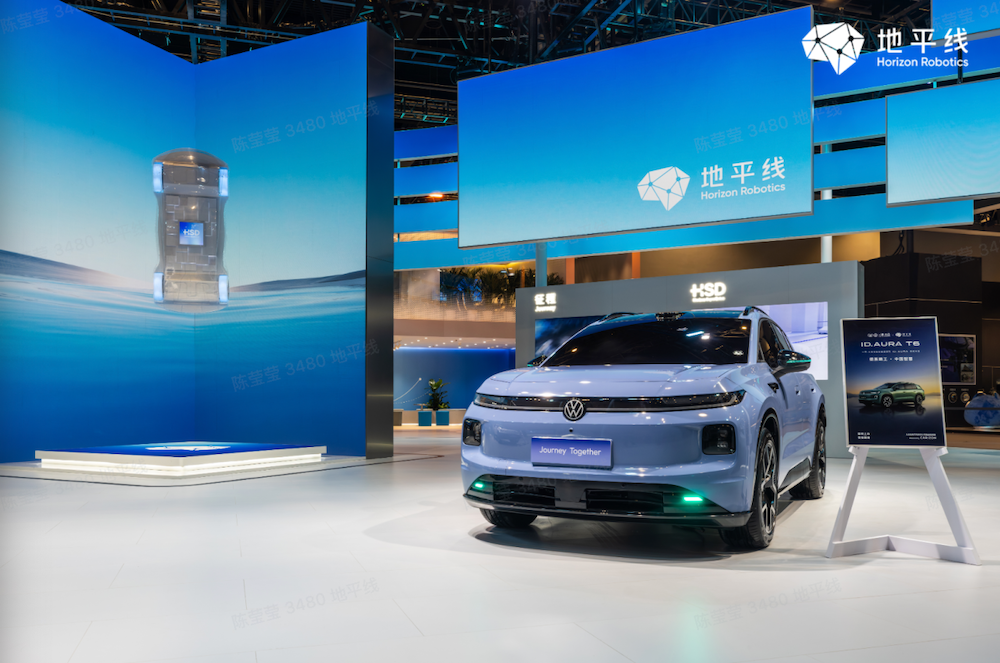
Horizon Robotics has overtaken Nvidia to become the largest automotive intelligence chip supplier in China's L2+ advanced driver-assistance market, capturing 32% share in Q2 2026 — a structural shift that CEO Yu Kai is leveraging to stake a bold claim on next-generation autonomous driving silicon.
The milestone, documented in a Bernstein research report published in mid-August, marks the first time a Chinese chipmaker has displaced a foreign incumbent at the top of the domestic L2+ segment. Nvidia's share slipped to 28% in the same period, while Qualcomm Inc. held third place at 20%. The data arrived days before Yu took to Chinese social media platform Weibo to declare that the company's forthcoming Journey 7 (J7) chip "will be the world's most powerful autonomous driving chip" — a claim that, unlike similar pronouncements from domestic peers in prior years, now carries measurable commercial weight behind it.
Market reaction was immediate within the industry. Bernstein's attribution of the share gain to three converging catalysts — BYD diversifying away from Nvidia toward a multi-vendor architecture, Geely redirecting orders from Black Sesame Technologies to Horizon, and Horizon's own ramp of the Journey 6M (J6M) chip enabling it to absorb incremental demand — signals that the shift is structural rather than episodic.
BYD's Pivot Reshapes the Competitive Calculus
The BYD variable deserves particular investor attention. The Shenzhen-based electric vehicle giant commands approximately 16% of China's L2++ market by volume. Bernstein estimates that even a one-third supply allocation to Horizon within BYD's high-end platform could nearly triple Horizon's L2++ market share from its current roughly 3% baseline. BYD's transition from an Nvidia-centric architecture to an "Nvidia + Horizon + in-house" multi-chip strategy reflects both geopolitical supply-chain risk management and a domestic-first procurement posture that Chinese automakers are increasingly institutionalizing in 2026.
For Nvidia, the erosion in China's automotive segment compounds broader revenue headwinds from U.S. export controls that have restricted its most advanced data-center products from the Chinese market. The automotive channel had been one of the few high-growth vectors where Nvidia retained unrestricted access; the Horizon encroachment narrows that runway.
J6 Volumes Validate the Platform Before J7 Launches
Horizon's current market leadership rests on the Journey 6 family — a six-SKU lineup (B/L/E/M/H/P variants) spanning entry-level to premium ADAS applications. Since the J6 series debuted on BYD vehicles in February 2025, it has been integrated into more than 100 mid-to-high-end intelligent driving models. The broader Journey chip family crossed the 10-million cumulative shipment threshold in 2025, and Horizon held a 31.94% share across the full L0-to-L2++ spectrum in that year — a platform-scale achievement that underpins the company's ability to negotiate long-term supply agreements with Tier 1 automakers.
The J6 ramp matters strategically because it de-risks the J7 transition. A chipmaker that has proven manufacturing yield, software stack maturity, and OEM integration depth at scale carries a fundamentally different risk profile than one pitching unproven silicon. Horizon enters the J7 development cycle with established relationships across the Chinese OEM landscape.
J7's "Algorithm-First" Architecture Targets the L3-to-L4 Compute Gap
The J7 program, details of which first surfaced in March 2026, is designed around a premise that distinguishes it from conventional compute scaling: algorithm teams, led by Vice President and Chief Architect Su Jing, are driving chip architecture — inverting the traditional hardware-first design flow used for the J6 series.
The underlying architecture, Horizon's fourth-generation BPU platform named "Riemann", was unveiled at the company's technology ecosystem conference in December 2025. Riemann delivers a 10x improvement in key operator compute throughput, a 10x increase in high-precision operator count, and a 5x gain in energy efficiency for large-model inference versus its predecessor. Yu described it at launch as "the ultimate architecture for universal robotic computing."
The highest-performance variant, J7P, targets peak compute "significantly exceeding" Nvidia's Thor-X, which carries a theoretical ceiling of 1,000 TOPS at specified precision levels. Volume production is planned for 2027. A derivative chip, C7H, developed jointly with Volkswagen AG through the Carizon joint venture, utilizes the same Riemann base and targets 500–700 TOPS on a 3-to-4nm process node.
Yu's own roadmap provides the strategic context: L3 autonomy requiring 500–1,000 TOPS is likely to emerge within two to three years; L4 deployment at scale by 2030 will demand 2,000 TOPS. J7's compute positioning sits precisely at the L3-to-L4 inflection — a deliberate gap-filling exercise rather than a brute-force spec race.
The shift to algorithm-led design also addresses a critical transition underway in vehicle AI: on-board model parameter counts are expanding from millions to billions, and next-generation high-end ADAS chips must natively support end-to-end single-model architectures and Vision-Language-Action (VLA) large models. Horizon's Riemann platform is engineered for this workload profile from the ground up, whereas chips designed primarily around conventional convolutional neural network workloads face architectural retrofitting challenges.
Validating "World's Best" Requires More Than TOPS
Yu's "world's most powerful" declaration will ultimately require 2027 production validation. The gap between theoretical peak compute and real-world autonomous driving performance is bridged — or not — by power envelope management, thermal design, software ecosystem depth, and the friction of OEM integration cycles that typically span 18 to 36 months. Nvidia's DRIVE platform retains significant advantages in global software toolchain maturity and developer ecosystem breadth, factors that do not appear in TOPS benchmarks.
Qualcomm's Snapdragon Ride platform at 20% share also represents a durable competitive position, particularly as foreign-branded vehicles sold in China continue to qualify as design-win targets for U.S. suppliers operating under current trade frameworks.
What Q2 2026 data confirms is narrower but consequential: in the specific segment of highway NOA (Navigate on Autopilot) systems deployed at volume in China, a domestic chipmaker has, for the first time, demonstrated the product capability and supply-chain execution to displace a global incumbent. Horizon was founded in 2015. The Journey family reached 10 million units eleven years later. The trajectory from there to J7's 2027 launch will determine whether the L2+ overtake is a ceiling or a floor.
Related Coverage:
Horizon Robotics Deploys HSD V2.0 Amid Customer Chip Self-Development Risk