
Volkswagen Adopts Xpeng's XNGP Technology as CARIAD Shifts to Integration Role
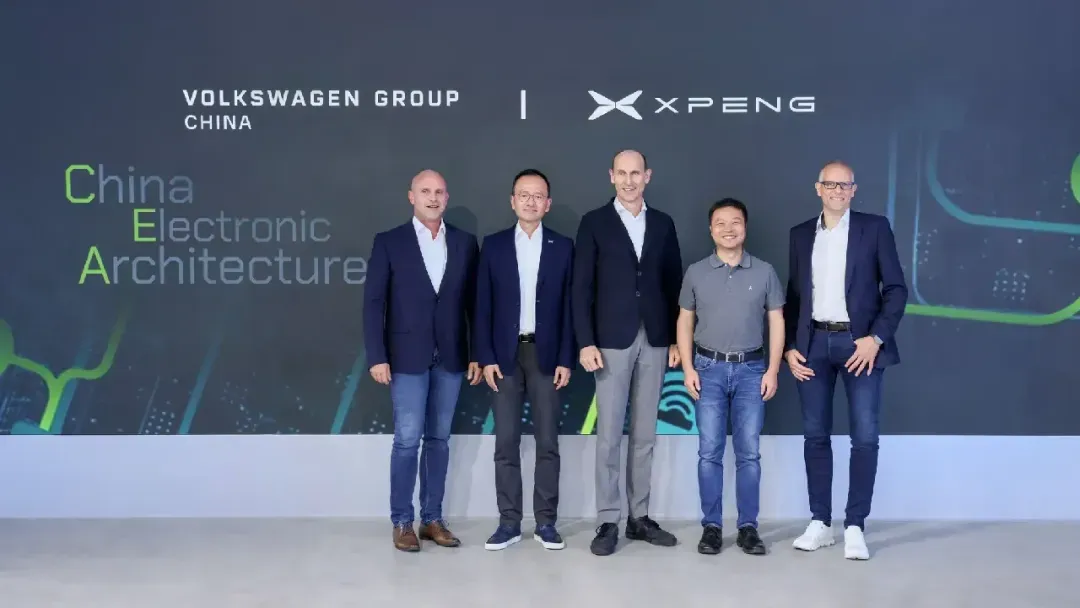
Volkswagen Group will deploy Chinese EV maker's autonomous driving solution starting 2026, marking a strategic pivot away from in-house software development as competition intensifies in China's automotive market.
The German automaker plans to integrate Xpeng's XNGP autonomous driving assistance solution into electric vehicles sold in China beginning 2026, with the first model being a jointly developed mid-size SUV. This move represents a significant departure from Volkswagen's original strategy of developing proprietary software through its subsidiary CARIAD.
CARIAD, Volkswagen Group's software division, will transition from a "developer" role to that of an "integrator and coordinator," CEO Oliver Blume announced last week. The shift signals Volkswagen's broader embrace of external partnerships globally, relying on Rivian in international markets while working with multiple Chinese suppliers domestically.
The partnership intensifies competition among Chinese automotive suppliers, with Xpeng joining Horizon Robotics, Huawei Technologies, and Zhuoyu Technology as key partners for Volkswagen and its Audi brand in China.
Deepening Strategic Alliance
Volkswagen's collaboration with Xpeng has accelerated significantly throughout 2025. In August, the companies expanded their joint electronic architecture development agreement beyond pure electric platforms to include combustion engine and plug-in hybrid vehicles for the Chinese market.
Xpeng Chairman He Xiaopeng announced in June that the company's self-developed Turing chip will be integrated into Volkswagen's new models alongside the electronic architecture. Volkswagen views this partnership as crucial for optimizing cost structures in China's highly competitive automotive landscape.
The German automaker invested €700 million ($764 million) in Xpeng in 2023, acquiring a 4.99% stake in the Chinese EV manufacturer. Volkswagen also holds a significant position as the second-largest shareholder in U.S. electric vehicle startup Rivian.
Vision-Based Technology Appeal
Xpeng's pure vision-based perception approach, which eliminates costly LiDAR sensors, aligns with Volkswagen's cost-conscious positioning across most vehicle segments. The Chinese company's AI Eagle Eye intelligent driving system employs front and rear 8-megapixel cameras combined with Lofic technology, delivering 125% improved perception range and 40% faster recognition speeds.
CEO He Xiaopeng has predicted that the vision versus LiDAR debate will be resolved by 2027, with vision-based solutions proving superior in handling complex scenarios including low-light and glare conditions where LiDAR currently holds advantages.
This technology approach becomes particularly relevant as China's ongoing price war drives up advanced driver assistance system adoption rates while demanding more cost-effective solutions for traditional automakers.
Market Pressure Drives Transformation
Volkswagen Group's China sales declined 9.5% to 3.2 million vehicles in 2024, while European sales fell 0.4%. The company's global deliveries dropped 2.3% to 9.027 million vehicles, with China posting a steeper 9.5% decline to 2.928 million units.
The automaker plans to launch over 40 new models in China over the next three years, with half being pure electric or new energy vehicles. By 2030, Volkswagen aims to introduce 30 next-generation pure electric models across its brands in China.
Company executives acknowledge the urgency of their situation, with CFO Arno Antlitz previously warning of having only one to two years to prepare for intensified Chinese competition. Management cites weak Chinese demand and high European production costs as key challenges, with the ID series facing severe market share pressure from competitively priced local rivals.
Volkswagen's partnership strategy aims to reduce development timelines from three years to under 18 months while achieving 40% cost reductions through localized platforms. The collaboration with Xpeng provides access to full-stack intelligent cockpit and driving technologies, positioning Volkswagen to compete more effectively against vertically integrated competitors like BYD, whose supply chain integration delivers significant cost advantages.