
Xiaomi Accelerates EV Delivery and Offers Discounts as Capacity Catches Demand
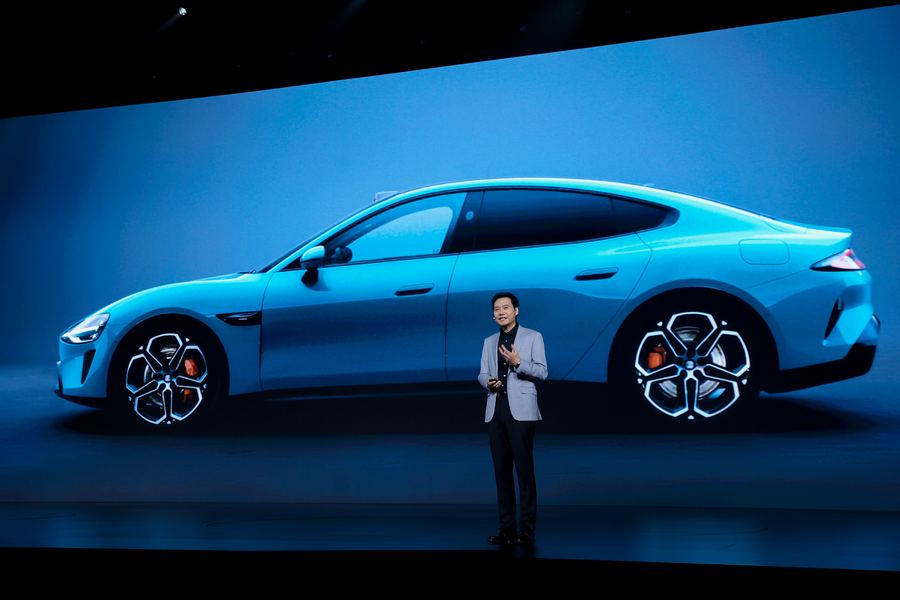
Xiaomi is shifting strategies from managing scarcity to aggressively driving sales volumes, leveraging expanded manufacturing capacity to clear inventory and drastically reduce wait times in the final stretch of 2025.
Chief Executive Officer Lei Jun announced on Dec. 1 that the company would begin selling display vehicles and "quasi-new" stock with immediate availability and incentives to maximize year-end deliveries. Concurrently, wait times for the flagship SU7 and YU7 series have collapsed from a peak of nearly six months to as little as three weeks, signaling a normalization in supply chain dynamics.
The sales push follows two consecutive months of deliveries exceeding 40,000 units in October and November, placing the technology giant well ahead of its annual schedule. The surge indicates that Xiaomi’s manufacturing output has matured significantly, creating an imperative to sustain high order volumes to match the accelerated production tempo.
This strategic pivot occurs shortly after Xiaomi’s EV division reported its first quarterly profit, a significant milestone for a consolidated entrant in the auto sector. With the annual sales target of 350,000 vehicles already surpassed, the company is now focused on defending market share against domestic rivals by ensuring rapid fulfillment for buyers ahead of the fiscal year-end.
Inventory Clearance and Rapid Delivery
In a notable shift from its previous backlog struggles, Xiaomi is now incentivizing customers to take immediate delivery of existing stock. Lei Jun stated on Weibo that the company is offering "fast pickup, full original warranty, and after-sales service" for show cars and vehicles with minor transport imperfections, which have been repaired and inspected by the manufacturer. Pricing for these units will be determined by their specific condition, configuration, and inventory age.
The urgency is reflected in the behavior of Xiaomi’s sales force. Sales personnel, who previously advised impatient customers to consider other brands, are now actively soliciting orders with promises that "certain models ordered this month can be delivered within the year."
Official data from Xiaomi’s website confirms the improved efficiency. The delivery cycle for the SU7 series has shortened to a range of three to six weeks. The YU7 series has also seen its wait times reduced by two to four weeks, with locked-in orders effectively expedited by up to seven weeks.
Production Capacity and Profitability
The acceleration in deliveries is underpinned by a substantial expansion in manufacturing capabilities. While Xiaomi has not officially confirmed details regarding its facility expansion, reports indicate that the second phase of its Beijing factory was completed in June, potentially raising total annual design capacity to 300,000 vehicles.
This capacity boost has translated into robust financial performance. In its third-quarter earnings, Xiaomi reported that revenue from its smart electric vehicle and AI innovation businesses reached RMB 29 billion yuan (US$4billion), representing a rise of 199.2%, marking its first profitable quarter.
Production appears to be outpacing the rate of new incoming orders, prompting the current sales drive. While the YU7 initially garnered 240,000 orders in its first 18 hours, the company has not released updated order figures recently. Analysts suggest the shortened delivery times indicate that monthly production now exceeds monthly new orders, necessitating a push to replenish the order book.
Intensifying Competition and Future Pipeline
The pressure to maintain momentum comes amidst a crowded competitive landscape. Since the launch of the YU7, rivals including BYD, Geely, and Huawei -backed AITO have flooded the market with competing models such as the updated AITO M7 and the Geely Galaxy M9.
To counter this, Xiaomi is expected to accelerate its product launch cycle. Market speculation suggests new models, potentially including a large extended-range electric vehicle (EREV) SUV codenamed "YU9" or "Kunlun," as well as an updated SU7 and a high-performance YU7 GT, could debut as early as late 2025 or early 2026. The move into the large SUV segment would pit Xiaomi directly against established players in one of China's most lucrative auto sectors.