
Xiaomi's RMB 109B Quarter: Memory Squeezes Phones as EVs Gain Ground
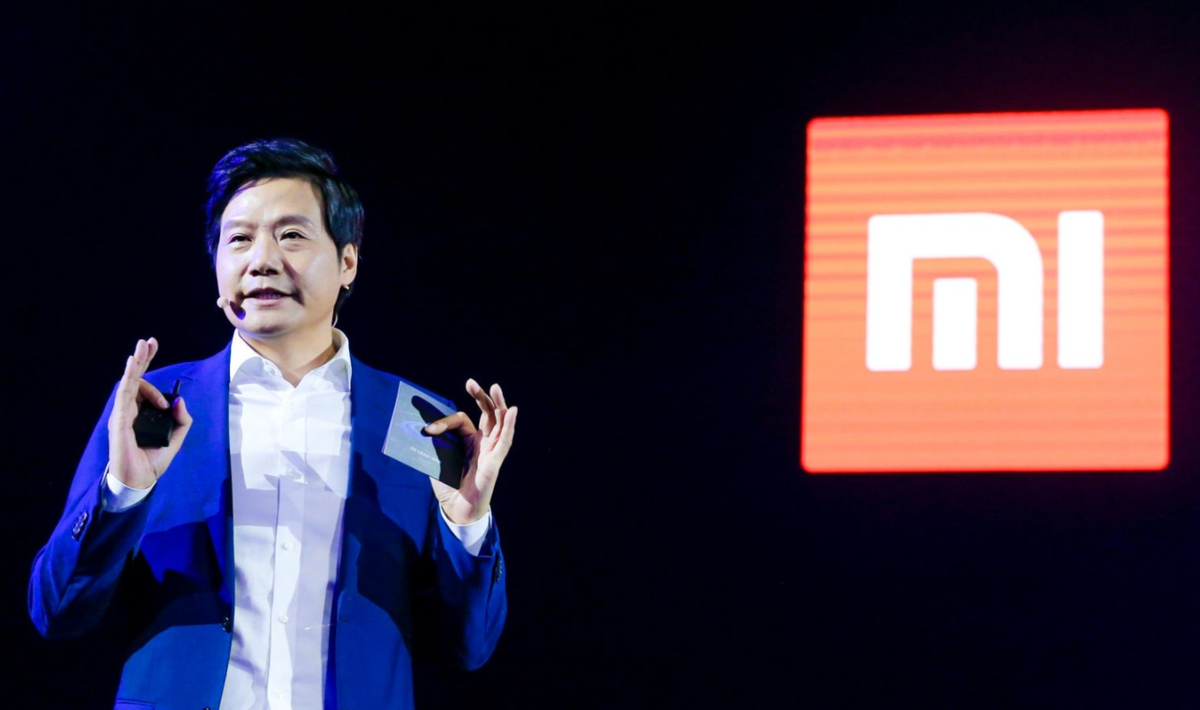
Xiaomi Group returned to the RMB 100 billion revenue threshold in Q2 2026, yet a 42.6% year-on-year collapse in adjusted net profit lays bare the structural tension at the heart of China's most ambitious consumer-technology conglomerate: a memory-price supercycle is simultaneously squeezing its smartphone cash engine, funding its electric-vehicle ramp, and delaying the commercial payoff of its artificial-intelligence ambitions.
The results, released after Hong Kong market close on August 18, show group revenue of RMB 108.9 billion (US$15.1 billion), down 6.1% year-on-year but recovering sequentially from Q1 2026's steeper decline. Adjusted net profit came in at RMB 6.22 billion (US$864 million). Management attributed the pressure to "persistent geopolitical uncertainty and a sharp rise in core component costs, particularly memory," language that maps precisely onto a LPDDR5X contract-price surge of 78%–83% quarter-on-quarter in Q2 — a figure that has forced every major Android handset maker to reprice, retrench, or absorb losses.
The market's prior pricing of catastrophe — Xiaomi shares hit an intraday low of HK$21.30 on June 30, a 46% drawdown from their end-2025 close of HK$39.30 — proved partially overcalibrated. A subsequent 52% rebound to HK$32.40 by July 30 was driven by two converging catalysts: short-covering as the crowded long-memory/short-consumer-electronics pair trade unwound (SK Hynix fell ~53% from its June peak; Micron dropped over 30%), and the first concrete product parameters for Xiaomi's extended-range EV line, the Pengcheng series. The Q2 print now provides the objective data needed to adjudicate between narrative and reality.
Memory Costs Compress Smartphone Margins Toward a Structural Floor
Xiaomi's smartphone segment generated revenue of RMB 42.1 billion (US$5.8 billion) in Q2 2026, down 7.5% year-on-year — the narrowest year-on-year decline in three quarters (Q4 2025: -13.6%; Q1 2026: -12.5%). Global shipments tracked by Omdia fell to 31.2 million units, trimming Xiaomi's worldwide market share from 15% in Q2 2025 to 11% in Q2 2026.
The critical data point is the gross margin: 8.5%, holding above the 8% floor established during the 2021–2022 memory downcycle. That the floor held despite a weighted-average cost pool now heavily loaded with high-priced Q2 purchases is analytically significant. Xiaomi applies the lower-of-cost-or-net-realizable-value method with weighted-average costing, meaning cheap legacy inventory dilutes — rather than eliminates — cost pressure gradually. The fact that margins stabilised at 8.5% rather than falling through 8% suggests the true no-buffer cost floor is close to current levels. The market feared a cliff; what materialised was a step.
The company's strategic response has been average-selling-price (ASP) prioritisation over volume defence. ASP climbed sequentially from RMB 1,176 in Q4 2025 to RMB 1,310 in Q1 2026 and RMB 1,351 in Q2 2026. The industry has moved in parallel: OPPO and vivo raised prices on select A-series and K-series models from March 16; Huawei publicly acknowledged negative unit economics at current pricing; Apple absorbed a portion of cost increases through its own margin buffer while raising prices on existing models.
Near-term relief remains elusive. Management guided that Q3 procurement costs could rise further. TrendForce's August 3 assessment added nuance: DRAM supply remains tight while NAND is beginning to tip toward oversupply. The weighted-average accounting lag means Q2's high-cost purchases will flow into Q3's cost of goods sold even if spot prices plateau. Smartphone gross margin troughs will likely lag memory spot-price peaks by at least one quarter.
Supply-side response is, however, materialising. Changxin Memory Technologies is expanding capacity following its IPO fundraise. Samsung has brought forward construction of its P5 Fab 2 to July 2026, with a planned investment of KRW 90 trillion. SK Hynix announced in December 2025 a 2026 general DRAM capacity expansion targeting approximately 70,000 wafers per month. When supply normalises, the pricing environment that enables sustained ASP increases, mid-to-high-end product mix shifts, and supply-chain renegotiation becomes structurally more favourable.
IoT Segment Absorbs Shock but Reveals Its Own Ceiling
With smartphone margins under siege, Xiaomi has leaned on its IoT and Lifestyle Products segment — large appliances, smart home devices, wearables — as a margin buffer. The segment reported Q2 2026 revenue of RMB 31.3 billion (US$4.3 billion), down 19.2% year-on-year, with a gross margin of 20.1%, roughly 2.4 times the smartphone segment's Q2 margin.
The sequential revenue trend is improving (Q4 2025: -20.3%; Q1 2026: -23.7%; Q2 2026: -19.2%), but the structural headwinds are real. Large-appliance demand in China remains hostage to the property cycle and consumer confidence. The marginal benefit of the government's appliance trade-in subsidy programme is diminishing. Xiaomi President Lu Weibing has publicly set a five-year target of RMB 100 billion in large-appliance revenue and a top-two market position in domestic air conditioning — ambitions that require a shift away from the asset-light OEM model (historically relying on Changhong, Meiling and other contract manufacturers) toward in-house production. The Wuhan smart-appliance factory, now operational, is the first structural move in that direction.
The IoT segment can stabilise Xiaomi's group-level margin profile, but it cannot be the primary growth driver. Its year-on-year revenue trajectory remains negative, and its exposure to macro-cyclical factors limits its role as a re-rating catalyst.
EV Deliveries Climb, but Pengcheng Bears the Weight of the Annual Target
Xiaomi's Smart EV and AI Innovations segment delivered 104,199 vehicles in Q2 2026, up 28.2% year-on-year and approximately 20,000 units above Q1 2026. Segment revenue reached approximately RMB 23.9 billion (US$3.3 billion), with a gross margin of 19.2% — tracking toward management's full-year 20% target. Segment operating loss narrowed to RMB 2.6 billion (US$361 million) from RMB 3.1 billion in Q1 2026.
The arithmetic, however, is stark. With H1 2026 cumulative deliveries of 185,055 units — approximately 34% of the 550,000-unit full-year target — Xiaomi must deliver roughly 365,000 vehicles in H2 to meet guidance. That requires a near-doubling of the H1 run rate. The Pengcheng extended-range SUV series is the vehicle (literally and figuratively) on which that target rests.
The Pengcheng N90 Max (pre-sale price RMB 299,900 / US$41,650) and N70 Max (pre-sale price RMB 259,900 / US$36,100) are scheduled for formal launch in September 2026. The strategic logic is sound: Xiaomi's existing SU7 and YU7 pure-electric models are concentrated among young, first- and second-tier city buyers with home charging access. Data from the China Passenger Car Association's county-level survey indicates that over 68% of purchase-intent respondents in third- and fourth-tier cities prefer extended-range or plug-in hybrid vehicles. The Pengcheng series is Xiaomi's bid for that addressable market — and for the overseas expansion planned for 2027.
The competitive environment is unforgiving. In the RMB 250,000–300,000 extended-range SUV segment, the Pengcheng series faces Li Auto L6 and AITO M7 — both with established brand equity, production scale, and dealer networks. Leapmotor C16 and Deepal G318 are compressing margins from below through aggressive cost management. Xiaomi's production capacity at its Wuhan facility — which it has pre-configured with dedicated extended-range production lines — will face a stress test when two new models launch simultaneously.
Critically, the September launch-night order count should not be treated as a definitive scorecard. Xiaomi itself does not disclose soft-order data, a deliberate choice that preserves expectation management. The revised SU7's launch demonstrated how launch-night sentiment can distort share-price moves in both directions. The genuine verdict on Pengcheng will emerge from weekly delivery data, order structure, and customer feedback over Q3 and Q4 2026.
AI Monetisation Remains the Unpriced Variable — and the Valuation Ceiling
A back-of-envelope valuation exercise clarifies why AI matters so disproportionately to Xiaomi's equity story. Li Auto, NIO, and XPeng each trade near RMB 100 billion market capitalisation. Even crediting Xiaomi's EV business at three times that combined value — a generous assumption — the implied per-share contribution across approximately 25 billion shares outstanding is roughly HK$12. The smartphone and IoT businesses can establish a floor; the ceiling requires an AI narrative with quantifiable economics.
Xiaomi's structural AI position rests on four pillars: its MiMo large language model (providing model-layer capability); a hardware IoT ecosystem of over one billion connected devices spanning phones, vehicles, appliances, and wearables; a RMB 60 billion (US$8.3 billion) three-year R&D commitment; and a cash and liquid asset buffer exceeding RMB 200 billion (US$27.8 billion). The company has not yet broken out AI annual recurring revenue (ARR) — a disclosure gap that prevents the market from building a direct monetisation model.
The deeper strategic insight is that as large-model capability differences compress — any frontier model update commands a shrinking lead time before competitors match it — the scarce resource shifts from model performance to user time. Xiaomi's hardware ecosystem is, at its core, a time-capture machine: phones, cars, appliances, and wearables compete to occupy more hours of a user's day. In a world where AI capability is increasingly commoditised, the entity that controls the physical interface to daily life retains pricing power over AI services. That logic positions Xiaomi alongside Tencent — whose WeChat, Pay, and Mini Program ecosystem constitutes China's densest digital utility layer — as one of two companies with a structurally defensible AI distribution moat.
The execution risks are commensurate with the opportunity. Global AI R&D spend is measured in hundreds of billions of dollars annually; Xiaomi's RMB 60 billion commitment, while meaningful, is not in the same order of magnitude as Alphabet, Microsoft, or Meta. AI competition is ultimately talent competition, and the decisions of a handful of researchers can determine outcomes at the model layer. MiMo's last major version update was v2.5 in April 2026; a v3.0 release — with its stated competitive benchmark targets — is expected before year-end and will serve as a near-term signal of Xiaomi's commitment level.
Impact Assessment: Three Verifiable Hypotheses for Autumn 2026
The Q2 2026 results convert an open-ended bear thesis into three time-bounded, falsifiable propositions:
1. Can smartphone gross margin hold at 8%? The weighted-average cost lag means Q3 2026 will absorb the full weight of Q2's high-cost memory purchases. If DRAM spot prices stabilise as TrendForce's NAND data suggests is beginning to happen in adjacent categories, and if Xiaomi's H2 product mix shifts further toward mid-to-high-end SKUs, margin recovery becomes plausible by Q4 2026. If spot prices resume their ascent, the 8% floor faces a genuine retest.
2. Can Pengcheng unlock the back-half delivery ramp? Reaching 550,000 units requires approximately 182,500 deliveries per quarter in H2 — roughly 75% above Q2's pace. That is achievable only if Pengcheng generates strong sustained order flow, Wuhan production scales without disruption, and the existing SU7/YU7 model lines maintain their run rates. The two-quarter delivery trajectory following the September launch is the definitive test.
3. Will MiMo v3.0 signal a credible AI commitment? A version update with measurable benchmark improvements and — ideally — early ARR disclosure would provide the market with the intermediate bridge between current operating metrics and long-term AI valuation. Absence of a meaningful update by year-end would reinforce scepticism about Xiaomi's ability to compete at the frontier.
The Q2 report did not resolve these questions. It did, however, establish that the worst-case scenario — a simultaneous collapse in smartphone margins, EV deliveries, and AI investment capacity — has not materialised. The floor is visible. The ceiling remains a function of execution in the next two quarters.
Related Coverage:
Xiaomi Unveils SkyNomad EREV SUVs at RMB 259,900, Forcing a New Price Floor
Xiaomi Set to Be First Customer for SK Hynix's LPDDR6 Mass Production