
Xiaomi’s Three-Chip Xring Push Takes on Qualcomm and AI Accelerators
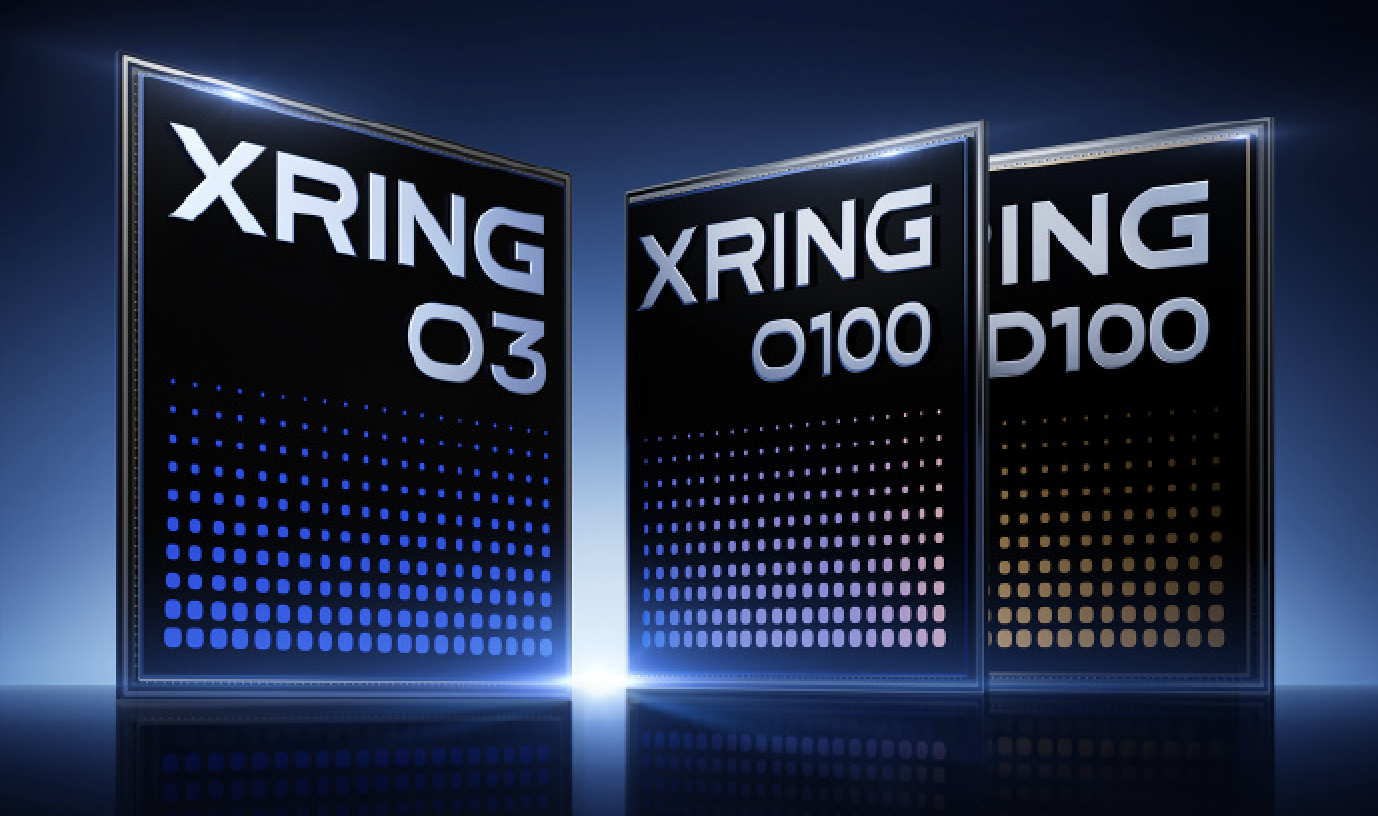
Xiaomi Group has unveiled a three-pronged in-house chip portfolio — spanning flagship mobile, large-model AI acceleration, and autonomous driving — a strategic escalation that signals the company's ambition to reduce dependence on Qualcomm and MediaTek across every hardware segment it competes in.
The disclosures, made at a media briefing in Beijing on August 24, 2026, represent the most comprehensive single-day chip announcement in Xiaomi's history. The Xring O3 mobile SoC has already entered mass production, while the Xring O100 AI accelerator and the D100 autonomous driving chip — both completing R&D — are scheduled for commercial deployment in 2027. The sequencing matters: Xiaomi is not merely announcing roadmaps; it is stacking production-ready silicon against future-dated platforms to demonstrate a credible, multi-year silicon independence strategy.
The market read is straightforward. For investors, the trio collectively addresses three of the highest-margin chip markets in consumer and enterprise technology. For Xiaomi's supply chain, it means progressively displacing third-party silicon costs on flagship devices while opening potential licensing or foundry-service revenue streams. For competitors — Qualcomm, MediaTek, and in the autonomous driving domain, Horizon Robotics and Mobileye — the pressure is structural rather than episodic.
Xring O3 Breaks the 5-Million Benchmark Barrier, Redefining China's Premium SoC Tier
The Xring O3 is built on a 3nm process node, occupies a die area of 133mm², and packs 24 billion transistors — a 26% increase over its predecessor. Its AnTuTu benchmark score of 5.22 million makes it the first SoC globally to breach the 5-million threshold, according to Xiaomi, a milestone achieved after 459 days of development.
The CPU architecture deploys a 10-core all-large-core configuration — six ultra-large cores plus four large cores — peaking at 4.35GHz, with CPU performance up 60% generation-over-generation. The deliberate rejection of the conventional big.LITTLE (large-small core) topology is analytically significant: Xiaomi's engineering rationale is that on-device AI inference demands sustained parallel compute throughput, not the burst-and-idle rhythm that heterogeneous core designs optimize for. Multi-core scores have crossed 15,000 for the first time on a Xiaomi chip.
The GPU story is equally striking. The new G2-Ultra NX graphics processor delivers an 85% performance uplift while simultaneously cutting power draw by 64% — a combination that is rare in mobile silicon, where performance gains typically come at a thermal cost. Eight NX neural network accelerators are embedded within the GPU die itself, collapsing the traditional boundary between graphics rendering and AI inference and enabling real-time AI-driven frame enhancement in gaming workloads.
On memory, the Xring O3 becomes the world's first mobile processor with native LPDDR6 support, achieving 113.8GB/s bandwidth — a 48% improvement over the Xring O1. For large-model inference, where parameter retrieval is the principal bottleneck, that bandwidth expansion is a direct multiplier on end-side AI throughput.
The NPU has been rebuilt from the ground up around Xiaomi's own MiMo model family. Tensor compute reaches 200 TOPS; vector compute stands at 3.13 TFLOPS. Against a conventional flagship SoC running a 3B MiMo model, the O3 delivers 40% faster prefill and 45% faster decode. Critically, Xiaomi's "All-in-AI" architecture distributes inference tasks across the entire chip: dual SME2 units in the CPU, an AINR unit in the ISP for night-video denoising, a hardware AI super-resolution unit in the DPU, and an AI engine in the ADSP. The system latency over Xiaomi's proprietary unified fusion bus is 82 nanoseconds.
Xring O100 Targets the On-Premise AI Inference Market With 330 Tokens Per Second
The Xring O100 is a purpose-built large-model AI accelerator, not a mobile SoC derivative. Fabricated on 6nm with a 3D wafer-level stacking architecture, it achieves 1.22TB/s memory bandwidth — a figure that positions it directly against the requirements of enterprise-grade inference workloads. Running Xiaomi's MiMo 3B model, the O100 sustains 330 tokens per second, a throughput metric that will draw immediate comparison against Nvidia's edge inference offerings and domestic competitors such as Cambricon and Biren Technology.
The near-memory AI compute architecture, paired with Xiaomi's proprietary high-bandwidth matrix bus supporting multi-core parallel computation, suggests the O100 is designed for rack-level or server-edge deployment rather than handset integration. Its 2027 commercial launch timeline aligns with what Xiaomi describes as the maturation of its MiMo model ecosystem — implying the hardware and software stacks are being co-developed rather than sequenced independently.
D100 Autonomous Driving Chip Closes the Last Gap in Xiaomi's Vertical Integration
The Xring D100 is Xiaomi's first self-designed automotive-grade intelligent driving chip, built on a 3nm process with a 20-core CPU and 16-core NPU. Its announcement is strategically the most consequential of the three disclosures: it directly addresses the most conspicuous remaining dependency in Xiaomi's electric vehicle (EV) hardware stack.
Xiaomi's SU7 sedan, which entered volume production in 2024, has relied on third-party automotive chips for its intelligent driving functions. The D100 signals that Xiaomi intends to own the full compute stack in its next-generation vehicles — a move that mirrors the vertical integration playbook executed by Tesla with its Full Self-Driving chip and by BYD with its in-house automotive semiconductors. The 2027 commercialization target for the D100 coincides with the expected launch window for Xiaomi's second vehicle model, making the timing alignment more than coincidental.
For the domestic automotive chip supply chain, the D100's arrival adds Xiaomi to a competitive set that already includes Horizon Robotics, Black Sesame Technologies, and increasingly Huawei's Ascend automotive platform — intensifying pressure on international suppliers including Mobileye and Texas Instruments in the China market.
Assessing the Strategic Inflection: From Component Buyer to Silicon Architect
The Xring O1, Xiaomi's first self-developed chip, served an auxiliary function — accelerating specific tasks within devices that still depended on Qualcomm Snapdragon SoCs for primary compute. The O3 inverts that hierarchy: it is positioned as the primary SoC for Xiaomi's highest-end flagship devices, with third-party chips becoming the fallback rather than the default.
The progression from O1 to O3 — spanning roughly two chip generations — compresses a development arc that took Apple nearly a decade to fully execute with its A-series silicon. Whether Xiaomi can sustain the R&D investment required to maintain competitive parity with Qualcomm's Snapdragon 8 Elite series and Apple's A-series on an annual cadence remains the central question for analysts monitoring the stock. The company has not disclosed cumulative chip R&D expenditure, but the 459-day development cycle for the O3 implies a sustained, large-scale engineering commitment that will be visible in future operating expense disclosures.
For now, the benchmark numbers are real, the mass production of the O3 is confirmed, and the 2027 commercial timeline for the O100 and D100 is on record. Xiaomi has moved from announcing a chip strategy to executing one.
Related Coverage:
Xiaomi's Xring O1 Tops 1 Million Shipments as In-House Chip Push Expands to EVs