
Xpeng CEO Forecasts Evolution of AI Automakers into Robot Companies as Tech Synergies Deepen
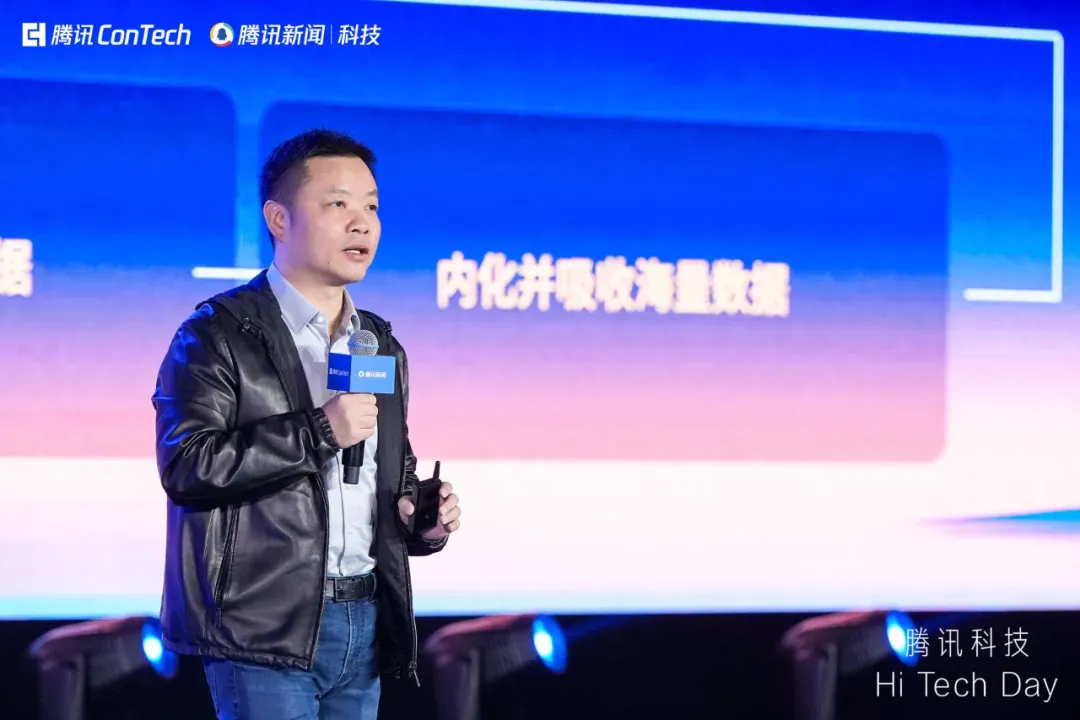
Xpeng Chairman He Xiaopeng stated that artificial intelligence-driven automotive companies are destined to evolve into robotics enterprises, citing deep technological homologies between the two sectors. The prediction highlights a broader industry pivot as electric vehicle manufacturers seek new growth engines beyond traditional mobility, positioning smart cars as a subset of a larger embodied intelligence market.
Speaking at the Tencent ConTech conference organized by Tencent on Dec. 19, He doubled down on his firm’s strategic rebranding to a "global embodied AI company," a shift first announced in November. He emphasized that the transition is driven by the necessity to capture data from the physical world to fuel the next stage of AI development, moving beyond the plateauing data gains from the digital realm.
The comments come as approximately 18 global automakers, including Tesla Inc., Xiaomi, and BYD, have entered the humanoid robotics sector as of December 2025. This sector-wide convergence suggests that investors should view autonomous driving capabilities not just as a vehicle feature, but as a foundational technology scalable across various robotics applications.
He projected that the integration of smart cars and robots will create a decentralized "Ant Colony Effect" among intelligent agents, fundamentally reshaping industrial ecosystems. This vision underpins Xpeng’s aggressive research and development spending, which combined with its ecosystem partners, reached RMB 11 billion yuan (US$1.5 billion) in 2025 to advance physical AI technologies.
Technological Convergence
The inevitable transition from automaker to robot maker is driven by shared technological foundations. He noted that over the past decade, automakers have built comprehensive stacks ranging from underlying chips and physical world models to upper-layer applications. This architecture provides a mature "hard" foundation for robotics development, eliminating the need to start from scratch.
Specific hardware synergies include Xpeng’s proprietary Turing AI chips, which deliver 2,250 TOPS (tera operations per second) of computing power. Derived from autonomous driving development, these chips now power the company's robotics initiatives. Similarly, algorithms designed for vehicle path planning and obstacle avoidance are directly transferable to robots navigating unstructured environments. Furthermore, the automotive industry’s massive supply chain and quality control standards offer a critical advantage in bringing robots to mass production.
The Hunt for Physical Data
While shared hardware provides the base, the pursuit of physical world data represents the core strategic driver. He argued that after 30 years of internet development, the growth of high-value data in the digital world is slowing. The physical world, however, offers an untapped reservoir of multi-modal data—including tactile feedback and spatial interaction—necessary for the next leap in AI capability.
Automobiles serve as primary data collectors in outdoor environments, but their scope is limited to mobility scenarios. Humanoid robots extend this reach into homes, commercial spaces, and industrial floors, acting as terminals to gather diverse data that feeds back into model training. This feedback loop is expected to improve the robustness and adaptability of AI models across all platforms.
The 'Ant Colony' Ecosystem
He introduced the concept of the "Ant Colony Effect" to describe the future industrial logic of the AI era. Unlike the centralized network effects of the internet age, the new era will be defined by decentralized intelligent agents capable of autonomous decision-making and collaboration.
In this ecosystem, smart cars and robots function as individual agents. Future tech giants, He predicted, will manage millions of these agents supported by massive GPU clusters. Automakers are positioned to build these ecosystems, with cars providing data and computing power while robots expand application scenarios. This collaboration aims to create a "Pan-Smart" environment where boundaries between devices blur, shifting competition from single products to comprehensive intelligent agent ecosystems.
Commercialization and Production Roadmap
Xpeng outlined a concrete timeline for its diversification. The company plans to begin mass production of its "IRON" humanoid robot in approximately one year. Initial deployments will focus on factory and commercial settings, particularly in Europe and China, before addressing the complex safety and reliability challenges required for home entry.
Additionally, the company is advancing its low-altitude mobility solutions. A modular flying car, which integrates an aircraft into a vehicle widely suitable for mass production, is scheduled for release in the second half of 2026. Xpeng is also developing a long-range eVTOL (electric vertical takeoff and landing) aircraft capable of speeds around 500 km/h.