
XPeng Eyes $20 Trillion Humanoid Robot Market With Late-2026 Production Target
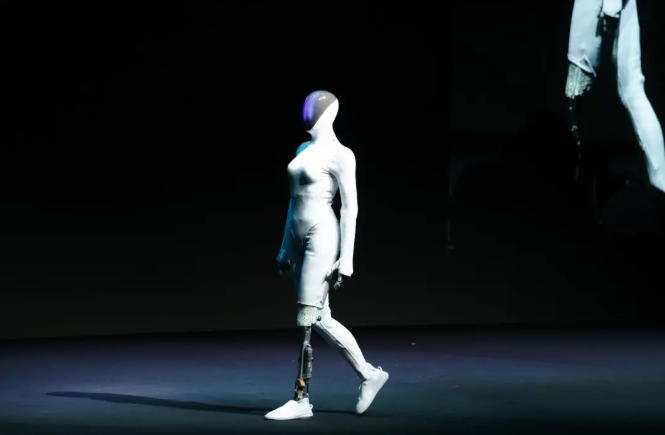
XPeng Motors Inc. Chairman and CEO He Xiaopeng outlined ambitious plans for the humanoid-robot industry, projecting it could become a $20 trillion market supporting 200 million units or more within 10 to 20 years—dwarfing the automotive sector’s $10 trillion market with 90 million annual vehicle sales. The electric-vehicle maker unveiled its latest humanoid robot, IRON, at XPeng AI Day on 5 November, targeting mass production by the end of 2026 with manufacturing standards that meet or exceed automotive-grade requirements.
He told media including The Paper that the company will invest in an automated factory to ensure production quality and reliability. After five to six years of development, XPeng determined that consumer-grade standards are insufficient for robot mass production; automotive-grade specifications—and in some cases even higher thresholds—are required to hit quality targets.
IRON will be the first humanoid robot to ship with all-solid-state batteries, eliminating thermal-runaway risks so the machine can safely operate in homes and crowded environments. XPeng plans to open its software-development kit (SDK) globally, allowing external companies and individuals to build additional functions and application scenarios.
He expressed optimism that the robotics industry will experience an “iPhone 4 moment” within five to ten years, though he cautioned that near-term mass production faces numerous challenges. He projected annual robot sales could exceed one million units within a decade, surpassing automotive volumes.
Humanoid Design Philosophy Drives Market Strategy
He defended XPeng’s anthropomorphic design approach, which drew attention when IRON walked onstage with a human-like gait and form. He cited three strategic advantages for human-like robots:
AI-driven intelligence requires training data from human environments rather than rule-based systems.
Existing infrastructure in homes and factories is designed for humans, making human-form robots more adaptable.
A consumer-friendly appearance drives sales volume, creating economies of scale that reduce costs in a positive-feedback loop.
The robot features spine-like structures, biomimetic muscles, and full-coverage flexible skin engineered for maximum human resemblance. He emphasized that advanced robots will take various forms, but anthropomorphic designs represent the core development direction for the industry.
Broader Physical-AI Ecosystem Taking Shape
XPeng positions humanoid robots as one pillar of its “AI and physical-world integration” strategy. At the same event the company unveiled its second-generation Vision-Language-Action (VLA) model, robotaxi services, and aerial-vehicle systems through affiliate Xpeng Aeroht.
Three robotaxi models will launch in 2026 and begin trial operations. Xpeng Aeroht’s flying-car plant commenced trial production on 3 November, rolling out its first “Land Aircraft Carrier” modular flying vehicle from a 10,000-unit-a-year facility. The site will accelerate mass production of the split-type flying-car system in 2026.
Growth Timeline Diverges From Automotive Industry
He distinguished the robotics growth trajectory from automotive development, noting cars follow a more linear “first-curve” pattern because of strict safety regulations and policy constraints. Robots, he argued, could experience exponential growth once they pass technical and product inflection points, though the timing of the breakthrough remains uncertain.
The executive acknowledged that no one can yet name the year that will mark the industry’s transformative, iPhone-4-like moment, but he expressed confidence that collective global effort will produce a major leap forward within five to ten years. This timeline reflects his view that robotics—less constrained by regulatory frameworks than automobiles or aircraft—can accelerate rapidly once key technological barriers are overcome.