
XPeng's Robot So Human It Sparked a Hoax Theory. Here's the Tech Behind It.
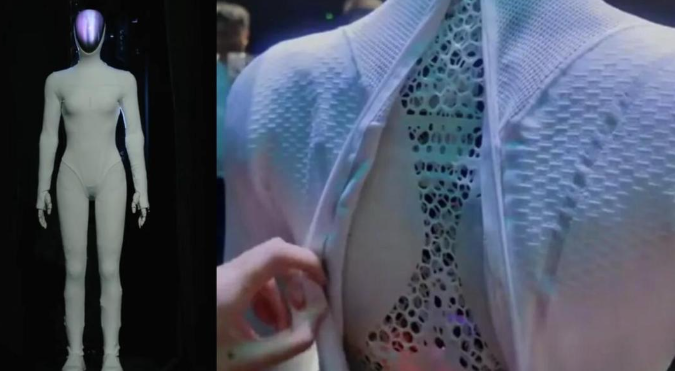
Chinese electric vehicle maker XPeng Inc. is signaling a major advance in humanoid robotics, using a new material innovation to create a machine so lifelike it triggered widespread online speculation that it was a human in disguise. The public debate, and the company's subsequent reveal, has cast a spotlight on elastomers—a class of flexible materials that could serve as artificial muscles, potentially accelerating the development of safer, more agile robots for factories and homes.
The controversy began after XPeng unveiled its latest humanoid robot, named IRON, on November 5. The robot’s remarkably fluid and natural gait in demonstration videos led many social media users to claim it was a hoax, with some pointing to an ear-like contour and a bulge on the robot's back as evidence of a person inside a suit.
In response, XPeng CEO He Xiaopeng released a video to debunk the rumors. He used scissors to cut open the fabric on the robot's leg and unzipped its back, revealing a milky-white internal structure with a dense lattice pattern, definitively proving it was a machine. This unusual step to quell public skepticism inadvertently became a powerful showcase of the company’s progress in creating biomimetic machines.
The technology enabling this human-like motion is not just sophisticated software but a material science breakthrough. The key lies in 3D-printed elastomers that function as the robot’s "muscles," a departure from the rigid metal bodies common in the industry. This innovation promises to make robots lighter, more efficient, and better suited for human environments.
‘Artificial Muscles’
The secret to IRON's fluid movement is its use of elastomers, a material with properties between rigid plastics and soft silicone. Unlike the stiff stainless steel or aluminum frames traditionally used in robotics, which result in rigid and jerky movements, elastomers provide a flexible and continuous response.
“Elastomer materials act like muscles, with the ability to coordinate and work like a muscle group,” said Xiao Bowen, CMO of Boli Technologies, a supplier of 3D-printed high-performance materials. This allows the robot to simulate the stretching and pulling motions of human muscles, creating a more biomimetic posture and walk. Such natural movement is considered a fundamental requirement for robots intended for household or elderly care scenarios.
This material also offers significant weight advantages. For the same volume, elastomers are 60% to 70% lighter than traditional rigid materials. This allows engineers to allocate more of the robot's weight budget to critical components like joints, hands, and the head, while reducing demands on motor torque and energy consumption. The lightweight and flexible body also mitigates the safety risk of collisions with humans.
A New Frontier in Manufacturing
The adoption of elastomers represents a shift in manufacturing processes for robotics. The material's complex internal lattice structures, which provide both flexibility and support, cannot be produced using traditional molding techniques. Instead, they require advanced 3D printing.
This method, which builds the robot's body layer by layer with photosensitive resin, allows for precise control over the internal structure, mimicking the biological process of muscle formation. Boli Technologies, whose clients include other major robotics firms like AgiBot and UBTECH Robotics, claims its 3D printing technology is 20 to 100 times faster than conventional processes. However, introducing a "muscular" system also creates new challenges, requiring more sophisticated control systems and algorithms to manage the material’s micro-deformations.
Oasis Capital, an early investor in Boli, sees material innovation as a "key variable" in the development of embodied intelligence, arguing that a robot's physical body is as crucial as its AI brain for real-world adoption.
XPeng's Robot-Car Synergy
For XPeng, the push into humanoid robotics is deeply integrated with its core automotive business. CEO He Xiaopeng has stated that the first application for its robots will be manufacturing cars in its own factories. This strategy creates a powerful-closed loop: the robots increase factory automation, and the human-centric factory environment serves as an ideal "testing ground" for the machines.
By operating in a real-world production setting, the robots can collect vast amounts of data, which in turn fuels a "data flywheel" to continuously improve their capabilities. A human-like form is critical, as it allows the robots to seamlessly integrate into environments and use tools designed for people. XPeng benefits from a significant head start, with He noting that about 70% of the technology in its robots—including perception systems, domain controllers, and AI software—is shared with its electric vehicles, enabling rapid development and reuse.
A $20 Trillion Bet
He Xiaopeng sees robotics as a market with enormous potential, one that will enter a period of high-speed growth once key technological and product inflection points are reached. He projects that robotics could become a $20 trillion market over the next 10 to 20 years, double the size of the automotive industry.
This long-term vision informs the company’s aggressive investment in the field. He believes that more approachable, human-like robots will drive higher sales volumes, leading to economies of scale and creating a virtuous commercial cycle.
"I haven't thought about how many robots we'll sell in ten years," He said in a recent interview. "But it will definitely be more than cars."