
Xpeng Slashes Flagship SUV Price by 25% in Margin Defense as China's Premium EV Market Overheats
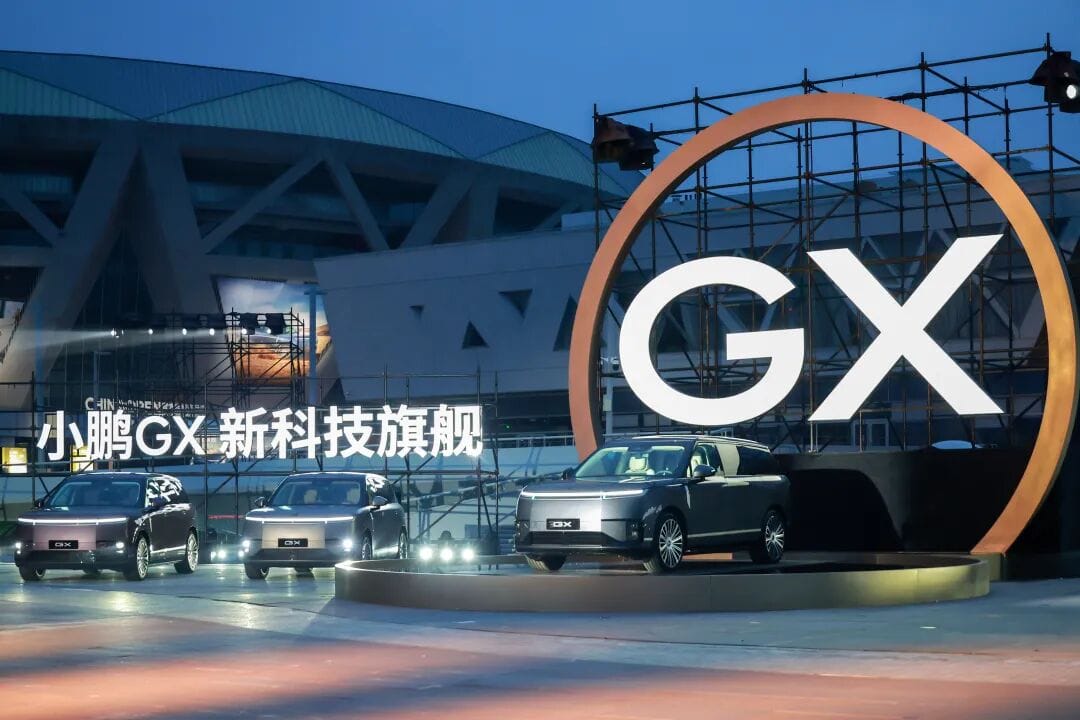
Xpeng aggressively undercut its own presale pricing by more than 25% for the new flagship GX SUV, signaling an intensifying margin defense strategy as China’s premium electric vehicle sector faces a looming supply glut in 2026.
The full-size SUV, launched late Wednesday with a starting price of RMB 279,800 (US$38,861), enters a saturated segment where over 40 competing models are slated for release this year. The drastic RMB 120,000 cut from the previously announced presale price reflects mounting pressure on automakers to balance volume growth against deteriorating profitability in a ruthless price war.
Xpeng’s vehicle gross margins contracted steadily throughout 2025, sliding from 14.3% in the second quarter to 13.1% by year-end. CEO He Xiaopeng characterized the final pricing as a difficult compromise designed to secure baseline profitability while capturing market share in the high-margin large SUV category, which management views as critical for the company's upward brand trajectory.
Surging Competitor Supply Squeezes Profitability
The large SUV segment has traditionally served as a high-margin sanctuary for domestic automakers seeking to escape the low-profit trap of mass-market vehicles. However, data from the China Passenger Car Association (CPCA) indicates the sector is rapidly transitioning from a blue ocean into a red one. With the total addressable market for full-size SUVs capped at approximately 100,000 units annually, the influx of 2026 models threatens to severely dilute market share and pricing power.
To achieve its stated goal of ranking among the top three in the full-size SUV segment, Xpeng must secure an average monthly sales volume of 5,500 units. The company faces entrenched competition from Nio ES8, Zeekr 9X, and Aito M8, with the latter already accumulating 22,269 units in sales through the first four months of 2026. As new entrants deploy identical hardware selling points—such as steer-by-wire chassis and privacy glass—the premium segment's growth headroom is narrowing.
Deploying Autonomous Tech Offsets Brand Constraints
Unlike rivals Tesla and Nio, which established premium brand positioning before descending into mass-market segments, Xpeng’s historical reliance on price-to-performance ratios creates structural headwinds for its premiumization efforts. To bridge this brand equity gap, Xpeng is heavily leveraging its proprietary autonomous driving architecture to justify the GX's valuation.
The GX integrates the company’s second-generation VLA system and aviation-grade safety redundancies. Concurrently, Xpeng is weaponizing this platform for the commercial sector, rolling out an L4-capable Robotaxi variant equipped with 3,000 TOPS of computing power on May 18. Scheduled for demonstration operations in the second half of 2026, the Robotaxi initiative serves a dual purpose: amortizing heavy R&D costs and validating the premium tech valuation that retail consumers demand. Ultimately, Xpeng's ability to translate these raw hardware specifications into a perceivable user experience will determine whether the GX can sustainably command its premium positioning in an unforgiving 2026 market.
Related Coverage:
Xpeng CEO Teases 'GX' Model Ahead of 2026 Launch