
XPeng Unveils Five-Model Lineup and AI Ecosystem at Munich Motor Show
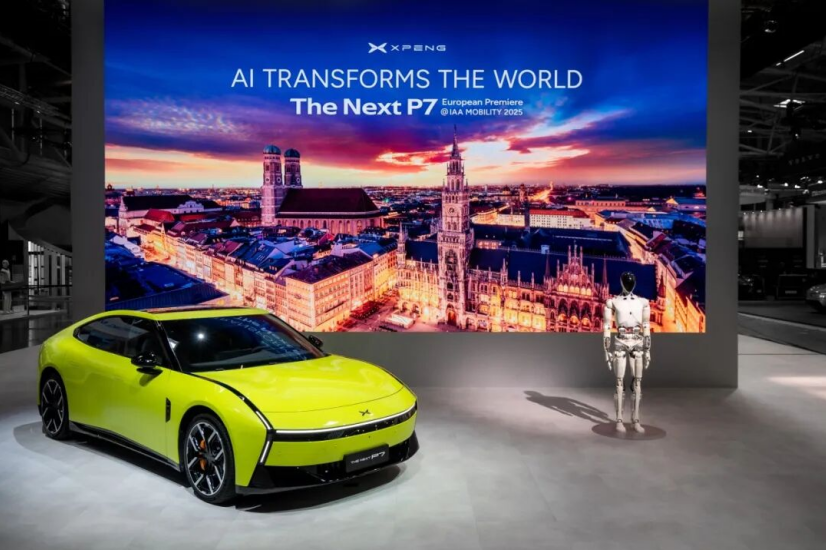
XPeng Inc. showcased five vehicle models and unveiled its AI-driven mobility ecosystem at the Munich Motor Show, marking the Chinese electric vehicle maker's latest push into European markets. The company announced the launch of its European R&D center and demonstrated advanced technologies including humanoid robots and flying cars as it seeks to establish a comprehensive AI mobility platform.
CEO He Xiaopeng outlined the company's strategy to build an integrated ecosystem centered on AI vehicles, humanoid robots, and flying cars during a themed presentation titled "Leading AI Future Mobility." The showcase comes as XPeng accelerates its global expansion, having delivered 21,701 vehicles overseas in the first seven months of 2025, representing a 174% year-on-year increase.
The company's European operations received a significant boost with the formal launch of its European R&D center, XPeng's ninth global research facility. This expansion supports the automaker's presence across 46 countries and regions since entering the Norwegian market in 2021.
XPeng's technological demonstrations at the Munich show highlighted its diversification beyond traditional automotive manufacturing, featuring AI-powered products designed to position the company at the forefront of next-generation mobility solutions.
European Market Strategy and Vehicle Portfolio
XPeng's Munich exhibition featured its core lineup including the new P7, 2025 G6 and G9 models, the X9, and the P7+. The G9 maintains its position as the top-selling Chinese brand in Europe's mid-to-large pure electric SUV segment, while the mid-size G6 SUV has gained market acceptance and the P7+ is preparing for European market entry.
The new P7 serves as the flagship model, equipped with three Turing AI chips delivering 2,250 TOPS of computing power to support local large language models for enhanced human-vehicle interaction. Performance specifications include 593 horsepower maximum output, 3.7-second zero-to-100 kilometer acceleration, and 5C ultra-fast charging capability providing 525 kilometers of range with a 10-minute charge.
XPeng's European R&D center establishment represents a strategic move to directly engage with European consumers and convert feedback into innovation outcomes, according to Vice Chairman and Co-President Gu Hongdi. The facility joins XPeng's Silicon Valley and San Diego research centers in forming a coordinated global development network.
The company's localization efforts extend beyond Europe, with the first locally-produced X9 delivered in Indonesia in July. XPeng's strategic partnership with Volkswagen Group continues expanding, with jointly developed electronic and electrical architecture being deployed across Volkswagen's pure electric, fuel, and plug-in hybrid vehicle platforms in the Chinese market.
AI Technology and Future Mobility Products
XPeng demonstrated its humanoid robot IRON, flying cars, and "land aircraft carrier" concept models as part of its broader AI technology portfolio. The company has invested five years in robotics development, completing six generations of research and concept validation.
IRON has entered factory training phases and incorporates Turing AI chips along with the Eagle Eye vision system from XPeng's AI vehicles. The robot demonstrated coffee-making capabilities at the Munich show, showcasing interaction and execution abilities. XPeng plans to launch its next-generation ultra-humanoid robot in Q4 2025, targeting mass production by 2026. He Xiaopeng previously indicated that success in robotics requires investment of at least 50 billion yuan ($6.9 billion).
In low-altitude mobility, XPeng HT has conducted 12 years of research with approximately $600 million invested, completing seven aircraft iterations. The "land aircraft carrier" flying car is scheduled for its global maiden flight in Dubai in October, with nearly 5,000 orders already secured in the Chinese market and formal deliveries planned for the second half of 2026.
XPeng HT completed a $250 million Series B round. As of July, the company has raised more than $750 million in total, according to public data. The subsidiary also secured 6 billion yuan (US$830 million) in credit facilities in November 2022 and a 1.26 billion yuan syndicated loan in April 2025.
The company continues advancing autonomous driving capabilities, planning to launch L4-level autonomous production vehicles in 2026 and begin Robotaxi trial operations in China. XPeng's Turing AI-assisted driving system is undergoing global adaptation, with localized intelligent driving assistance functions expected for different markets starting in Q4 2026.