
XPeng’s EV Growth Hits a Supply Wall as Its Physical AI Bet Gains Momentum
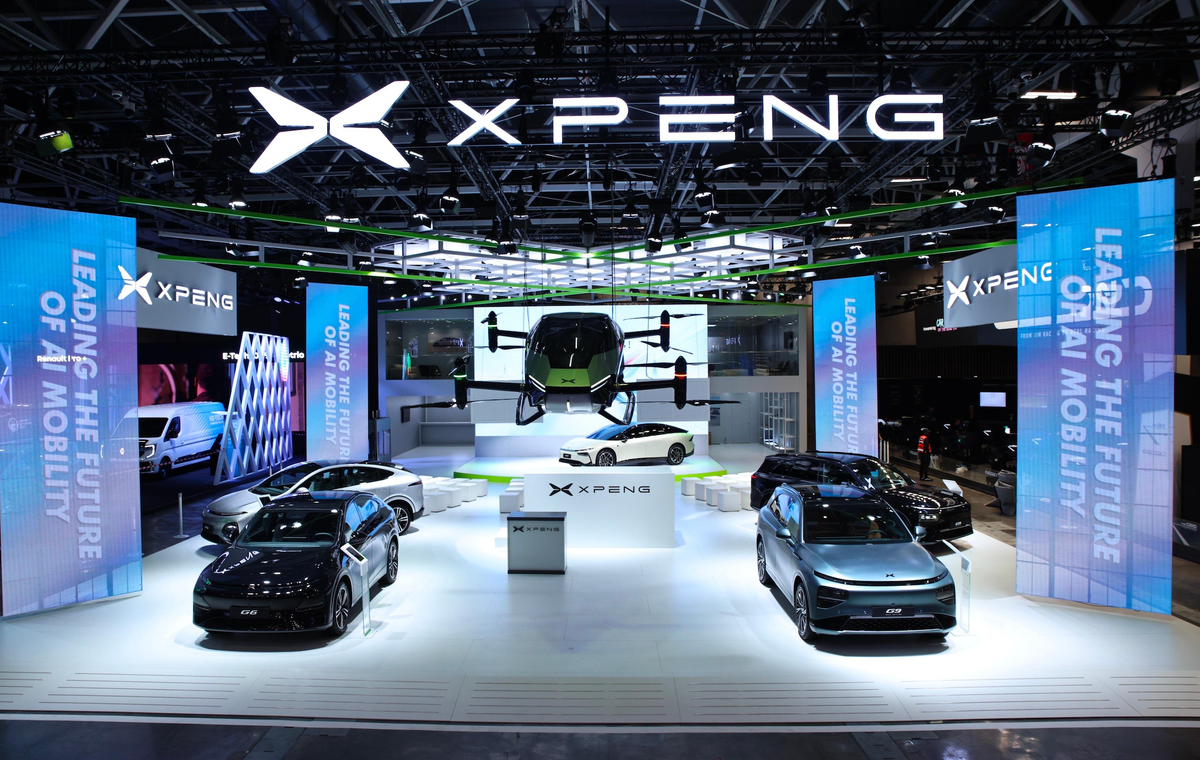
XPeng posted a mixed second-quarter scorecard on Aug. 24, with consolidated gross margin holding above 20% for a second consecutive quarter — but a Q3 delivery guidance that missed Wall Street consensus by nearly 19% sent its U.S.-listed shares tumbling more than 7% to $11.33, the lowest close since the first trading day of 2025.
The earnings release arrived hours after the company's robotics subsidiary, Dogotix, disclosed a $900 million fundraising round at a post-money valuation of $6.3 billion (approximately RMB 45.4 billion). Investors largely set aside that headline, concentrating instead on the widening gap between XPeng's AI ambitions and the supply-chain bottlenecks choking its vehicle business. The divergence encapsulates a central tension in China's electric-vehicle sector in 2026: premium technology narratives are increasingly difficult to sustain when core unit economics remain under pressure.
Supply Shock, Not Demand Collapse, Drives Q3 Guidance Miss
XPeng delivered 103,295 vehicles in Q2 2026, up 64.8% sequentially from a weak Q1 but virtually flat year-over-year against 103,181 units in the same period of 2025. Total revenue reached RMB 19.74 billion (US$2.74 billion), up 8.0% year-over-year and 51.5% quarter-over-quarter, falling short of the analyst consensus of RMB 19.9 billion.
The more consequential data point was the Q3 guidance: 115,000–121,000 deliveries and revenue of RMB 21.7 billion–23.4 billion (US$3.01 billion–US$3.25 billion). Both figures landed materially below market expectations of 147,000 units and RMB 26.6 billion respectively, with the revenue midpoint approximately 15% below consensus.
The shortfall is not a demand problem. XPeng's newly launched MONA L03 compact SUV accumulated 47,000 firm, non-cancellable orders within one hour of its July 16 debut — a conversion rate that eclipsed the 2024 MONA M03 launch benchmark of 30,000 orders in 48 hours. The GX full-size SUV, priced between RMB 269,800 and RMB 349,800, is running at roughly 7,000 monthly units with approximately 30,000 orders in hand.
The constraint is production capacity. The MONA L03 relies on XPeng's proprietary Turing AI chip — a single-die 750 TOPS processor that the company rolled out across its entire lineup in Q2 — and supply of that component is proving insufficient to satisfy order velocity. With July deliveries already recorded at 38,027 units, the Q3 guidance implies an August-September average of only 38,500–41,500 units per month, a pace that appears to leave tens of thousands of pending orders unfulfilled in the near term.
Service Revenue Quietly Becomes the Gross-Margin Engine
The headline gross margin figure of 20.7% — up from 17.3% a year earlier and marginally above Q1's 20.6% — obscures a structural shift in where XPeng's profitability is actually originating.
Vehicle gross margin came in at 12.1%, flat sequentially and below the consensus estimate of 12.4%. Average selling price (ASP) declined RMB 10,000 quarter-over-quarter to RMB 165,000, dragged lower by a mix shift: the lower-priced MONA M03 accounted for 41% of deliveries (up 8 percentage points sequentially), while the flagship X9 fell to 7%. International sales, which carry higher margins, grew 81% year-over-year to approximately 20,000 units — representing 19.4% of total deliveries — but were insufficient to offset the domestic mix headwind. On the cost side, the scale ramp and Turing chip substitution reduced per-unit cost by approximately RMB 9,000 to RMB 145,000, absorbing raw-material inflation in lithium iron phosphate batteries and memory chips. Per-unit gross profit nonetheless slipped a further RMB 1,300 to roughly RMB 20,000.
The consolidated margin rescue came from the services segment. Services and other revenue reached RMB 2.70 billion (US$375 million), up 93.9% year-over-year, driven by milestone-triggered recognition of technology R&D service fees from an undisclosed automaker client, plus parts and accessories sales. The segment's gross margin expanded 8.6 percentage points sequentially to 75.1%, well above the consensus forecast of 69%. Crucially, that segment — representing only 13.7% of total revenue — contributed RMB 2.03 billion in gross profit, nearly matching the RMB 2.06 billion generated by the entire vehicle business. XPeng's 20%-plus consolidated margin, in other words, rests on a services pillar that may not recur at the same intensity every quarter.
Operating Losses Narrow, But Investment Drag Widens Net Deficit
Operating loss for Q2 narrowed to RMB 1.14 billion from RMB 1.87 billion in Q1, reflecting operating leverage from the volume recovery. On a non-GAAP basis, net loss was RMB 1.24 billion. The reported GAAP net loss widened to RMB 1.34 billion, compared with RMB 480 million in Q2 2025, partly because fair-value losses on long-term investments expanded by RMB 310 million quarter-over-quarter.
Research and development expenditure reached RMB 2.91 billion (US$404 million), up 32.1% year-over-year, funding the VLA 2.0 autonomous-driving model upgrade released in August, Robotaxi L4 road-testing in Guangzhou, and the Iron humanoid robot's production ramp. Selling, general and administrative expenses rose to RMB 2.50 billion — above the RMB 2.28 billion consensus — as franchise dealer commissions tracked higher sales volumes and marketing spend for new model launches escalated. XPeng guided full-year R&D spending of approximately RMB 12.0 billion, including roughly RMB 7.0 billion earmarked for physical-AI initiatives.
Cash and equivalents stood at RMB 40.48 billion (US$5.62 billion) as of June 30, down RMB 1.61 billion from the prior quarter.
Robotics Unit Raises $900M, Targets Margins That Exceed Automotive
The Dogotix fundraising, led by IDG Capital with participation from Hillhouse Capital and strategic backing from Tencent and Alibaba, values XPeng's humanoid robot business at $5.0 billion pre-money and $6.3 billion post-money. XPeng retains approximately 73.8% of Dogotix after the round; the subsidiary will remain consolidated into group financials.
CEO He Xiaopeng stated on the earnings call that IRON hardware gross margin is expected to "significantly exceed" XPeng's current vehicle gross margin of 12.1%, with AI model licensing, software services, and subscriptions providing additional high-margin revenue streams. Co-President Gu Hongdi added that because robotics requires less capital expenditure than vehicle manufacturing, the segment could reach profitability faster than the automotive business once production scales — though he declined to specify a timeline, noting that the company's near-term priority is achieving monthly production capacity of over 1,000 units by end-2026, with commercial deliveries to enterprise customers beginning in 2027.
The strategic logic rests on supply-chain overlap: more than 85% of IRON's component suppliers are shared with XPeng's vehicle business, providing cost leverage from day one. XPeng also argues that its nearly decade-long autonomous-driving data pipeline — covering collection, labeling, training, and deployment — gives it a structural advantage over pure-play robotics startups, for which data infrastructure must be built from scratch.
Dogotix's implied equity value attributable to XPeng, after applying an 80% liquidity discount standard for primary-market transactions, is approximately $3.7 billion (roughly RMB 26.7 billion) — a figure that analysts expect to be re-rated upward as volume milestones are hit.
Overseas Expansion Accelerates as Domestic Market Softens
XPeng exported 9,700 vehicles in July 2026, a 223.3% year-over-year surge that lifted exports to 25.5% of wholesale volume — a company record. For the first half of 2026, international revenue accounted for more than 25% of total revenue. He Xiaopeng noted that XPeng's average export ASP exceeds €40,000 (approximately US$46,700), placing it in the top tier of Chinese automakers by overseas per-unit profitability.
The company is simultaneously advancing its VLA autonomous-driving software for international markets. MONA L03 vehicles equipped with the Turing chip have already been dispatched to overseas markets as of August, and XPeng has formed a dedicated business development team to explore licensing VLA and related technologies to third-party automakers globally. A subscription-based software monetization model is under development, with specifics to be disclosed at a later date.
The international push is partly a structural response to deteriorating domestic conditions. China's passenger-vehicle market has been contracting since late 2025, with persistent price competition and overcapacity compressing margins industry-wide.
Annual Delivery Target Faces Steep Arithmetic Challenge
XPeng's internal 2026 full-year delivery target of 550,000–600,000 units implies year-over-year growth of 28%–40% against 2025's 429,445 deliveries. Through July, cumulative deliveries stood at 204,004 — down 12.8% year-over-year and representing only 37.1% of the 550,000-unit floor. Reaching that minimum requires averaging approximately 69,200 units per month from August through December, a level roughly 39% above XPeng's all-time monthly delivery record.
The Q4 product slate — including the G9L five-seat SUV (pre-sale from RMB 259,800), the MONA L05, and continued GX and MONA L03 ramp — provides credible demand catalysts. Deutsche Bank projects MONA L03 could reach 150,000 annual units by 2027. But even at an optimistic Q4 monthly average of 60,000 units, full-year deliveries would total approximately 462,000–467,000, leaving a gap of 83,000–88,000 units against the 550,000 target.
The more realistic investor framework for 2026, therefore, is not whether XPeng hits its internal volume goal, but whether the Robotaxi passenger service launching in Guangzhou in Q3, the Iron robot production ramp, and the VLA software subscription model can collectively reframe the company's valuation from a volume-driven EV manufacturer toward a physical-AI platform — before the automotive cash burn demands a more fundamental reassessment.
Related Coverage:
XPeng’s Europe Strategy: Global Platform, Local Software, and the B2B Challenge