
Yadea, the 'BYD of Scooters,' to Challenge Japan's Motorcycle Titans on Home Turf
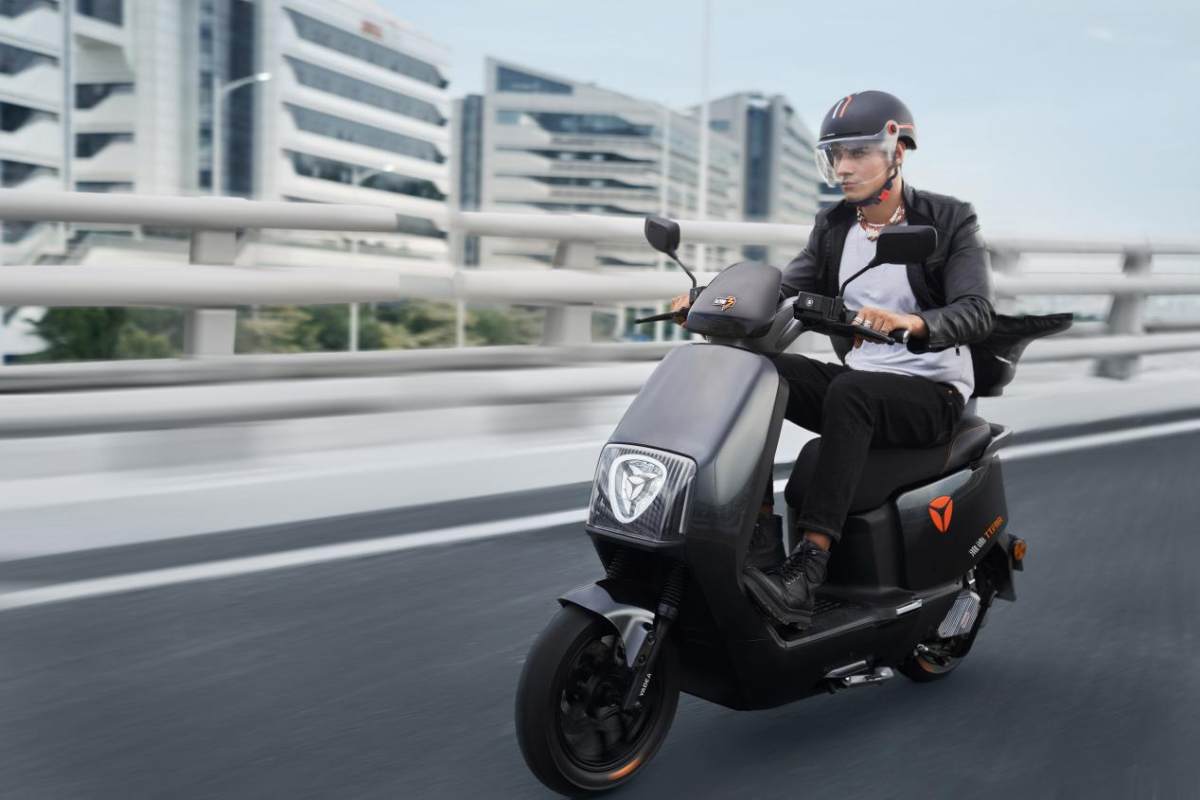
Yadea Group Holdings, the world's largest electric two-wheeler manufacturer, is launching its first electric scooter in Japan in November, priced around 210,000 yen ($1,380), approximately 30% cheaper than comparable Honda models. The Chinese company's entry comes as Japan implements stricter emissions standards this month, creating an opening for electric alternatives in a market where Japanese manufacturers hold over 40% global share in the gasoline-powered two-wheeler segment.
The timing of Yadea's market entry capitalizes on regulatory disruption. Japan's new emissions standards, equivalent to European environmental regulations, require significant reductions in carbon monoxide and nitrogen oxide emissions. Japanese manufacturers stopped production of existing models in late October, with only Yamaha Motor announcing a concrete launch date for compliant gasoline models in the first half of 2026.
Existing electric offerings from Honda and Yamaha Motor exceed 300,000 yen ($1,968), roughly 100,000 yen more than gasoline equivalents, leaving a pricing gap Yadea aims to exploit. The company's aggressive positioning reflects both opportunity in Japan's nascent electric market and necessity driven by domestic overcapacity in China.
The move represents a test case for whether Chinese electric vehicle manufacturers can replicate their domestic success in developed markets dominated by established Japanese brands, potentially forcing accelerated electrification strategies among incumbent players.
Competitive Pricing Strategy
Yadea's PORTA model, classified as a "gentsuki class 1" light electric two-wheeler with 0.6 kilowatt output, can be charged via standard household outlets and offers 60 kilometers maximum range. The 217,800 yen ($1,430) final price point exceeded initial market expectations of around 100,000 yen due to compliance requirements for maximum speed limits and turn signal positioning under Japanese safety standards.
Hasegawa Mobility, Yadea's authorized Japanese distributor, positions the vehicle as adequate for daily commuting needs. The retro-styled design and color scheme target younger demographics in a shrinking market. Japan's two-wheeler sales peaked above 3 million units annually in the early 1980s but fell to approximately 320,000 units in 2024, one-tenth of historical highs due to demographic decline.
"Two-Wheeler Industry's BYD"
Founded in 2001, Yadea displaced Japanese manufacturers including Honda that once dominated China's two-wheeler market. The company gained market leadership through vertical integration, developing and manufacturing batteries and electric motors in-house. Yadea holds significant share in the under-5,000 yuan ($694) price segment in China, earning comparisons to BYD for its low-cost electric vehicle strategy.
The company now operates sales networks across over 100 countries. However, the overseas expansion reflects structural pressures. "China is experiencing deflation and domestic market weakness. Two-wheelers also face production overcapacity, so they need to find overseas outlets," said Hikari Todoroki, chief consultant at KPMG Consulting.
Despite China's domestic challenges, Yadea's international push comes as global two-wheeler electrification accelerates. According to Yano Research Institute in Tokyo, electric models comprised 8.5% of the 59.9 million global two-wheeler unit sales in 2024, with projections reaching 18.8% electrification by 2035.
Japanese Manufacturers' Response
Honda, Yamaha Motor, Suzuki, and Kawasaki Heavy Industries collectively control over 40% of the global two-wheeler market, built on internal combustion engine expertise. However, emerging competitors including India's Ola Electric Mobility, Vietnam's VinFast, and Taiwan's Gogoro are introducing models with ranges exceeding 100 kilometers.
Honda plans 500 billion yen ($3.28 billion) investment in two-wheeler electrification through 2030, targeting 30 electric models and 4 million annual unit sales—equivalent to one-fifth of its global volume. "Electric two-wheelers achieving profitability still requires time," said Minoru Kato, Honda's two-wheeler business division head, at a January briefing in Tokyo. The strategy maintains internal combustion profitability while developing electric technology.
Yamaha Motor aims for approximately 30% of new two-wheeler models to be electric during 2025-2027, through electrification of existing models and introducing products from invested U.S. startups.
Takaki Nakanishi, representative analyst at Nakanishi Research Institute, notes differentiation from automobiles: "Unlike cars, the two-wheeler internal combustion market is still growing. Japanese companies don't necessarily need to be electrification pioneers." Adoption barriers include higher prices and inadequate charging infrastructure outside limited markets like China.
Nevertheless, Yadea's entry into Japan's home market will test whether pricing advantages can overcome brand loyalty and established distribution networks, potentially accelerating Japanese manufacturers' electrification timelines regardless of profitability concerns.