
Aiper Leads Chinese Wave Disrupting $3 Billion Pool Robot Market
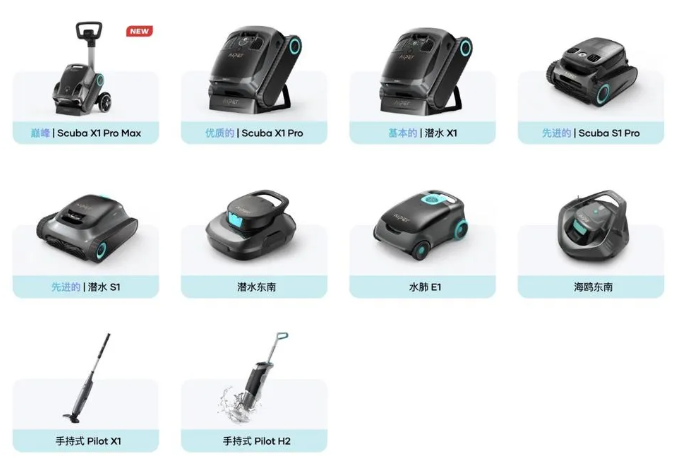
Chinese technology firms are rapidly overturning the stagnant, billion-dollar robotic pool cleaner market, a niche but lucrative segment long dominated by Western incumbents. Spearheaded by companies like Aiper, these challengers are leveraging innovations from the consumer electronics playbook—cordless designs, AI-powered navigation, and agile supply chains—to capture significant global market share.
The trend was underscored in April 2025 when Spanish pool equipment giant Fluidra acquired an approximate 27% stake in Aiper’s parent company, Yuanding Intelligence Co. The strategic investment validates the Chinese firm's disruptive model and provides a powerful global channel for expansion. Aiper, which only pivoted to pool robots in 2019, reported total revenue of approximately 3 billion yuan (about $420 million) in 2024.
This influx of innovation is putting legacy brands under intense pressure. Industry leader Maytronics saw its revenue decline 14% to 3.4 billion yuan in 2024, as its traditionally corded, random-path devices struggle to compete with the new generation of smarter, more efficient Chinese products. The shift signifies a broader pattern of Chinese companies moving from OEM manufacturing to building globally competitive brands.
The new entrants are succeeding by directly addressing key consumer pain points that incumbents were slow to solve. By eliminating cumbersome power cords, improving cleaning efficiency with intelligent path planning, and offering competitive pricing, they have unlocked new demand in a market ripe for disruption. Chinese brands now account for over 40% of global pool robot shipments.
From Tangled Cords to Smart Navigation
The global market for robotic pool cleaners is centered in the U.S. and Europe, where nearly 90% of the world’s 28-30 million private pools are located. High maintenance costs, averaging 3,000−6,000 yuan annually, created a strong demand for automation. Yet, the market, led by century-old brands like Maytronics (Dolphin), Fluidra (Zodiac/Polaris), and Hayward, was characterized by slow technological progress. Their products were often heavy, prone to tangled cords, and relied on inefficient random-collision navigation.
Chinese firms identified this gap starting around 2019. Aiper, for instance, focused its strategy on developing "cordless" and "intelligent" products. The company overcame significant technical hurdles, including underwater sensor limitations where traditional LiDAR has a 90% failure rate. Aiper’s solutions include a proprietary "pool environment physical simulation engine" that resolves up to 80% of design issues before prototyping, and a combination of visual navigation and millimeter-wave radar in its high-end Scuba series. It has also developed solar-powered surface skimmers and advanced battery management systems.
Aiper's Playbook: Rapid Growth and Global Reach
Aiper’s rapid ascent is built on a clear strategy combining technological innovation with a dual-channel global rollout. The Shenzhen-based company, with an R&D center in Suzhou, leverages China’s efficient electronics supply chain to bring products from concept to market in just a few months—a pace legacy competitors cannot match.
In 2024, Aiper’s revenue was split between online sales (1.8 billion yuan) and offline retail (1.2 billion yuan). Its products, priced from 179 to 1,099 yuan, are sold through its own website, Amazon, and over 7,000 physical stores, including major retailers like Home Depot, Lowe’s, and Walmart. Offline sales now constitute over 40% of its business. To build brand recognition, the company has invested in high-profile marketing, including sponsorships of the Super Bowl and the Grammy Awards. Aiper is now looking to extend its success into a broader smart yard ecosystem, with plans for robotic lawnmowers, smart irrigation, and snow blowers.
An All-Chinese Battlefield Emerges
While Aiper is a market leader, it faces intense competition from a growing cohort of domestic rivals, turning the global market into an all-Chinese contest. These companies are segmenting the market with different strategies, from value-focused offerings to high-end technological showcases.
The most prominent competitor is Wangyuan Technology Co., which markets its products under the brand Wybot. Formerly Aiper's largest contract manufacturer, Wybot has transformed into a direct competitor, capturing 19.7% of the wireless segment in 2024. It focuses on the low- to mid-range market with aggressive pricing, including discounts of up to 43% during promotions.
At the premium end, Xingmai Innovation Technology Co., known as Beatbot, is challenging with devices like the AquaSense Pro Max, which features advanced underwater LiDAR and multi-sensor fusion for precise navigation. Other players, including Zhicheng Dynamics (SMOROBOT) and Langyong Weilai, an affiliate of household robotics firm Dreame Technology, are also entering the fray, leveraging their expertise in home robotics.
Incumbents Face an Innovator's Dilemma
The coordinated assault by Chinese brands has left Western incumbents in a precarious position. Maytronics' 2024 revenue decline highlights the erosion of its market leadership, particularly in the premium segment it once dominated. Its first cordless models, released only in 2023, still rely on older random-path navigation, putting them at a functional disadvantage.
Legacy players like Polaris and Hayward face a similar threat. Unless they can rapidly pivot to cordless and intelligent platforms, they risk ceding further market share. The pool robotics industry is quickly evolving from a standalone appliance category into an integrated part of the smart yard ecosystem, a vision that Chinese firms, with their roots in consumer technology, are better positioned to execute.