
Zhipu AI Open Sources Agent Model, Accelerating 'Driverless Moment' for Smartphones
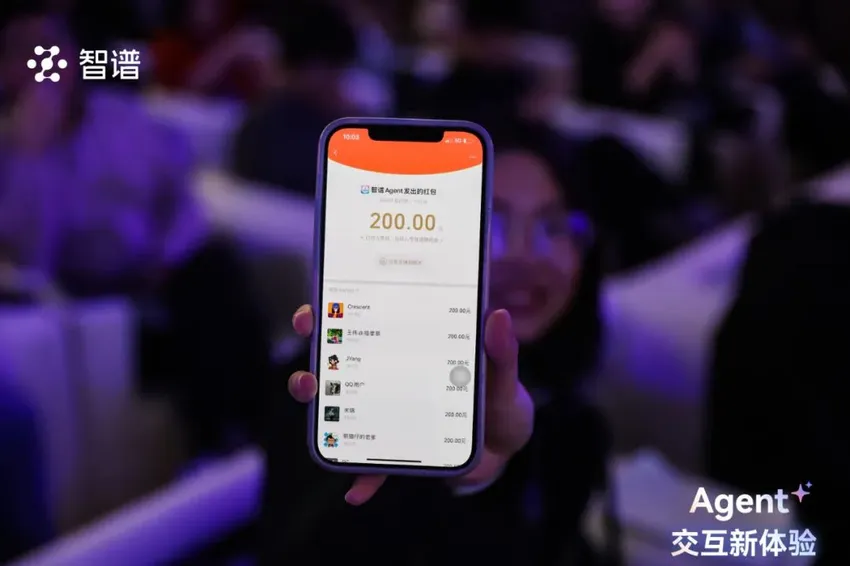
Zhipu AI officially announced the open-source release of its core AI Agent model, AutoGLM, on Tuesday, a strategic move designed to lower the technical barrier for creating autonomous mobile assistants. By making the "Phone Use" capability a public foundation, the company aims to enable hardware manufacturers and developers to build personalized agents that can operate smartphone interfaces like human users, challenging the closed ecosystems of incumbent internet giants.
The initiative is viewed by analysts as a "driverless moment" for the mobile industry, with CITIC Securities drawing parallels between the impact of AI Agents on smartphones and autonomous driving on automobiles. The release follows a volatile week in the Chinese tech sector, where a "Doubao" AI phone launched by ByteDance faced immediate defensive blocking from major applications, prompting industry shifts toward decentralized, open-source solutions that are harder to encircle.
The AutoGLM framework, developed over 32 months, supports over 50 high-frequency Chinese applications such as WeChat and Taobao, capable of simulating human actions like clicking, scrolling, and inputting based on visual analysis. Crucially, the technology supports local deployment and data processing on the device, addressing the privacy and security concerns cited by major platforms as justification for blocking earlier AI agent iterations.
This development signals a fundamental shift in the control of mobile traffic and user interaction. "Doing this at just one company is not enough," Zhipu AI stated, emphasizing that the goal is to make this capability a shared industry infrastructure. By empowering millions of potential individual agents rather than a single product, the open-source model threatens to disrupt the traditional app-based economy, opening a new trillion-dollar market for on-device intelligent agents.
Democratizing Mobile AI Agents
The decision by Zhipu AI to open-source AutoGLM and launch the project on GitHub is interpreted as a technical disruption to the current market hierarchy. The release includes the core trained model, the "Phone Use" capability framework, and runnable demos for major apps. This move effectively flattens the technical threshold, allowing hardware vendors and individual developers to replicate AI assistants capable of understanding screens and executing complex tasks without relying on official APIs.
The timing creates a counter-narrative to recent corporate standoffs. On December 1, ByteDance, in collaboration with Nubia—a subsidiary of ZTE—released the nubia M153 powered by the "Doubao" assistant. Priced at RMB 3,499 (US$482), the device sold out immediately, with scalper prices on the secondary market surging to between RMB 7,999 (US$1,102) and RMB 9,999 (US$1,377). However, the device’s ability to operate across apps triggered defensive mechanisms from platforms like WeChat and Taobao, resulting in forced logouts and risk warnings. Market observers note that while giants can target a specific product like the Doubao phone, suppressing countless personalized agents built on an open-source framework presents a significantly more complex challenge.
Vision-Based Operation and Privacy Architecture
The technological architecture of AutoGLM represents a departure from traditional accessibility scripts. According to Zhipu AI, the system utilizes a visual large model (AutoGLM-Phone-9B) combined with Android Debug Bridge (ADB) commands. Instead of relying on APIs, the agent functions by "seeing" screenshots, analyzing the interface, and simulating finger clicks. This "human-like" operational capability makes it difficult for app developers to block the agent through simple code detection, as the AI operates based on visual recognition of the interface.
To counter the "privacy and security" arguments used by internet giants to justify blocking AI agents, Zhipu AI designed AutoGLM with a focus on data sovereignty. The framework supports local deployment, ensuring that model operation and data processing occur entirely on the user's device. "The technology is open to the ecosystem, but data and privacy remain on the user's side," the company stated in its announcement. This architecture undermines the legitimacy of blocking attempts based on data leakage concerns, as the data never leaves the handset.
Reshaping Hardware and Traffic Logic
For the hardware sector, the availability of AutoGLM offers a "new match point." Smartphone manufacturers such as Xiaomi, OPPO, and Honor, which previously lacked a "super entry point" to connect all applications, now have access to a ready-made technical foundation. Analysts suggest that the depths of integration between large model vendors and phone manufacturers could mirror the "Huawei + Seres" model in the automotive industry, potentially driving a boom in AI smartphones similar to the growth seen in the new energy vehicle sector.
Conversely, the development poses a challenge to the "moats" of internet giants like Tencent and Alibaba. AI agents have the potential to bypass homepage recommendations and advertising slots, accessing core services like ticket booking and price comparison directly. This shift threatens to invalidate the traffic distribution logic of super-apps. Giants now face a choice: construct higher defensive walls at the cost of user experience, or open APIs to coexist with the new agent ecosystem.
A Shift in Digital Sovereignty
The open-sourcing of AutoGLM marks a transition into a "programmable" era for mobile agents, similar to how Stable Diffusion impacted AI art. This framework is expected to spawn a variety of specialized tools, from accessibility agents for the visually impaired to workflow efficiency assistants.
Between the launch of the Doubao phone and the open-sourcing of AutoGLM, December 2025 has witnessed a rapid escalation in the battle for mobile entry points. While current user experiences may still face latency or stability issues, the trajectory suggests a move away from closed ecosystems and traffic monopolies. The initiative effectively returns choice to users and developers, signaling the start of a fundamental reversal in intelligent terminal interaction logic.