
15 Embodied AI Unicorns in 6 Months: China’s Robot Race Hits a Reality Check
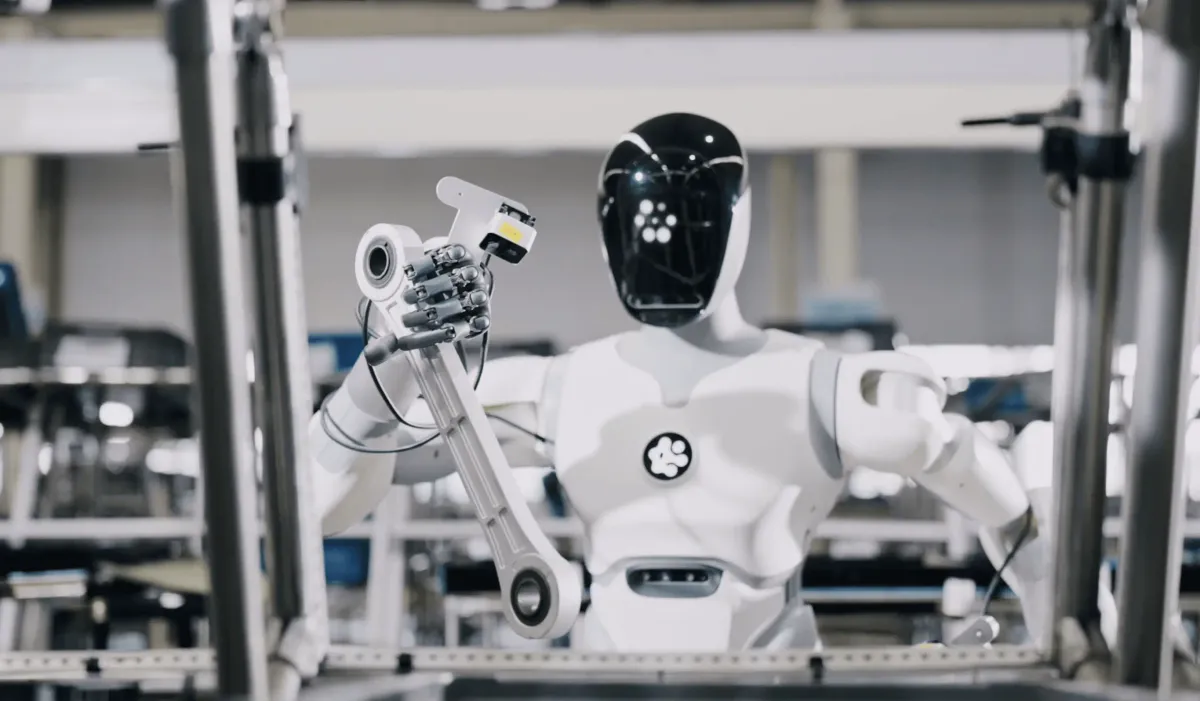
At least 25 Chinese embodied intelligence startups now carry valuations above RMB 10 billion (US$1.39 billion), with 15 of them crossing that threshold in the first half of 2026 alone — a concentration of capital formation that is rewriting the robotics investment landscape but also compressing the window for commercial survival.
The latest entrants arrived on June 29, when AI² Robotics and X Square Robot each disclosed valuation exceeding RMB 20 billion (US$2.78 billion), capping a six-month period in which China's embodied AI sector absorbed more than RMB 46 billion (US$6.39 billion) in disclosed funding. The pace has no precedent in the country's robotics history, eclipsing even the early frenzy in large language models in 2023.
Yet beneath the headline numbers, a structural tension is hardening. Most startups in the cohort carry cash runways of only 18 to 24 months, according to industry analysts, meaning a reckoning — whether through consolidation, down-rounds or outright failure — is likely to arrive between 2027 and 2028. Nvidia founder and CEO Jensen Huang declared 2026 "the commercialization year for humanoid robots" at the GTC conference in March. Several Chinese founders privately counter that it is, more precisely, "the year of elimination."
Full-Stack Players Dominate, Capturing Seven of Fifteen New Unicorn Slots
The 25-strong unicorn cohort breaks into three distinct technical camps, and the full-stack integrators — firms that build both the "brain" software and the physical hardware body — command the largest share, with 13 members.
Seven of those 13 joined the RMB 10 billion club in H1 2026.
The fastest ascent belongs to GALAXEA, a startup founded by a post-1990s team from Tsinghua University. The company raised a RMB 1 billion (US$139 million) Series B in February 2026, then closed a near-RMB 2 billion (US$278 million) Series B+ round just two months later, doubling its valuation to RMB 20 billion — the steepest appreciation curve in the sector since the Lunar New Year holiday. Xinghaitu's technical edge centers on a Vision-Language-Action (VLA) model architecture; in June it released both its Fast-WAM world model and the Kengo bipedal humanoid robot.
Sudo AI, founded in May 2025, reached a RMB 13.6 billion (US$1.89 billion) valuation just 11 months after incorporation, closing a US$500 million (approximately RMB 3.4 billion) Pre-A round in April 2026 — one of the largest single-round checks written in Chinese robotics to date. Its flagship product, the Sudo R1, integrates a 3D world model with reinforcement learning in a unified design.
TARS, another 2025 vintage, secured US$455 million (approximately RMB 3.1 billion) in a Pre-A round co-led by Hillhouse Group and Sequoia China, reaching a RMB 13 billion (US$1.81 billion) valuation. The participation of two of China's most disciplined institutional investors signals that the sector's risk premium is, at least in their assessment, still compensated.
AI² Robotics, founded in April 2023 and now Shenzhen's first embodied AI unicorn, disclosed cumulative new funding of nearly RMB 5 billion (US$694 million) on June 29, lifting its valuation above RMB 20 billion. The company claims a near-RMB 500 million (US$69 million) order backlog — one of the few demand-side data points disclosed by any player in the cohort.
ROBOTERA, in which Tsinghua University holds an equity stake, closed a RMB 1 billion (US$139 million) strategic round in March 2026, with Samsung, GaoCheng Capital and Singtel among investors — a rare instance of cross-border institutional capital entering Chinese embodied AI at the unicorn stage.
Astribot, founded in 2022, completed three consecutive funding rounds within a 90-day window ending June 3, aggregating over RMB 1 billion (US$139 million) and crossing the RMB 10 billion threshold.
Pudu Robotics, a 2010-vintage service robot incumbent, pivoted to embodied AI in 2026 and raised nearly RMB 1 billion (US$139 million) in April, demonstrating that legacy hardware players are not ceding the field to pure-play startups.
"Brain" Software Specialists Draw Intense Capital Despite Existential Risk from General AI
Three software-centric, or "brain派," companies entered the unicorn bracket in H1 2026, and their funding velocity rivals that of the full-stack leaders.
Spirit AI, founded in February 2024, raised approximately RMB 4.5 billion (US$625 million) across four rounds between February and May 2026, reaching a RMB 20 billion (US$2.78 billion) valuation. Its embodied foundation model Spirit v1.5, released and open-sourced in January, outperformed Nvidia's Pi0.5 on standard benchmarks; the successor Spirit v1.6 ranked first globally in blind testing at ICRA 2026. Yet Spirit AI's own founder, Han Fengtao, offered the sector's most candid self-assessment at the Zhiyuan Conference: current model capability is equivalent to "a one-to-two-year-old child," and meaningful scaled deployment is "at least two years away."
GigaAI, founded in 2023, raised in two tranches — a multi-billion-yuan B1 round in April and a RMB 1 billion (US$139 million) B2 round on June 15 — following an A1 investment from Huawei's Hubble Investment in November 2025. The Huawei imprimatur is significant: it positions Jijia's GigaBrain model series as a potential node in Huawei's broader AI ecosystem.
X Square Robot, founded in December 2023, completed six funding rounds between January and June 2026 — including B, B+, B++ and C rounds in rapid succession — pushing its post-money valuation above RMB 20 billion (US$2.78 billion), with cumulative financing exceeding RMB 3 billion (US$417 million). The company's GreatWall operational model series represents one of China's earliest fully end-to-end approaches to general embodied intelligence.
The existential risk for Brain-driven enterprise is structural: if general-purpose frontier models — whether from OpenAI, Google DeepMind or Chinese equivalents — extend natively into embodied control, the differentiation premium for vertical AI models collapses. Survival, analysts argue, requires building proprietary data moats in specific industrial or domestic scenarios before that commoditization occurs.
Hardware Specialists Scale Production, But Face a Long-Term Squeeze from Vertical Integration
Six hardware-focused, or "hardware-centric companies," companies joined the unicorn cohort in H1 2026, and several carry a commercial credibility that pure-software peers cannot yet match.
COOWA stands apart as one of the few self-sustaining entities in the entire sector. The company, which deploys autonomous street-cleaning and last-mile delivery vehicles across Shanghai, Shenzhen and other cities, reported 2025 revenue exceeding RMB 1 billion (US$139 million) and profitability — a rare combination in a sector where most players are pre-revenue. A US$600 million-plus (approximately RMB 4.3 billion) funding round in May 2026 valued the company at US$3 billion (approximately RMB 21.6 billion).
D-Robotics, spun out of Horizon Robotics' AIoT division in January 2024, is attacking the problem from the silicon layer, supplying compute chips and operating systems to robot manufacturers. Its B2 round in April 2026 — US$150 million (approximately RMB 1.08 billion) — pushed its valuation to approximately RMB 10.8 billion (US$1.5 billion). The chip-level play is strategically distinct: if embodied AI scales, D-Robotics captures value regardless of which application-layer winner emerges.
EngineAI, founded in October 2023, completed eight funding rounds in under two years, closing a US$200 million (approximately RMB 1.44 billion) Series B in April 2026 at a RMB 10 billion-plus valuation. Its full-size humanoid T800, launched in December 2025, anchors a hardware portfolio centered on integrated joint modules.
Tianji Robotics, a component supplier serving approximately 45 robot manufacturers, reported Q1 2026 order intake exceeding 10,000 units and annual delivery capacity of 2,000 units — modest in absolute terms but meaningful as proof of recurring commercial demand. The company raised RMB 1 billion (US$139 million) across its Series B and B+ rounds in May 2026, with a post-money valuation approaching RMB 10 billion.
Noetix Robotics, founded in September 2023, gained national brand recognition when its consumer humanoid "Xiaobumi" appeared on China Central Television's (CCTV) Spring Festival Gala in 2026. A near-RMB 1 billion (US$139 million) Series B in March 2026 brought its valuation close to RMB 10 billion, backed in part by the Beijing Robot Industry Fund — a state-linked vehicle that signals policy alignment.
Leju Robotics, the sector's most mature hardware player by founding date (2016), has accumulated over RMB 1.8 billion (US$250 million) in total funding and filed for IPO counseling registration with the Shenzhen Securities Regulatory Bureau in October 2025, targeting a RMB 2.6 billion (US$361 million) public offering at an implied valuation of approximately RMB 10 billion.
Valuation Premium Reflects "Ticket to the Future" Logic, Not Current Revenue
The core investment thesis animating the entire cohort is not a discounted cash flow calculation — it is an options bet. Xu Huazhe, assistant professor at Tsinghua University's Institute for Interdisciplinary Information Sciences and founder of Hatching Robot, framed it precisely: investors are "buying a ticket to the future," pricing in the possibility of a "GPT moment for the physical world" rather than any near-term earnings stream.
Zhou Yong, founder of hardware specialist Linkerbot, pushed back against bubble characterizations by benchmarking against China's electric vehicle and semiconductor build-outs: single-round checks of "RMB 1 billion-plus are still just the starting point" if any manufacturer eventually ships 100,000 units annually, at which point required capital would be "ten times the current level." Wang Xin, partner at Orient Fortune Capital, reinforced the long-duration narrative: "Viewed from a long-term lens — humanoid robots entering homes, one per household — there is no bubble."
The dissonance between those long-duration narratives and near-term operating reality is the sector's central tension. With most companies' cash runways expiring in 2027-2028, the period Jensen Huang designated as commercialization year may instead function as a triage event. The companies that exit that window with defensible unit economics — whether through industrial deployment contracts, component supply agreements or consumer product revenue — will define the next cohort of credible contenders. Those that do not will validate the more cautious reading of today's valuations.
As Beijing Academy of Artificial Intelligence president Wang Zhongyuan noted at the Embodied Industry CEO Forum on June 15, 2026: "Perhaps in a few years, everyone in this room will be worth over RMB 100 billion." The remark drew laughter. It was only half a joke.
Related Coverage:
China's Top 10 Unicorns in 2026: What the Rankings Reveal About the New Economy