
A Mutual Lifeline: Chinese Battery Giants Accelerate Global Localization Strategies Amid Domestic Saturation
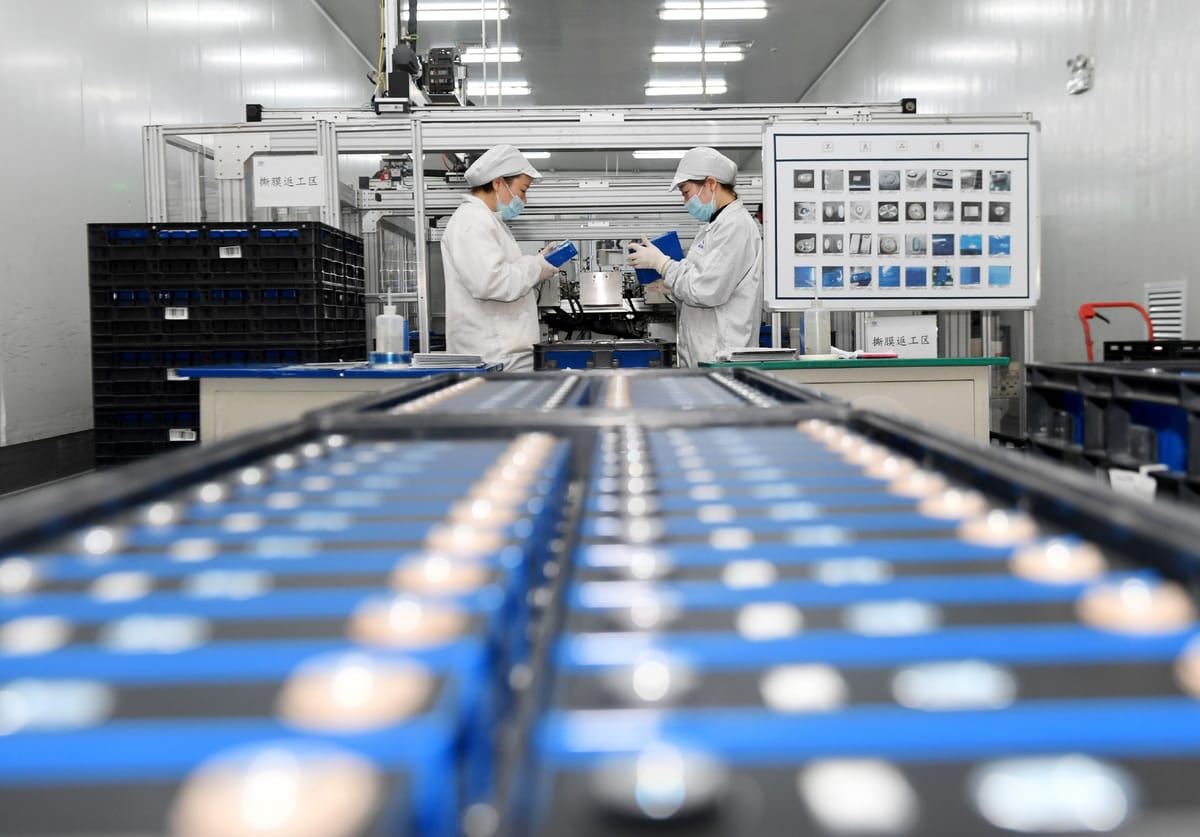
In a definitive shift from export-oriented commerce to localized manufacturing, China’s lithium battery behemoths are rapidly establishing a physical foothold in Europe, North America, and Southeast Asia throughout 2025. This migration represents a necessary strategic alliance: Western markets require advanced battery technology and scale to meet electrification goals, while Chinese manufacturers are compelled to pivot overseas to escape a saturated domestic market and secure sustainable profit margins.
The intensity of this expansion is visible across multiple continents this winter. In Zaragoza, Spain, Contemporary Amperex Technology Co., Limited (CATL) has commenced construction on a 50GWh joint venture factory with automotive group Stellantis N.V., a facility poised to become a central hub for European affordable electric vehicles (EVs). Simultaneously, EVE Energy is accelerating the mechanical and electrical installation aimed at replicating its large cylindrical battery production lines in Debrecen, Hungary.
This global operational shift is driven by stark financial realities rather than mere ambition. With China’s domestic power battery capacity planning exceeding predicted demand by twofold and prices plummeting over 35% in the last two years, manufacturers are facing thinning margins at home. in contrast, overseas markets offer gross margins 5 to 10 percentage points higher, with some leading firms reporting overseas margins nearly double those of their domestic operations.
However, this expansion is reshaping the industry's identity from "suppliers from China" to "global manufacturers." The move is largely a response to protectionist policies, including the U.S. Inflation Reduction Act (IRA) and the European Union’s New Batteries Regulation. These frameworks have effectively closed the door on the traditional export model, mandating local production and supply chain traceability as the price of admission to the world's most lucrative EV markets.
New Industrial Clusters
The winter of 2025 has witnessed a clustered rollout of Chinese industrial capacity abroad. The CATL project in Spain alone involves an investment exceeding RMB 30 billion (US$4.1 billion), with production slated for late 2026. The facility will focus on cost-effective lithium iron phosphate (LFP) batteries. Beyond Europe, CATL is also expanding its footprint in Japan with a 2.4GWh grid-scale energy storage project.
Similar momentum is evident in Eastern Europe. South of EVE Energy’s Hungarian site, Gotion High-tech has erected the steel framework for its gigafactory in Surany, Slovakia. With an initial capacity of 20GWh, the site was selected to serve the nearby production facilities of Volkswagen and Stellantis.
The expansion extends to the supply chain. Guangzhou Tinci Materials Technology, a leading electrolyte manufacturer, broke ground on its first North American plant in Baytown, Texas, in early December. Planning for 20,000 tons of annual capacity, the company aims to supply battery clients manufacturing within the U.S. Meanwhile, in Thailand, Sunwoda Electronic is planning the second phase of its 17.4GWh facility, recently anchoring its supply chain with a massive 106,800-ton purchase order for LFP materials from Jiangsu Longpan Science & Technology.
Escaping the Domestic "Red Ocean"
For Chinese players, globalization has evolved from a choice to a survival imperative. Executives cite the brutal price war of early 2024 as a wake-up call, where downstream pressure from automakers slashed component prices while raw material costs remained volatile. This compression has pushed domestic capacity utilization rates to dangerously low levels, with some major assets operating at less than 50% capacity—a drain on cash flow and investor confidence.
The divergence in profitability is stark. Financial data reveals that overseas gross margins for companies like CATL and EVE Energy significantly outperform domestic figures, reaching as high as 29.5% for some entities. European automakers, prioritizing supply security and performance, have demonstrated a willingness to pay a premium for high-quality components, offering Chinese firms an escape route from the domestic price wars.
Strategic objectives are being updated to reflect this reality. One leading battery enterprise has set a target to have overseas capacity account for more than 40% of its total by 2030, viewing this not just as revenue diversification, but as a reconstruction of competitive barriers and profit centers.
Regulatory Compulsion
Policy frameworks in the West are the invisible hand accelerating this migration. The U.S. IRA ties tax credits of up to US$7,500 per vehicle to strict requirements regarding the localization of battery components and critical minerals. Chinese firms have concluded through extensive modeling that establishing U.S. factories is the only viable entry ticket to the mainstream North American supply chain.
In Europe, the challenge is the New Batteries Regulation, which demands full lifecycle carbon footprint disclosure and mandatory recycling ratios. These rules function as a "green trade barrier," necessitating local manufacturing to reduce transport emissions and forcing a restructuring of upstream supply chains. To comply, Chinese companies must verify the carbon data of suppliers for cathode, anode, and electrolyte materials, effectively exporting their compliance standards along with their hardware.
Operational Friction in New Markets
The transition to localized manufacturing poses significant operational hurdles. Executives report that building factories overseas is exponentially more complex than exporting products. In Texas, Chinese material manufacturers face infrastructure deficits, such as 18-month wait times for grid power expansion, forcing additional millions in investment for self-built substations. Supply chains are also fragmented; simple components available within 24 hours in China may require nationwide sourcing in the U.S.
Cultural and legal adaptation remains a friction point. In Poland and Hungary, Chinese managers have had to adjust "China speed" expectations to align with local labor laws and rigorous environmental scrutiny. For instance, EU regulations require Chinese manufacturers to assist their upstream suppliers in establishing carbon accounting systems compliant with European standards—a massive administrative undertaking.
Despite these "acclimatization" challenges, no major player is retreating. Industry consensus holds that the difficulty of building overseas is the necessary cost of becoming a true global enterprise. As domestic markets plateau, the ability to manufacture locally and navigate foreign regulatory environments has become the defining metric for long-term survival in the battery sector.