
Chinese EV Makers Forge Alliance with AI to Break Through Growth Ceiling
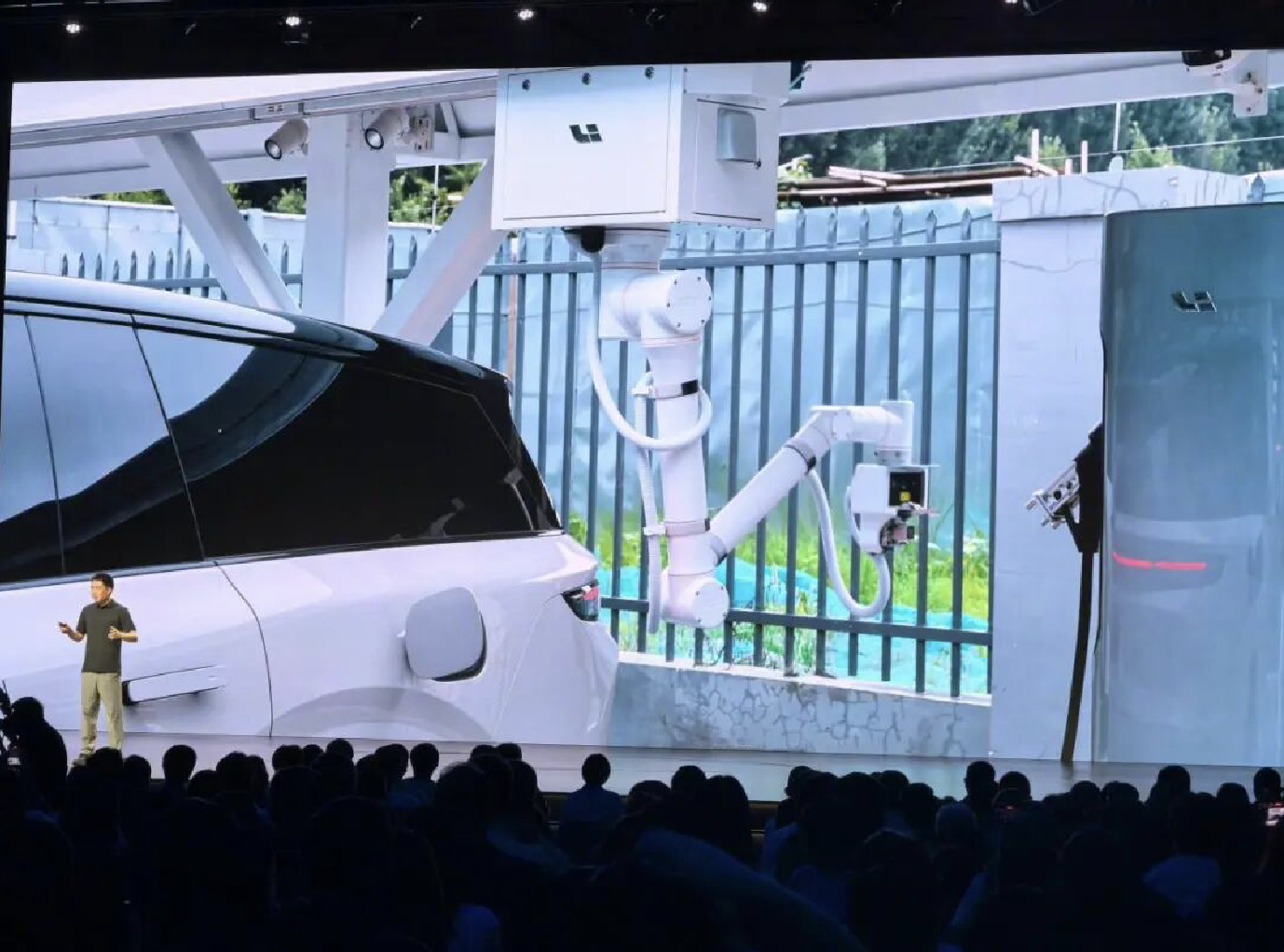
Chinese electric vehicle manufacturers are aggressively expanding into artificial intelligence, proprietary semiconductors, and robotics, signaling a critical strategic pivot. As the domestic auto market approaches saturation, the convergence of hardware manufacturing and AI algorithms has evolved from an ambitious option into a fundamental necessity for survival and valuation growth in the next phase of industry consolidation.
Li Auto recently underscored this shift by launching its first AI glasses, "Livis," in December, following the quiet establishment of dedicated spatial and wearable robot departments in June 2025. Competitor Xpeng has similarly accelerated its diversification, showcasing humanoid robots, flying cars, and reactivating its Robotaxi unit, positioning these technologies alongside its proprietary "Turing" AI chip to build a comprehensive AI ecosystem.
These developments mark a significant departure from the pure volume-driven sales model that defined the past decade of China's "New Force" automakers. With industry leaders warning of an imminent "knockout round" where only a handful of dominant players will survive, the integration of generative AI and robotics is now viewed as the primary differentiator to avoid commoditization and combat sagging hardware margins.
For investors, this transition implies a structural shift in capital allocation, with substantial R&D resources being diverted from traditional vehicle iterations to underlying AI infrastructure. The move aims to replicate the valuation premiums commanded by technology firms rather than traditional manufacturers, forcing these companies to balance the intense pressure of maintaining profitability in their core automotive business with the massive capital demands of their new technological ambitions.
The Limits of the Automotive "Story"
The urgency to pivot stems from the maturing landscape of the Chinese automotive sector. By the first three quarters of 2025, the market share of internal combustion engine vehicles fell below 50% to 49.9%, indicating that the rapid displacement of fuel cars by EVs is plateauing. Industry executives, including Xpeng CEO He Xiaopeng and Nio CEO William Li, acknowledge that the market has entered a zero-sum game. While EV penetration is projected to reach 90% by 2030, the era of exponential organic growth for the sector as a whole is ending.
Consequently, Chinese EV startups are increasingly resembling traditional automakers in their core operations, focusing on cost-cutting, supply chain efficiency, and platform modularization to protect margins. Li Auto, Seres Group, and Leapmotor have achieved profitability, while Xpeng and Nio target quarterly profits in late 2025. However, as the "car manufacturing" narrative loses its luster with investors, finding a new growth engine has become imperative.
This led to the emergence of non-automotive hardware as the new frontier. Beyond Li Auto’s AI glasses, other major players including Seres, Changan Automobile, and Nio have all initiated projects involving robotics and proprietary chips. The automakers are betting that their expertise in manufacturing and supply chain management can be seamlessly transferred to these new AI-driven terminals.
Replicating the Tesla Model
The strategic blueprint for this transformation is unmistakably modeled after Tesla Inc. The U.S. giant has successfully reframed its narrative from a car company to an AI and robotics enterprise, a shift solidified by Elon Musk’s focus on Optimus robots and Robotaxis rather than new vehicle models. Tesla’s shareholder approval of Musk’s compensation package in November 2025—tied to AI milestones like FSD subscriptions and robot deliveries—signaled that the capital markets now value AI scalability over vehicle deliveries.
Chinese founders have openly embraced this logic. Li Xiang, founder of Li Auto, has emphasized that mastering "basic skills" like underlying AI infrastructure is crucial for survival in the AI era. Similarly, Xpeng’s tech roadmap mirrors Tesla’s, utilizing a unified "physical AI model" to power cars, robots, and flying vehicles simultaneously. This approach allows for the reuse of code and algorithms across different product lines, theoretically maximizing R&D efficiency.
The consensus among China’s "New Forces" is that an alliance between manufacturing and AI is the only path to the "finals" of global competition. They are adopting Tesla’s "End-to-End" AI methodology and investing in proprietary chips to ensure they are not merely assembling hardware but owning the intelligence that powers it.
Capital Intensity and R&D Gambles
This strategic alliance with AI requires immense financial commitment at a time when competition in the auto market is squeezing margins. While Chinese automakers are increasing their investment, a gap remains compared to industry leaders.
Tesla’s projected R&D expenditure for 2025 is expected to exceed US$6.27 billion, with approximately 60%of that amount—roughly RMB 6 billion yuan (US$826 million)—dedicated to AI-related technologies, including VLA models and inferencing chips. Xpeng has allocated approximately RMB 5 billion yuan (US$689 million) specifically for AI investments this year.
The diverge in spending highlights the challenge facing Chinese players: they must maintain high-volume vehicle sales to fund the exorbitant costs of AI development. Unlike Tesla, which slowed new car launches to focus on AI, Chinese companies like Xpeng and Li Auto must continue aggressive vehicle iteration to defend their market share. This dual burden of "saving money" on manufacturing while "burning money" on AI defines the current precarious alliance within their business models.