
Agibot Open-Sources GO-1 Embodied AI Model to Accelerate Robotics Development
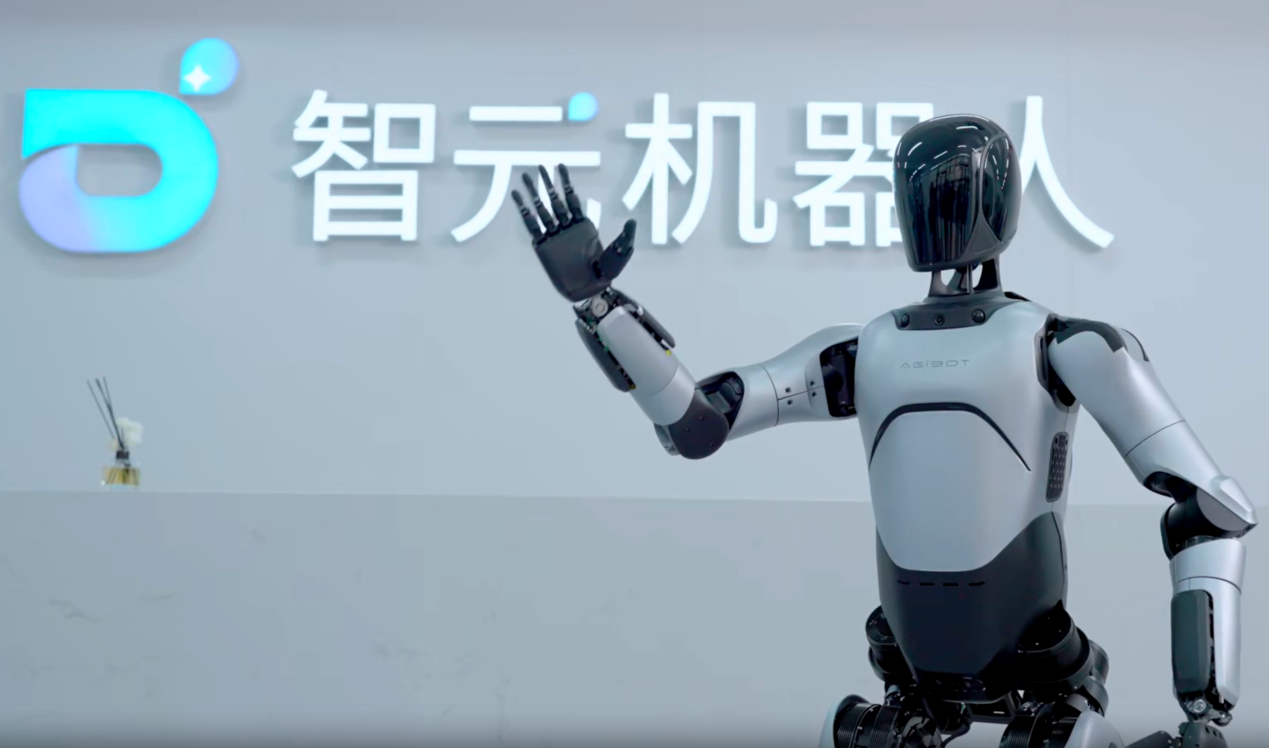
Chinese robotics firm Agibot has open-sourced its general-purpose embodied AI foundation model, GO-1, a strategic move aimed at lowering technical barriers and accelerating the commercialization of intelligent robots capable of performing complex, human-like tasks.
The release, announced on September 23, makes the Genie Operator-1 (GO-1) model and its underlying architecture publicly available on GitHub. This follows the company's decision in January 2025 to open-source its large-scale, real-world robotics dataset, indicating a clear strategy to build a broad developer ecosystem around its core technologies.
At the heart of the GO-1 model is what Agibot claims is the world's first Vision-Language-Latent-Action (ViLLA) architecture. The framework is engineered to more effectively translate high-level human commands into precise, multi-step robotic actions, addressing a critical challenge in creating versatile and autonomous machines.
By making both its foundational model and a massive dataset publicly available, Agibot is positioning itself as a key enabler in the burgeoning field of embodied AI. The move could spur industry-wide innovation by providing developers with powerful tools that were previously proprietary, potentially intensifying competition among firms vying for dominance in the next generation of robotics.
A New Architecture for Smarter Robots
The GO-1 model's core innovation, the ViLLA architecture, introduces a "latent action" layer between the system's understanding of a command and its physical execution. This allows the robot to form an intermediate, abstract plan—akin to an internal monologue—before translating it into specific motor actions, improving accuracy and reducing errors.
The architecture operates on three synergistic layers:
- VLM Understanding Layer: Built on the InternVL-2B model, it processes multimodal inputs including multi-angle images, force signals, and natural language instructions, forming the robot's ability to perceive its environment and understand requests.
- Latent Planner: Acting as the "decision-making brain," this layer forecasts a sequence of abstract latent actions to map out a high-level strategy for complex tasks.
- Action Expert: Leveraging a diffusion model, this layer generates high-frequency, precise, and continuous action sequences, enabling the robot to perform delicate manipulations like twisting bottle caps and folding clothes with greater dexterity.
An All-in-One Development Platform
To support the adoption of GO-1, Agibot is offering Genie Studio, a comprehensive development platform designed to provide a full-stack solution for developers. The platform integrates Agibot's open-source dataset, various foundation models including GO-1, and a complete simulation toolchain for generating high-fidelity test data.
The company states the GO-1 model is "out-of-the-box" ready within the platform, packaged with a unified training framework and a complete developer toolchain. A key feature is its one-click function for compiling and deploying models directly to physical robots, a capability intended to significantly shorten development cycles and streamline the path from simulation to real-world application.
Cross-Platform Performance and Benchmarks
While pre-trained on data from Agibot's own G1 robot, the company has demonstrated the GO-1 model's adaptability across a range of third-party hardware. Successful tests on robots from Unitree, AgileX Robotics, and on a Franka Emika robotic arm have validated its portability and compatibility with different kinematics and control interfaces.
Performance benchmarks highlight the model's capabilities:
- GenieSim Simulation: GO-1 achieved a leading total score of 3.793, with strong performance in complex tasks such as packing moving objects on a conveyor belt and restocking supermarket shelves.
- Libero Simulation: The model showed superior results in tests measuring spatial awareness and object manipulation.
- Real-World Tests: On the Genie G1 robot, GO-1 outperformed other state-of-the-art models in everyday chores like restocking beverages, folding shorts, and clearing a dining table.
Building an Open Ecosystem
The open-sourcing of GO-1 is the latest step in Agibot's broader effort to cultivate a low-barrier, collaborative ecosystem for embodied intelligence. The move complements the recent launch of the company's "Genie Trailblazer" global program, which invites research teams to collaborate on core challenges in general-purpose AI models and advanced teleoperation.
By combining open-source resources with a dedicated push for talent aggregation, Agibot aims to create a flywheel effect for innovation. The company expects that the convergence of high-quality data, mature models, and global research talent will significantly shorten the timeline for bringing capable, intelligent robots into everyday life.