
Vita Dynamics to Launch Vbot Robot, Targets 50,000 Shipments in 2026
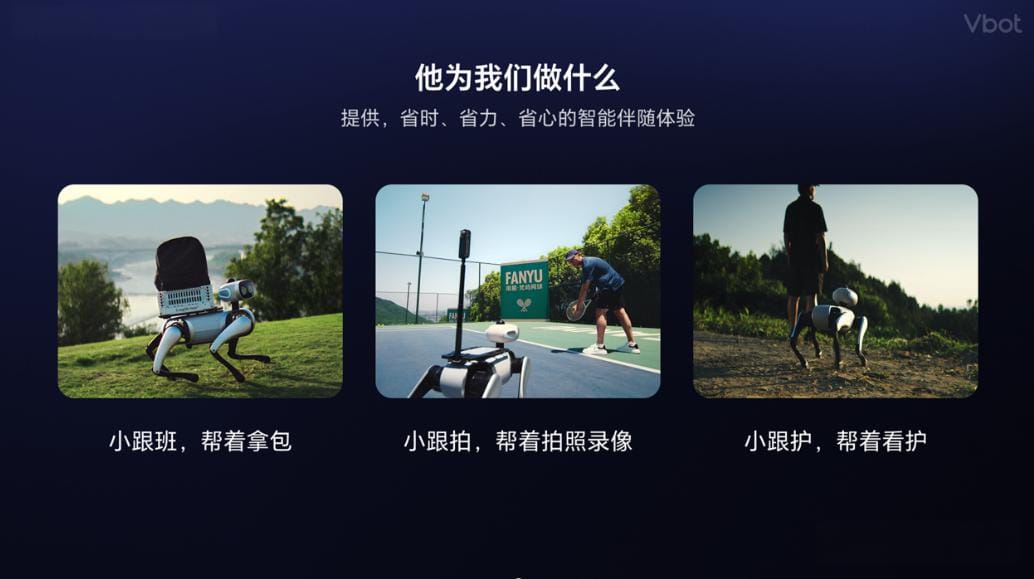
Chinese robotics startup Vita Dynamics is set to begin trial production of its first consumer quadruped robot next month, with an ambitious goal of shipping up to 50,000 units in 2026 as it seeks to dominate the nascent market despite significant supply chain and cost challenges.
The Vbot will enter an extended trial production phase in October 2025, a move that will delay its commercial launch to consumers, co-founder Zhao Zhelun said at a conference in Wuhan. The company will apply rigorous testing standards borrowed from the automotive industry, providing samples to media and early users before a full-scale public release to ensure higher product quality.
Vita Dynamics is forecasting shipments of 30,000 to 50,000 units next year, aiming for a 60% share of a consumer quadruped robot market it estimates will reach 70,000 to 80,000 units in 2026. The aggressive target signals the company’s intent to become a leader in the emerging field, even as Zhao tempered expectations by stating the industry has not yet reached its “Ford moment.”
The company’s strategy hinges on building user loyalty through a superior experience rather than engaging in early price wars. To drive adoption, Vita Dynamics will roll out a network of physical experience stores in major Chinese cities by the end of 2025, complementing its online sales channels.
Finding a 'Walkman,' Not an 'iPhone'
Vita Dynamics is positioning its Vbot not as a revolutionary, all-purpose device, but as a focused product for the current technological era. According to Zhao, the consumer robotics sector has yet to reach a stage where a product's utility and value are clearly matched, a phase he described as critical for commercialization.
“Today, no robotics company has truly reached the third stage of matching a clear use case with its price and value,” Zhao said. “I think the industry should first find a ‘Walkman,’ not an ‘iPhone.’ The Walkman’s creation was far more suited to its era’s technological innovation and user needs.”
The Vbot combines three core engineering capabilities that have recently matured: quadruped locomotion, autonomous movement, and natural language interaction. The goal is to create a robot that doesn't need a remote control, can navigate living spaces, and can be directed through speech. After a positive reception at the recent World Robot Conference, the company is increasing its investment in natural language processing to better understand user commands.
A Hybrid Sales Model to Drive Adoption
Vita Dynamics plans a deliberate sales strategy focused on user satisfaction and physical trials. The company will prioritize its Net Promoter Score (NPS) over aggressive pricing in the initial phase, a lesson Zhao drew from his early experience at Tesla Inc., where high NPS fueled organic growth despite high vehicle prices and low volumes.
Recognizing that consumers need hands-on experience before purchasing a high-value product, Vita Dynamics will begin launching a network of offline stores by the end of 2025. Zhao positions the Vbot as a product category between a high-end drone and a car, where physical trials are essential to convert interest into a sale.
The physical stores will integrate product experience, sales, and after-sales support. This network will be built through a combination of directly operated locations and partnerships with professional distribution teams. The company also plans to collaborate with other retailers, leveraging the robot’s inherent ability to attract foot traffic to gain exposure.
Tackling an Immature Supply Chain
A key hurdle for Vita Dynamics is the immaturity and high cost of China’s robotics supply chain. Zhao noted that the industry, historically serving low-volume business-to-business clients, is characterized by high-margin components that inflate final product costs.
Joint motors are the single largest cost in the Vbot's bill of materials, with one motor costing around RMB 400 yuan (US$55). A typical quadruped robot requires 12 such motors, bringing the cost to nearly RMB 5,000 yuan for that system alone. To address this, Vita Dynamics is developing its own motors, aiming to eventually reduce the cost to under 200 yuan per unit.
This vertical integration strategy is inspired by automakers like Tesla and BYD, which brought key components in-house to control costs and scale production. Zhao believes this approach, paired with leveraging China’s mature electric vehicle supply chain for parts like chips and sensors, will be critical. “Tesla couldn’t build its robot today without China’s supply chain,” he said, expressing conviction that robotics will become a "China Native" industry.