
AI “Smart Pens” From China Stir Cheating Fears and Hype Abroad
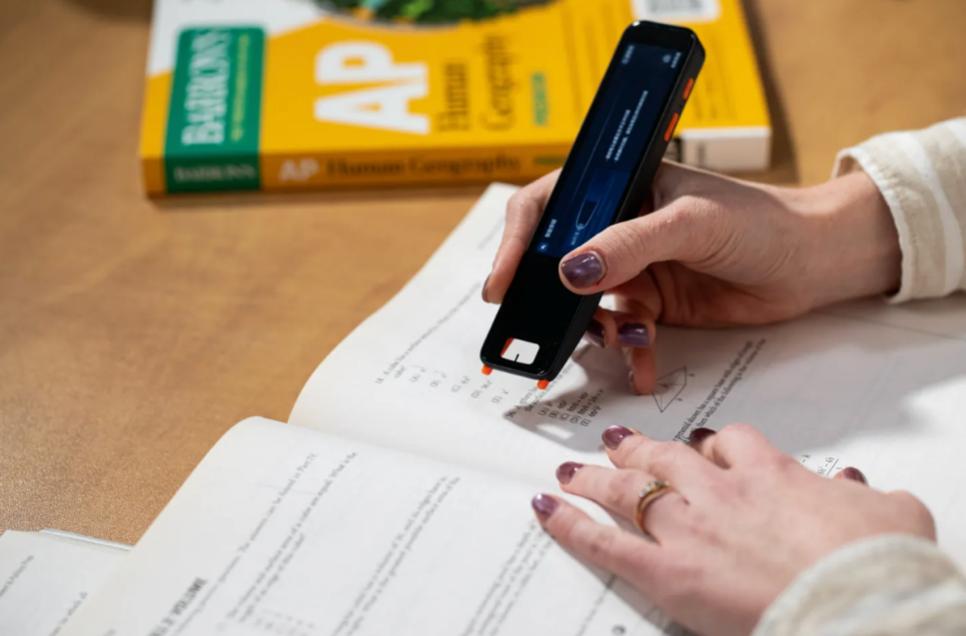
Foreign students are flocking to low-cost “AI Smart Pens” sourced from China’s Huaqiangbei electronics market, attracted by viral TikTok videos touting them as a way to “cheat” on pen-and-paper exams. The devices promise instant solutions by scanning printed questions, positioning themselves as hardware companions to generative AI in education.
Yet early tests suggest the products are crude, poorly localized and barely functional for serious study or exam assistance. US tech site The Verge found one widely advertised model struggled to recognize basic algebra, geography and science questions and returned irrelevant answers, calling into question its real-world utility.
The phenomenon underscores a widening gap between demand and quality in AI-powered learning tools. In China, parents are paying up for premium, standalone AI study devices such as NetEase Youdao’s high-end pen, while overseas students are experimenting with cheap white-label imports positioned as exam hacks.
China’s AI Study Pens Find Willing Buyers at Home
In February, NetEase Youdao launched its Youdao AI Answer Pen, followed by an upgraded Youdao AI Answer Pen Space X priced at RMB 1,499 (US$206). Despite the relatively high price point, sales have been strong: on JD.com alone, Space X has exceeded 200,000 units sold.
The devices resemble smartphones, with dedicated hardware for scanning questions and delivering AI-generated explanations. Their popularity demonstrates Chinese parents’ readiness to pay for standalone, phone-free study tools that promise to raise learning efficiency and reduce distractions.
China’s market already supports large-scale AI homework apps such as Zuoyebang, whose monthly active users are close to 100 million, showing entrenched demand for AI-powered problem solving that hardware makers are now tapping.
Viral “Cheating Gadgets” on TikTok
Outside China, similar-looking devices have shot to prominence on TikTok and YouTube Shorts, where influencers label them “AI Smart Pen” or “ChatGPT Pen.” Videos show students casually pulling the pens from their pockets, scanning exam papers and waiting for on-screen answers, often framed explicitly as a way to circumvent strict test conditions.
These clips have attracted millions of views and likes, with comment sections split between alarm and desire. Self-identified parents and educators warn that such tools may help students pass tests but “lose at life,” while many students openly declare, “I need this.” The appeal is amplified by the recent return of paper-based testing and tighter controls on phones and browser extensions in classrooms.
Unlike in China, most overseas students have little exposure to dedicated learning hardware such as dictionary pens or point-reading devices. Mainstream education hardware remains tablets and laptops, making AI pens appear as novel “new tech” and heightening their viral appeal.
Huaqiangbei Roots and Weak Localization
The Verge’s reporter Elissa Welle purchased a US$68.99 “AI Smart Pen” similar to those promoted in short videos and found it bore the hallmarks of a generic Chinese dictionary pen repurposed for AI. The interface was entirely in Chinese, with menus suggesting the device was originally designed for translation and language learning before AI answering and recording functions were added.
To locate the Q&A mode, Welle had to rely on a phone translation app to decipher the Chinese menus, indicating minimal localization beyond marketing materials. This aligns with the device’s likely origin as a white-label product from Shenzhen’s Huaqiangbei ecosystem, repackaged quickly for overseas demand.
Poor Performance and High Detection Risk
In testing, the pen’s performance fell far short of its online hype. It frequently failed to correctly scan questions in algebra, geography, basic science and history. Even when text recognition worked, the AI often produced off-topic answers—offering, for example, facts about the number of active volcanoes when the correct response should have been “mantle” in a question on Earth’s internal structure.
These errors were not isolated, leading The Verge to conclude the device was “almost unusable” for reliable exam or homework support. Physical design also limits its viability as a cheating tool: the pen is about 15 centimetres long, lights up while scanning and is easily noticeable in exam conditions.
A quoted university student suggested that simply photographing questions with a phone and sending them to ChatGPT would be both simpler and cheaper, underscoring the gap between viral marketing and practical use.
Short-Term Hype, Limited Long-Term Value
Both in China and overseas, the demand for AI-powered problem solving is clear, but it is being channelled in different directions. In China, strong parental spending power and a focus on “improving learning efficiency” are turning AI answer pens into a scalable educational hardware subcategory. Abroad, with AI software more restricted in classrooms and paper exams returning, AI pens are gaining attention largely through their perceived ability to bend the rules.
For now, many Huaqiangbei-style “AI Smart Pens” appear to be fast-turnaround products that satisfy curiosity and short-term demand more than they deliver sustainable learning value. The gap between expectation and performance suggests that long-term winners in this space will be those able to combine robust pedagogy, reliable AI and localised design, rather than quick-fix cheating gadgets.