
Alibaba Cloud’s AI Data Center Revolution Moves Competition Beyond Chips
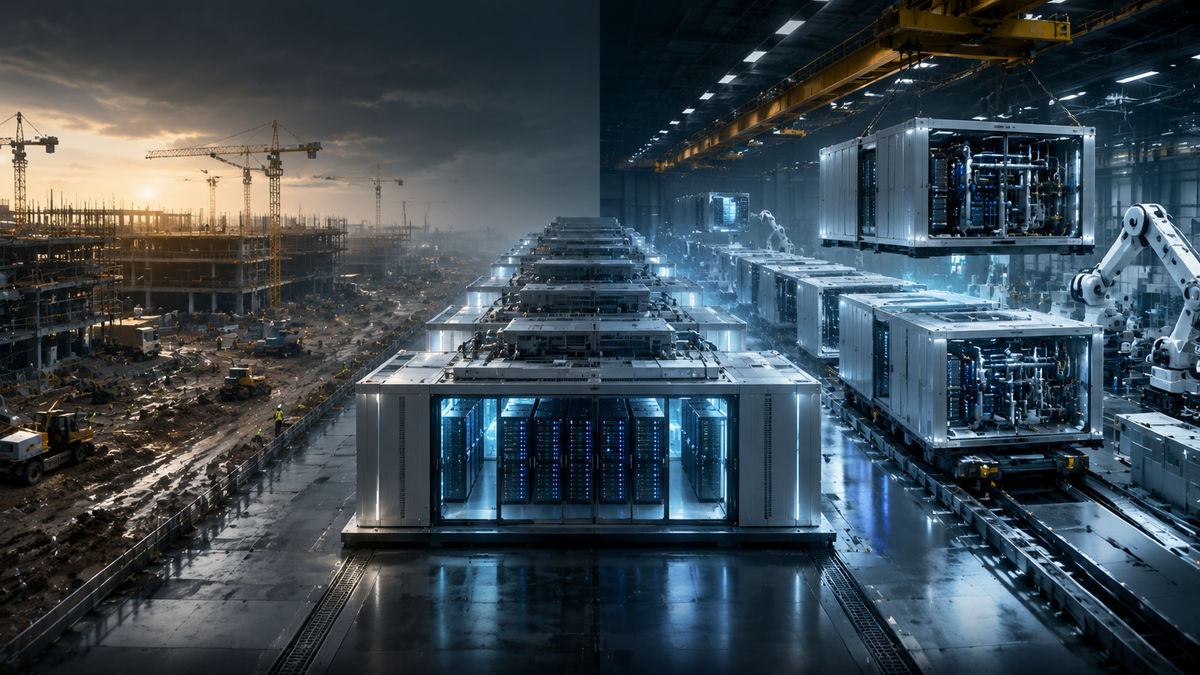
Alibaba Cloud has compressed the construction timeline for large-scale AI data centers to 100 days—a fraction of the 12-to-18-month industry benchmark in the United States—while simultaneously reducing build costs by more than 10%, signaling a fundamental reengineering of how hyperscale AI infrastructure gets built and deployed globally.
The disclosure, reported by China Securities Journal on August 10, 2026, comes as demand for AI compute capacity continues to outpace supply across major cloud markets. The timing is deliberate: Alibaba has committed RMB 380 billion (approximately US$52.8 billion) over three years to cloud and AI hardware infrastructure, and Chief Executive Wu Yongming has publicly flagged that even this figure may prove insufficient given current client demand trajectories.
Wang Chaoyang, General Manager of Alibaba Cloud Global Data Centers, confirmed the 100-day target is not a conceptual benchmark but an operational milestone already validated at production facilities in Ulanqab and Zhongwei.
CUBE 5.0 Rewrites the Construction Playbook
The technical engine behind the speed claim is CUBE 5.0, Alibaba Cloud's fifth-generation architecture purpose-built for AI data centers (AIDC). The system elevates the modularization rate across five core subsystems—power supply, cooling, security, intelligent management, and fire suppression—from approximately 30% in earlier generations to 90%.
The construction sequence breaks into three discrete phases: 30 days of parallel factory fabrication and on-site preparation, 50 days of on-site installation, and 20 days of commissioning and testing. Critically, all five subsystems are fully commissioned before a single server or networking device enters the facility—eliminating the sequential dependencies that inflate timelines under conventional "serial construction" models.
By contrast, comparable projects in China traditionally require six to twelve months; U.S. equivalents run twelve to eighteen months. Alibaba Cloud's approach effectively compresses a year-and-a-half of American construction into one calendar quarter.
The efficiency gains extend beyond time. Compute density per unit area reaches five to ten times that of the prior generation. Transformer counts are reduced by nearly half. The architecture supports both air cooling (PUE ≤ 1.15) and liquid cooling (PUE ≤ 1.10), with free switching between the two. High-voltage direct current (HVDC) and a "high-elasticity" design allow the infrastructure to accommodate at least three successive generations of heterogeneous chip architectures—a hedge against the rapid GPU refresh cycles that have rendered earlier data center designs obsolete.
Doubling Global Capacity Reshapes Supply Chain Math
Alibaba Cloud has stated it plans to more than double modular data center global production capacity within 2026. The company currently operates across 32 geographic regions and 105 availability zones worldwide.
The capacity expansion carries direct procurement implications. Each gigawatt of AI data center capacity corresponds to roughly RMB 100 billion (US$13.9 billion) in IT equipment capital expenditure. A doubling of modular output translates into a proportional surge in annual hardware procurement across servers, networking, power systems, and cooling equipment—a demand signal with multi-year visibility that distinguishes it from cyclical order flow.
Alibaba Cloud has also disclosed that it has partnered with domestic Chinese manufacturers to qualify and substitute components previously sourced exclusively from overseas brands, reducing exposure to supply constraints and import dependencies. The architecture's bill of materials (BOM) has been standardized down to component layout and fastener specifications, enabling factory-scale, repeatable production.
Certification Clears Path for International Deployment
CUBE 5.0 has obtained European CE certification under EN standards and Southeast Asian product approval under IEC standards—regulatory clearances that position the architecture for deployment outside China without requiring fundamental redesign.
This international certification strategy aligns with Alibaba Cloud's broader geographic expansion. With modular units factory-produced in China and shipped as containerized assemblies, the company can replicate compute nodes in overseas markets at a speed and cost structure that incumbent local data center operators cannot easily match using traditional construction methods.
The certification footprint also creates a potential export channel for the broader Chinese AI infrastructure supply chain—including liquid cooling specialists, HVDC power equipment manufacturers, and prefabricated modular enclosure producers.
Winners and Pressure Points Across the Value Chain
The shift from on-site construction to factory manufacturing redistributes value within the data center supply chain in ways that carry investment implications.
Prefabricated modular data center manufacturers stand to capture the most direct volume uplift. Global prefabricated infrastructure provider EP Systems completed a Series B+ round of over US$100 million with Alibaba Cloud participation, positioning it as a key production partner for the capacity ramp.
Liquid cooling is structurally advantaged. High-density AI racks generate thermal loads that air cooling alone cannot efficiently manage at scale. The CUBE 5.0 architecture treats liquid cooling as a standard configuration rather than an optional upgrade, accelerating adoption across the sector. Industry observers have identified 2025 as the inflection year for liquid cooling commercialization in China; the 2026 capacity doubling extends and amplifies that demand.
HVDC power systems and energy storage equipment benefit from the "plug-and-play" modular power unit design, which requires pre-integrated, high-density power assemblies rather than custom on-site electrical work.
Third-party IDC construction and operations firms with established Alibaba Cloud relationships—including Beijing Sinnet Technology and Data Center — gain order visibility as the modular model scales, since the "fast-build" methodology can be licensed and replicated by qualified partners.
Conventional civil engineering and mechanical-electrical general contractors face structural headwinds. The modular approach transfers their traditional scope—and associated margin—to factory production environments. The parallel is instructive: the same disruption that prefabricated construction introduced to conventional real estate development is now arriving in data center infrastructure.
The Competitive Calculus: Speed as a Strategic Moat
In an environment where AI compute remains supply-constrained, the ability to bring capacity online faster than competitors is a durable commercial advantage. Under conventional timelines, a hyperscaler can commission one to two data center phases per year. The modular model enables three to four phases annually—a throughput improvement that compounds over multi-year infrastructure programs.
Alibaba Cloud's 17-year iterative history in data center architecture, combined with access to China's vertically integrated domestic manufacturing base, creates barriers to replication that are not easily overcome by announcing a competing modular strategy. The architecture's validation at Ulanqab and Zhongwei, combined with international regulatory clearances, demonstrates production readiness rather than prototype status.
The broader strategic implication is that AI infrastructure competition is no longer confined to semiconductor performance. The ability to deploy compute capacity rapidly and cost-efficiently—what Alibaba Cloud's Wang Chaoyang describes as solving the "impossible triangle" of schedule, cost, and quality simultaneously—has become an independent axis of competitive differentiation.
Related Coverage:
Alibaba Cloud Commercializes China’s GPU Alternative, Reshaping AI Infrastructure