
Alibaba Cloud's Domestic AI Supernode Goes Live, Igniting China's Compute Infrastructure Race
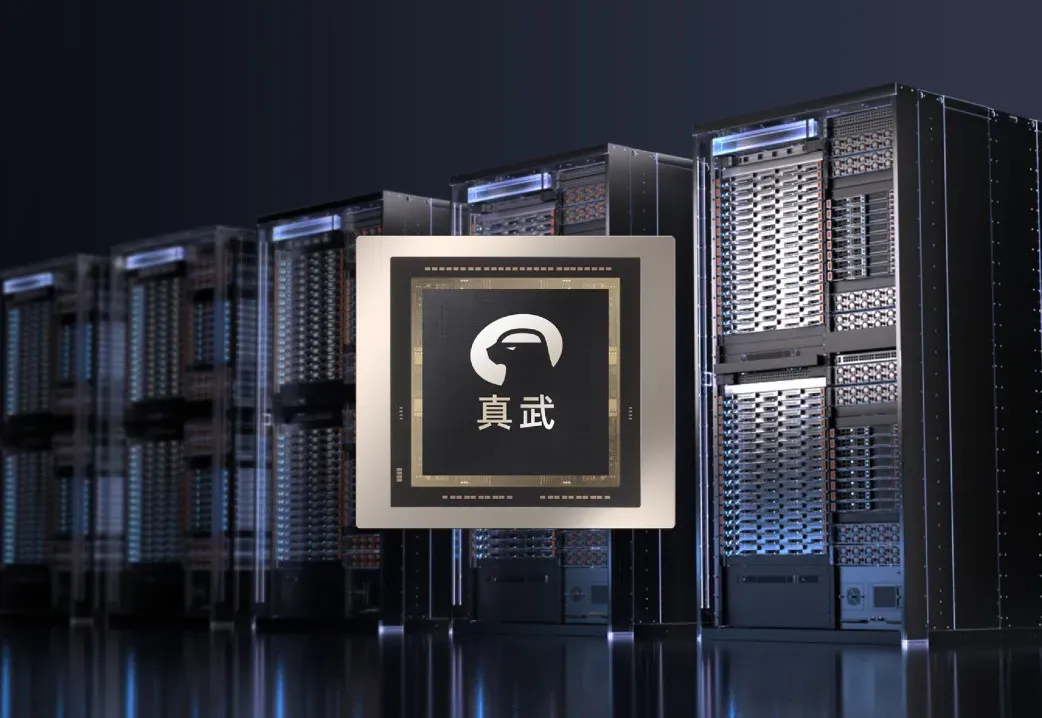
China's homegrown AI compute buildout crossed a critical threshold Tuesday as Alibaba Cloud launched its Lingjun Zhenwu M890 supernode instance — the first domestically developed supernode architecture proven to run models exceeding two trillion parameters — placing it in direct competition with Huawei's Ascend 384 and Baidu's Tianci platforms in a market analysts say is entering its highest-stakes phase yet.
The M890 went on sale in the Ulanqab region of Inner Mongolia on August 12, 2026, with enterprise clients able to activate 64-card high-speed interconnect compute units directly via the cloud — no proprietary data center required. The commercial debut carries outsized significance: both Moonshot AI's Kimi K3 and Alibaba's own Qwen3.8-Max are already serving external traffic through the instance, providing immediate proof-of-production validation that rivals cannot yet match at this parameter scale.
Market reaction among supply-chain investors was swift. Analysts at Guojin Securities flagged switching chips, high-density server cabinets, and high-speed connectors as the three incremental beneficiaries of the supernode upgrade cycle — a read-through that sent related hardware names higher in early afternoon trading in Shanghai and Shenzhen.
M890 Redraws the Domestic Interconnect Benchmark
The headline technical leap is interconnect bandwidth. By deploying its proprietary ICN Switch 1.0 chip, Alibaba Cloud expanded the Scale-up interconnect from 16 cards to 64 cards within a single supernode unit, pushing card-to-card bandwidth to 800 GB/s. The architecture also supports FP8 and FP4 low-precision computation — formats increasingly critical as inference workloads demand higher throughput at lower power draw.
Compared with its predecessor, the Zhenwu 810E, training performance in autonomous driving and embodied intelligence scenarios improves by a factor of three. The underlying Lingjun Zhenwu intelligent compute platform, running on HPN 8.0 unified training-inference networking, supports up to 130,000 heterogeneous cards per single cluster and is designed to scale to one million cards — a ceiling that, if reached, would rival the largest hyperscaler deployments globally.
The M890 can handle Mixture-of-Experts (MoE) model inference at up to ten trillion parameters, a capability threshold that positions it squarely in the emerging "inference era" that both domestic and global AI labs are racing to monetize.
Ulanqab Anchors a Low-Carbon, High-Density Strategy
Alibaba Cloud's choice of Ulanqab as the launch region is deliberate and strategically layered. The facility is one of the company's five "super data centers" and operates on approximately 90% green electricity — a critical differentiator as regulators and enterprise clients alike apply growing pressure on AI infrastructure carbon intensity.
The site also features a fully modular design architecture with a 90% modularization rate across power supply, cooling, security, intelligent systems, and fire suppression. That engineering choice directly compresses delivery timelines and, crucially, future-proofs the facility: the design supports at least three successive chip generations, insulating capital expenditure from the rapid obsolescence risk that has plagued earlier AI infrastructure buildouts.
Alibaba Cloud stated it plans to more than double global capacity for modular data centers in 2026, with additional supernode instance availability rolling out to other regions in subsequent quarters.
Domestic Rivals Accelerate, Defining a Three-Way Contest
The M890 launch arrives amid an intensifying domestic supernode arms race that Guosheng Securities describes as a "differentiated lead" over foreign alternatives at the system architecture level — a strategic hedge against chip-level constraints imposed by U.S. export controls.
The competitive landscape now features three distinct platforms:
- Huawei: The Ascend 384 supernode has achieved commercial deployment across more than 750 installations spanning internet, telecoms, finance, education, healthcare, transportation, and manufacturing sectors. Huawei claims it is the only domestic supernode to have trained a state-of-the-art (SOTA) model.
- Baidu Intelligent Cloud: The Tianci 256-card supernode, built on Kunlun chip architecture, launched commercially in June 2026 and has completed compatibility testing with Wenxin, DeepSeek, GLM, and MiniMax model families.
- Dawning Information Industry: The Shuguang 8000 ("Dengfeng") represents China's first fully domestic 100,000-card AI supercluster and has been integrated into the National Supercomputing Internet, offering compute services to government enterprises and research institutions nationwide.
Supply Chain Winners: Switches, Cabinets, and Connectors
Guojin Securities' investment framework identifies three hardware layers as the primary value-capture points in the supernode upgrade cycle.
First, switching chips and systems: supernode architecture extends high-speed interconnect from traditional external Scale-out Ethernet into intra-rack and inter-rack Scale-up domains, driving demand for specialized low-latency switching silicon. As single-card compute density and interconnect bandwidth continue rising, chip count per system, port speeds, and per-unit ASPs are all expected to trend upward.
Second, servers and rack-level systems: the delivery unit has migrated from individual whitebox servers to full-rack and Pod-level systems, substantially raising the engineering barriers — and margin potential — for leading ODM manufacturers capable of managing integrated power, thermal, interconnect, and system optimization at scale.
Third, connectors and high-speed interconnect: the proliferation of compute boards, switching boards, power units, and backplanes within a single supernode multiplies high-speed connection points. Escalating SerDes rates, combined with the parallel evolution of orthogonal, Cable-tray, and NPO interconnect architectures, are driving an upgrade cycle across high-speed backplanes, board-edge connectors, high-speed copper cables, and optical interconnect products.
2026 Marks the Inflection Year for Domestic AI Chip Volume
Guohai Securities characterizes 2026 as the inaugural volume year for domestic AI chips built on homegrown supply chains, projecting that new high-performance AI chip designs will reach market — and potentially achieve mass shipment scale — in the second half of this year.
The brokerage's thesis rests on a convergence of factors: maturing domestic software-hardware ecosystems, accelerating standardization of supernode architectures, and rising end-market demand from enterprise and government AI deployments. Critically, analysts argue that system-level innovation — the ability to integrate chip, compute, storage, networking, thermal management, and application layers into a coherent supernode platform — can partially offset the performance gap at the individual chip level that persists due to export restrictions on leading-edge GPU technology from Nvidia and AMD.
If the M890's production deployment of two-trillion-parameter models holds as a repeatable benchmark, it would represent the most concrete evidence to date that China's domestic AI infrastructure stack can sustain frontier-scale model inference without reliance on restricted foreign silicon.
Related Coverage:
Alibaba Cloud Commercializes China’s GPU Alternative, Reshaping AI Infrastructure